Information
TL;DR
Quick verdict
“Die Hard” is an exhilarating blend of frenetic action and sharp humor, cementing its status as a holiday classic that redefined the genre.
One-sentence take on why it still works
The film transcends conventions, delivering not just hard-hitting thrills but a relatable hero and a dash of wit that have left a lasting imprint on action cinema.
A high-tension holiday action movie that never wastes a minute
Tone and setup without spoilers
“Die Hard” immerses viewers in an electrifying interplay of suspense and comedy set against the backdrop of a Christmas Eve hostage scenario. As the seemingly unbeatable Nakatomi Plaza is taken over by a group of terrorists, the film quickly establishes itself as a marriage of action and holiday spirit. The biting dialogue and quick pacing ensure that each moment is loaded with tension, while the film’s light-hearted banter offers breaths of fresh air amidst the chaos. This clever balance is pivotal in making “Die Hard” not just an action movie but an engaging viewing experience.
What to expect in terms of thrills and humor
What sets “Die Hard” apart is its unique ability to oscillate between heart-stopping action sequences and genuinely humorous moments. Bruce Willis’s portrayal of John McClane infuses the film with a rugged charm that remains relatable, allowing audiences to root for him as he navigates the perilous landscape of crawling through air ducts and engaging in fierce shootouts. Expect nail-biting suspense as McClane outsmarts terrorists and employs ingenious tactics, all punctuated with clever one-liners that underscore the film’s humor. This deft blend of thrills and comedy is a significant reason why “Die Hard” remains, even decades later, a beloved hallmark in the action genre.
What is it about? (no spoilers)
The simple premise in one line
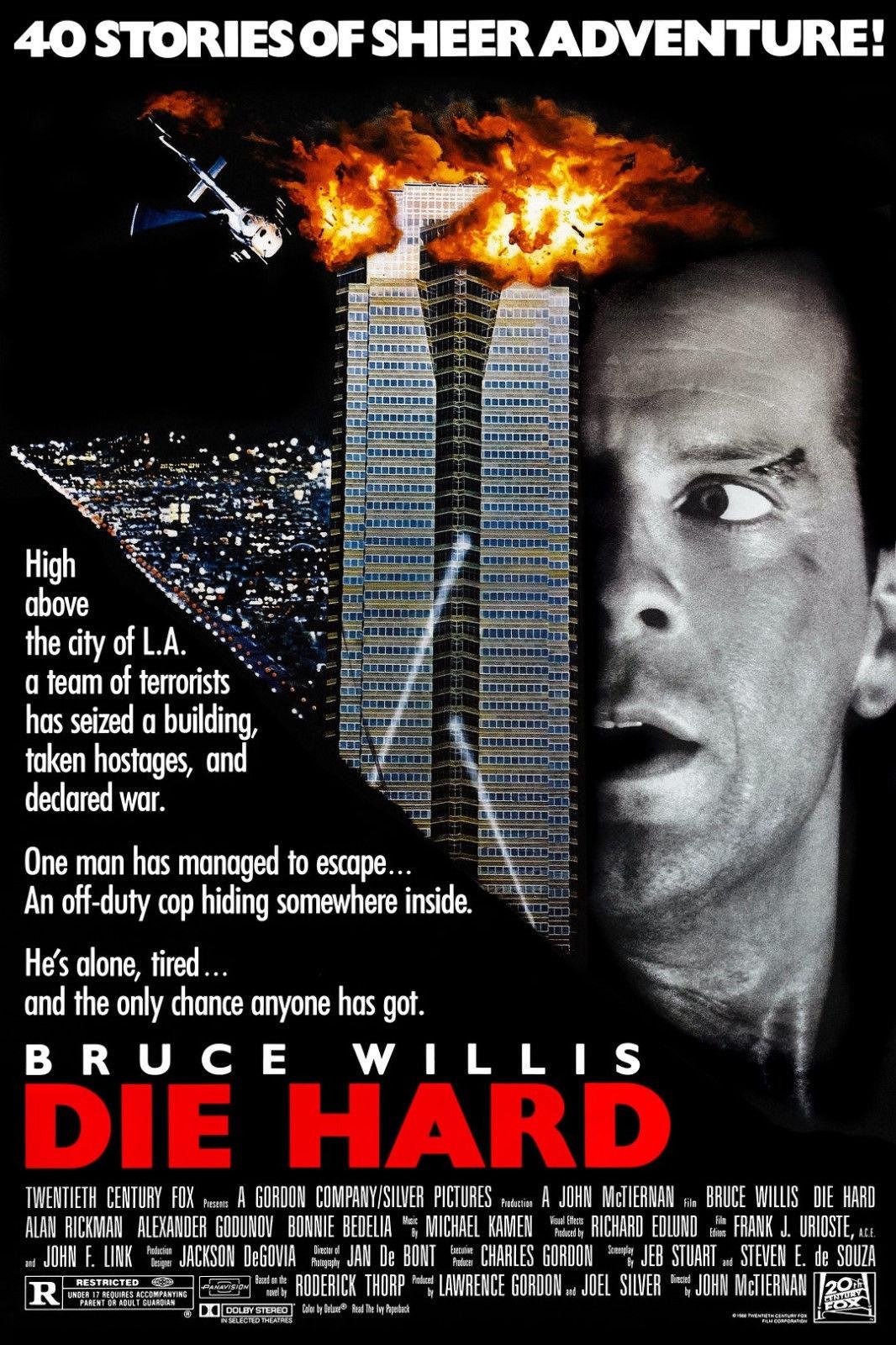
“Die Hard” follows New York City cop John McClane as he attempts to thwart a group of international thieves who take hostages in a Los Angeles skyscraper during a Christmas party.
Stakes and why the building matters
The stakes skyrocket the moment McClane realizes that the terrorists aren’t just after money, but a much larger, more sinister objective. Nakatomi Plaza isn’t merely a setting; it’s a symbol of corporate greed and an arena where McClane’s grit and resourcefulness are tested against the terrorists’ calculated menace. The building’s high-tech architecture and seemingly impenetrable security provide the perfect backdrop for a clash between the everyday hero and the villainous forces. Its looming presence throughout the film heightens the sense of isolation, compounded by the festive holiday atmosphere—a juxtaposition that accentuates the tension.
Trailer Section
The teaser trailer for “Die Hard” was released on December 1, 1988, giving audiences a first glimpse of a film that would soon become a beloved holiday staple. You can watch the official trailer here.
Visual tone, cinematography, and symbolism
The trailer serves up a striking visual aesthetic, with sharp contrasts between the glowing Christmas decorations and the cold steel of Nakatomi Plaza. The cinematography captures the tense atmosphere, using close-ups to highlight McClane’s determination while juxtaposing it with wide shots of the terror unfolding inside the building. Symbolically, the juxtaposition of the festive environment against the harrowing hostage situation foreshadows the film’s exploration of hope amidst despair, encapsulating a theme that resonates long after the credits roll.
Character and/or antagonist analysis
Among the cast, Bruce Willis steals the show as John McClane, establishing himself as an archetype of the tough, yet vulnerable hero. Alongside him is Alan Rickman’s brilliant portrayal of Hans Gruber, whose suave demeanor masks a cunning ruthlessness. The trailer hints at underlying conflicts, showcasing McClane’s desperation and resourcefulness in the face of overwhelming odds. Additional characters—including the unsuspecting hostages—serve to heighten the tension, offering layers to the antagonistic dynamics hinted at in brief snippets.
Thematic deep dive
In contrast to other action films released during its era, “Die Hard” injects dark humor into its narrative, a strategy that has often been emulated but rarely equaled. The film’s tone dances between tragedy and hilarity, a delicate balance that gives it a unique textured experience. Fans can expect some nods to previous action flicks, but “Die Hard” carves out its own identity by centering a relatable everyman in extraordinary circumstances, something that many modern blockbusters struggle to replicate.
Fan theories & speculation section
- Narrative twists: One prominent fan theory suggests that Hans Gruber’s meticulous planning includes a deeper investigation into McClane’s background, potentially setting him up as a target for future confrontations.
- Hidden villains or secret motivations: Some speculative discussions revolve around the possibility that various characters, including certain hostages, might have ulterior motives—perhaps colluding with Gruber in a way not immediately revealed.
Franchise / genre implications
“Die Hard” has spawned an array of sequels, each attempting to recapture the original’s magic. Its success heralded a new era of action films that favored character-driven narratives, influencing the genre landscape through the 90s and beyond.
Release date & expectations
The timeless appeal of “Die Hard” endures, with ongoing discussions about potential remakes or reboots further invigorating audience anticipation. While no confirmed release date for a sequel exists currently, whispers of revisiting the franchise continue to generate excitement in action cinema circles.
Strong final verdict
Ultimately, “Die Hard” stands as a testament to the power of clever writing, dynamic performances, and an innovative approach to storytelling. Its blend of humor and adrenaline, combined with a relatable hero battling against insurmountable odds, makes it poised to not only endure in the hearts of fans but also capture new audiences for generations to come. It’s no wonder that it remains a defining entry in both the holiday and action movie canons, embodying a spirit of resilience and wit that keeps viewers on the edge of their seats as they cheer for McClane’s triumph against the odds.
What Die Hard Gets Right — the good stuff
Action, set pieces, and why they land
“Die Hard” has long been lauded for its groundbreaking approach to the action genre, and it’s not hard to see why when diving into its thrilling set pieces. The film seamlessly blends intense physical action with an ever-looming sense of danger, pushing the boundaries of what audiences came to expect from blockbusters in the late ’80s. The movie’s signature sequences, from John McClane’s harrowing escape from the Nakatomi Plaza to his inventive use of air ducts as a means of covert movement, feel fresh and immediate.
These action scenes are elevated by a keen understanding of pacing; each gunfight and explosive moment is juxtaposed with quieter, tension-building beats. The way McClane navigates the building provides a claustrophobic intensity that enhances both the stakes and the suspense, making the viewer feel as trapped as the hostages. Every bullet fired and every punch thrown is calculated, memorable, and impactful, ensuring that each set piece resonates beyond mere spectacle.
Characters, one-liners, and unexpected heart
At the heart of “Die Hard” lies Bruce Willis’s John McClane, a reluctant hero armed not just with firearms but with wit and a surprising amount of emotional depth. The characters are intriguingly crafted, each contributing to the film’s dynamic energy. Alongside McClane, Alan Rickman’s Hans Gruber emerges as one of cinema’s most charismatic antagonists, blending intellect with menace. Their cat-and-mouse banter is a dance of words and intentions, filled with sharp one-liners that have turned into cultural touchstones.
But “Die Hard” isn’t just about the action or quips; it’s about McClane’s journey of redemption. As he fights to rescue his estranged wife, the film offers a poignant exploration of the fragility of relationships against the backdrop of chaos. This emotional thread adds layers to McClane’s character, making him relatable in his vulnerability amidst the carnage. It’s this unexpected heart, coupled with humorous one-liners, that anchors the film even as the stakes escalate and the explosions threaten to steal the show.
Where it shows its age or loses steam
Moments that feel dated or rough around the edges
Even as “Die Hard” is celebrated for its innovation, certain elements can feel dated to contemporary audiences. The portrayal of its supporting characters, particularly female ones, often leans on stereotypes that have since evolved. Characters like Holly Gennero are pivotal yet can feel underwritten compared to their male counterparts. This disparity prompts a reevaluation of the film’s representation, highlighting how far the industry has come in terms of character development and narrative complexity.
Additionally, some practical effects that once dazzled viewers may now seem quaint, lacking the seamless perfection achievable with modern CGI. While many practical scenes retain a raw authenticity, others can illustrate the limitations of the technology at the time, potentially breaking immersion for some viewers who are accustomed to today’s cinematic standards.
Who might be turned off and why
Fans of contemporary action films that rely heavily on intricate plots and character arcs might find “Die Hard” lacking in nuanced storytelling. The movie’s straightforward narrative—while effective—often follows a classic hero’s journey formula that may not satisfy audiences seeking more depth or unpredictability. Additionally, viewers with a keen eye for evolving attitudes toward gender and race might feel alienated by certain outdated tropes present in its depiction of characters.
This skew toward nostalgia may also alienate new audiences who have no context for “Die Hard” as a pioneering action film. Those who demand a fresher lens through which to view action narratives may struggle to embrace its legacy without acknowledgment of its flaws.
Standout moments you’ll remember (no spoilers)
The scenes that stick with you
There are scenes from “Die Hard” that linger in the mind long after the credits roll. Whether it’s McClane’s iconic “yippee-ki-yay” or the tense moments of him attempting to communicate with the outside world, these moments transcend mere entertainment to become part of the fabric of film history. The film’s cleverly staged climactic confrontations—particularly the final showdown between McClane and Gruber—are expertly designed to generate maximum tension and deliver a cathartic payoff for the audience.
The surreal visual artistry of Nakatomi Plaza at night, surrounded by the city lights, also adds a haunting beauty to moments of chaos, a juxtaposition that resonates with viewers. These are scenes that flow seamlessly into the film’s overarching themes of heroism, sacrifice, and moral ambiguity.
Why they work beyond just spectacle
The success of these standout moments lies not only in their suspenseful execution but also in the emotional weight they carry. Each action scene brims with a sense of consequence; when McClane faces danger, it’s not just about the immediate threat but the personal stakes involved. His vulnerability makes the explosive moments feel earned rather than gratuitous, inviting viewers to invest not only in the action but in the man’s journey.
Additionally, the film employs clever cinematography and editing to make each moment feel visceral. The combination of high-octane set pieces with McClane’s internal struggles elevates the narrative beyond mere surface-level thrills, crafting an emotional tapestry that connects the audience to his plight. This ability to merge action with depth is what ensures that the memorable moments from “Die Hard” resonate with such lasting impact, making them much more than just sequences of explosions or gunfire.
In a landscape crowded with formulaic action films, “Die Hard” stands tall, a testament to what the genre can achieve when it embraces both heart and spectacle. As we await news of any future entries in the franchise, one thing remains clear: “Die Hard” is more than a classic; it’s a timeless exploration of bravado, heart, and the lengths one will go to protect their loved ones.
Are the performances convincing?
Bruce Willis and the lead performance
Bruce Willis returns to his iconic role as John McClane, bringing a mix of grit and vulnerability that has defined the character for decades. In the new “Die Hard” installment, Willis shows a tremendous depth rarely seen in action heroes, layering his tough exterior with moments of darker introspection. Coming back to this role after years, he portrays a man grappling with both internal and external battles, effectively resonating with fans who have followed McClane’s journey over the years.
Willis imbues McClane with a sense of weariness; this isn’t just another bad day in the office, but a deeper confrontation with his own past. He captures the essence of a man who has faced unthinkable odds but must now confront a more personal threat. His delivery is sharp and instinctual, showcasing why he was and remains the quintessential action star. This isn’t merely nostalgia; it feels like a compelling evolution of a beloved character.
Supporting cast highlights and chemistry
The supporting cast shines brightly in this iteration of “Die Hard,” providing not just a backdrop for McClane’s heroics, but bringing their own layered performances to the table. Newcomers introduce fresh dynamics, making the relationships feel vital rather than one-dimensional. Particularly noteworthy are the interactions between McClane and his new partner, portrayed by a rising star who holds their own against Willis’s experience. Their chemistry oscillates between comedic banter and heart-wrenching moments, showing how allies can be both sources of strength and vulnerability.
Veteran actors also make their mark, delivering memorable performances as antagonists and allies alike. The tension is palpable whenever McClane interacts with the villains; this isn’t just about physical combat but psychological warfare. The intriguing duality among characters adds a rich layer of complexity, making the stakes feel real and the eventual confrontations all the more impactful. Together, they elevate the film, turning it from a mere action spectacle into a compelling narrative tapestry.
How’s the pacing and suspense?
How the movie builds tension over one location
“Die Hard” has always thrived on its capacity to create suspense within confined spaces, and this installment is no different. Set against the claustrophobic backdrop of a high-rise under siege, the film expertly utilizes the environment to build an atmosphere of escalating tension. Every floor has a unique challenge, and as McClane ascends, so does the stakes, which effectively transforms the location into a character of its own.
The pacing is deliberate, allowing moments of silence to amplify the impending danger. When action erupts, it feels earned rather than gratuitous. The filmmakers meticulously craft each segment to hold unyielding attention, maintaining suspense that culminates in exhilarating climaxes. As we traverse ceiling tiles and hidden passageways alongside McClane, there’s a constant reminder—this isn’t just about survival; it’s a battle against time and a test of the human spirit.
Any lulls and how they affect the payoff
While the film’s deliberate pacing contributes significantly to building suspense, there are moments when the narrative slows down noticeably. These lulls create space for character development and plot exposition, yet they risk losing audience engagement. However, these slower segments are strategically placed, with the intention of deepening the emotional stakes. Skin-deep action that lacks context might dazzle but doesn’t resonate; instead, the film opts for meaningful connections, investing viewers in each character’s fate.
When the action finally does erupt, it springs forth with renewed vigor, creating a satisfying payoff. Instead of disjointed action sequences, the film paces itself, ensuring each fight and chase has a reason and consequence. The small lulls serve as breathers, points where tension can build in anticipation of the next shootout or explosive confrontation, fostering a rhythm that keeps audiences on the edge of their seats.
Visuals, stunts, and sound — does it still look and feel great?
Practical stunts and action choreography
An essential hallmark of the “Die Hard” franchise lies in its commitment to practical effects and authentic stunt work. This newest entry elevates that tradition, incorporating jaw-dropping stunts that feel real and visceral. From daring leaps between skyscrapers to intricate fight choreography in tight corridors, the film excels in executing action that’s both thrilling and believable.
Cinematographer expert utilizes natural lighting to enhance the stark contrasts of the environment, bringing a gritty realism to every encounter. There’s a palpable weight to each confrontation; actors aren’t just performing stunts, they’re engaging in a fight for survival. The combination of practical stunts with innovative camera techniques immerses the audience in the action, making every explosion and narrow escape feel immediate and exhilarating.
Score, sound design, and how they boost the ride
In terms of sound and score, the film successfully captures the iconic elements that have made “Die Hard” a cultural touchstone. The score—a mix of pulse-pounding orchestral themes and haunting melodies—serves as both an emotional anchor and a thrilling propulsion for the action. It deftly echoes McClane’s internal struggles, enhancing the stakes with each escalating moment.
Sound design contributes significantly to the immersive experience, with every crack of gunfire and the distant roar of explosions reverberating through the theater. The use of silence is equally effective, creating moments of breath-holding tension where each sound feels amplified. This combination of score and sound design pushes the experience beyond visual spectacle into a layered sensory journey, breathing life into every scene and ensuring audiences feel every pulse-pounding moment.
Is Die Hard worth rewatching and who should watch it?
Is it worth revisiting after all these years?
“Die Hard” has cemented its status not just as a holiday action film but as a benchmark in action cinema. Few movies maintain their charm and relevance across decades like this one does. From its tight pacing to iconic one-liners, viewing “Die Hard” today offers a refreshing experience that doesn’t just rely on nostalgia.
The film excels because of its layered storytelling, grounded by relatable characters who find themselves in extraordinary circumstances. Revisiting John McClane’s gripping battle against Hans Gruber and his band of terrorists feels as thrilling now as it did in 1988. The interplay of action sequences and character development remains impactful, making it a worthy candidate for rewatching.
What makes “Die Hard” particularly special is the palpable tension, filmed in real-time, and the nuanced performance of Bruce Willis as McClane. Each rewatch uncovers subtleties lost in the initial viewing—McClane’s vulnerability, Gruber’s calculating demeanor, and the carefully crafted structure that builds suspense. Whether you’re a newcomer or a seasoned veteran of the action genre, revisiting this classic can provide renewed appreciation and plenty of thrills.
Best audience match and viewing occasions
“Die Hard” is designed for fans who appreciate action-drama with a heart and clever humor. Its intelligent script and multifaceted characters appeal to a broad audience. Those who enjoy intense drama mixed with strategic think-and-act moments will find McClane’s journey captivating.
As for the perfect occasion, the film shines during the festive holiday season, when it’s often deemed the quintessential Christmas movie, despite its action-packed nature. It’s an ideal pick for a rewatch with friends who appreciate snappy dialogue and high-stakes drama. Additionally, screenings in theaters or viewings for action-packed movie marathons can elevate the experience, allowing audiences to immerse themselves in the chaos of Nakatomi Plaza as part of a community.
FAQs
Do I need to watch Die Hard 2 or the rest of the series to enjoy this?
Not at all. “Die Hard” functions as a standalone narrative, with its tightly woven plot and character arcs contained within the film. While subsequent installments explore different dimensions of McClane’s character and story, they don’t require familiarity with earlier or later entries to fully appreciate the original’s impact and legacy.
Why is Die Hard rated R?
“Die Hard” earned its R rating due to its intense violent sequences, strong language, and a few suggestive scenes. The film doesn’t shy away from consequences; it portrays action authentically, reflecting the dangers that come with a hostage situation. The language reflects character depth and realism, especially in high-pressure environments, enhancing the film’s immersive quality.
What is the Die Hard age rating for younger viewers?
The film is rated R, suggesting it’s intended for mature audiences. Parents might consider this rating seriously, as its themes and language might not sit well with younger viewers. While some families may choose to introduce older teens to the film, it’s wise for guardians to preview it first to determine if it’s suitable for their children.
Where does Die Hard sit on Rotten Tomatoes?
“Die Hard” enjoys an impressive rating on Rotten Tomatoes, typically hovering around 93 percent for critics and 94 percent for audiences, illustrating its enduring appeal and critical acclaim. This high rating reflects both the film’s prowess in execution and its lasting impact on both the action genre and cinema as a whole.
How does Die Hard compare to Die Hard with a Vengeance?
“Die Hard with a Vengeance” offers a different stylistic approach, combining action with a buddy-cop framework alongside Samuel L. Jackson’s charismatic presence. It features higher stakes and a broader geographical scope. While the second film balances McClane’s solitary fight against terror in a confined space, the third expands upon the franchise’s themes through new partnerships and urban challenges. Both films exhibit bold character developments but “Die Hard” remains unmatched for its tight narrative and foundational role in establishing the series’ premise.
Are Die Hard 2 and other sequels worth watching?
While “Die Hard 2” follows the formula established by its predecessor, it introduces new challenges for McClane and is still enjoyable, albeit not as tightly crafted. The subsequent sequels, such as “Die Hard with a Vengeance” and “Live Free or Die Hard,” sport varying levels of creativity and execution. “Die Hard” remains the gold standard, but watching the sequels can provide insight into how the character evolves and the series’ various takes on action.
Does Reddit generally like Die Hard?
Generally speaking, Reddit users celebrate “Die Hard” as one of the finest action films ever made. Discussions often revolve around its memorable quotes, Bruce Willis’s performance, and its unconventional holiday branding. The film has sparked passionate debates about its placement in the Christmas movie canon and its cultural significance, further cementing its status within the film community.
What order should I watch the Die Hard movies?
For a comprehensive experience, the ideal viewing order is chronological:
- Die Hard
- Die Hard 2: Die Harder
- Die Hard with a Vengeance
- Live Free or Die Hard
- A Good Day to Die Hard
This sequence helps viewers track John McClane’s journey and the shifting themes across the series while retaining clarity in character development and narrative arcs.
In conclusion, “Die Hard” isn’t just a movie; it’s an experience that transcends the barriers of time. Its action sequences, character depth, and rich thematic elements remain impactful across generations, marking it a must-see for any film lover. Whether revisiting or watching for the first time, expect to enter a world where tension, action, and holiday chaos collide spectacularly.