How a surprise 2025 hit opened the door for bolder storytelling
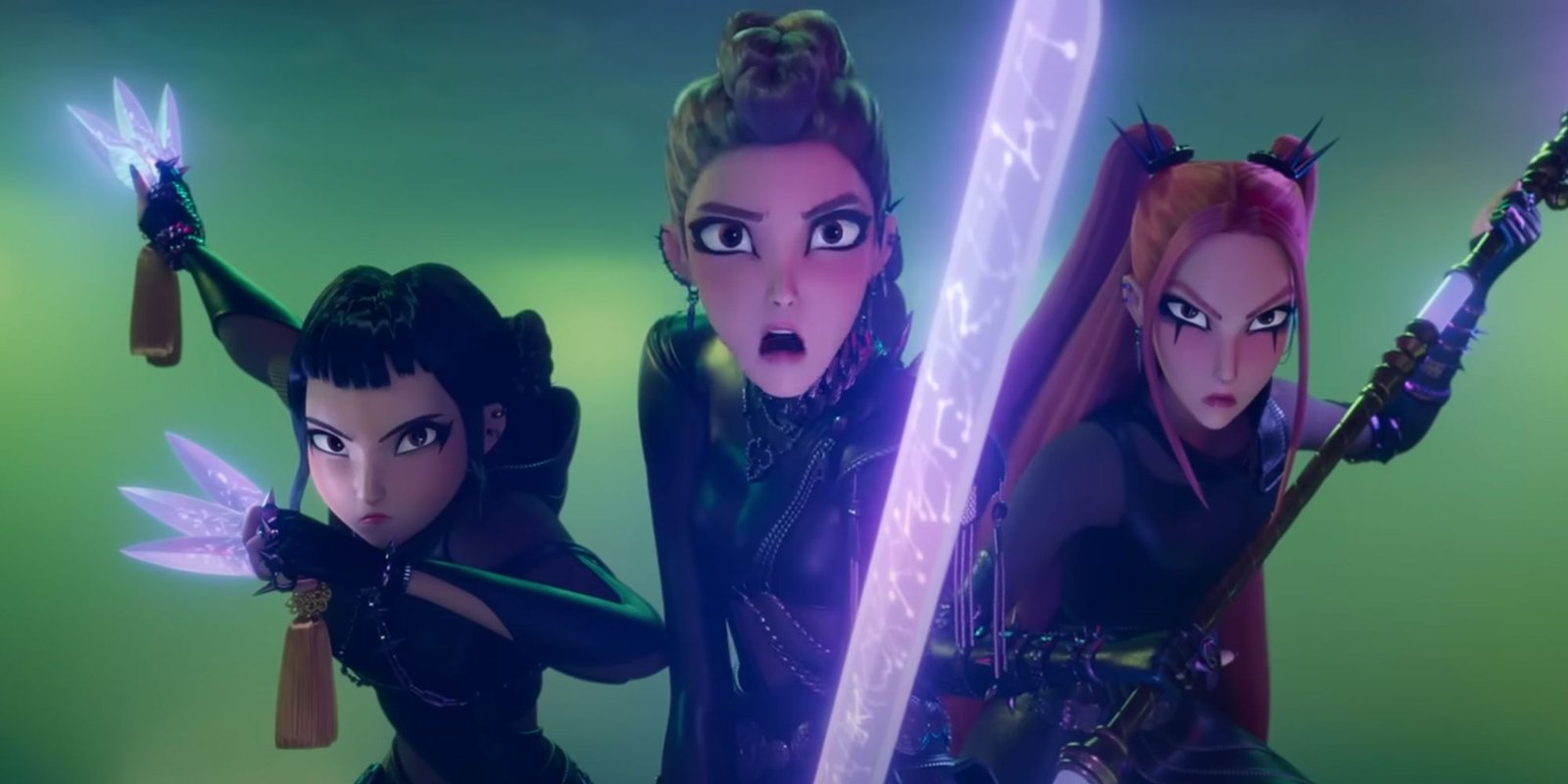
KPop Demon Hunters emerged in 2025 as one of Netflix and Sony Pictures Animation’s most talked-about releases. Directors and co-writers Maggie Kang and Chris Appelhans blended K-pop energy, high-stakes action and emotional themes of shame and acceptance into a vivid animated world. The film’s central trio — Rumi, Mira and Zoey, performed by Arden Cho, May Hong and Ji-young Yoo as the on-screen idols HUNTR/X — became an instant phenomenon, buoyed by songs that connected with audiences beyond the movie itself.
Rather than resting on the film’s upbeat finale, the creators and cast are already imagining how the franchise could move into darker, more complex territory. In a recent profile interview, Cho, Hong and Yoo discussed what’s unresolved at the end of the first film and sketched out ambitions for future installments — including a sequel that digs into emotional fallout and a historically grounded prequel in the tone of Star Wars’ Andor.
The ending that wasn’t quite a tidy bow
KPop Demon Hunters concludes with the Saja Boys defeated, the demonic ruler Gwi-Ma (voiced by Lee Byung-hun) driven back and a new Honmoon created to reseal the threat. On the surface, it’s a celebratory victory: HUNTR/X stays together and the world is ostensibly safe. But the cast points out that several emotional threads remain unresolved.
Arden Cho, who voices Rumi, stressed that the film’s ending isn’t a “bowtied happy ending.” Key questions linger — most notably the state of Rumi’s relationship with her mentor and adoptive mother, Celine (Yunjin Kim). Cho noted that while the group has found each other, the personal acceptance Rumi needs may not be assured: “It’s not really a bowtied happy ending. Sure, the Honmoon is sealed, the world is safe, the demons are gone, but does Celine accept Rumi? We don’t know. Does she have a family? We don’t know. But we do know she has her girls; she has her friends.”
That ambiguity provides fertile ground for the sequel to explore identity, belonging and the lingering wounds of shame — themes that helped make the original resonate with many viewers.
Arden Cho: auditioning for Celine helped shape Rumi
Cho revealed an unexpected route to playing Rumi: she initially auditioned for Celine, not for the lead vocalist. Recording a lower, mature vocal for the mother figure gave Cho insight into Celine’s mindset and the cultural pressures she represents — information that later informed her portrayal of Rumi.
“When I got the audition back in August 2022, I did a voice note, and I remember sending one voice note of Celine’s lines, and I pitched my voice as low as I could to be as mature adult mom as I could… when I auditioned for Celine, I was given some information that I think was helpful to understand Rumi later,” Cho said. That perspective helped her interpret the fraught caring behind Celine’s directives to “hide” and “be perfect,” experiences many immigrant families and first-generation children recognize.
Cho framed Celine’s behavior as imperfect love: a protective instinct that can nonetheless cause trauma. That empathy for both characters suggests the sequel could take a genuinely nuanced look at their history and motivations, rather than reducing Celine to a one-note antagonist.
Sequel possibilities: darker emotional territory and more half-demons
Beyond the Rumi–Celine arc, the cast is interested in widening the franchise’s scope. Cho wonders whether Rumi is truly unique as a half-demon, and whether meeting others like her could offer new avenues for storytelling and emotional growth. That simple question — “she can’t possibly be [the only one]” — opens possibilities for more complex worldbuilding and character-driven plots that examine identity and community.
May Hong and Ji-young Yoo also discussed tonal shifts and story directions that could make a follow-up more mature in theme while retaining the franchise’s kinetic visual and musical strengths.
A prequel pitch: ancient dynasties to the 20th-century occupation
While a sequel would continue the immediate aftermath of the first film, Yoo and Hong have also entertained the idea of going backward. They floated concepts ranging from an early-2000s-set story to a prequel that reaches into Korea’s deep past.
Ji-young Yoo is particularly drawn to traditional Korean music and historical settings: “I love Pansori, the traditional Korean singing… I would love to see ancient dynastic Korea.” That cultural texture could inform a visually distinct chapter in the franchise, tying supernatural elements to long-standing musical and storytelling traditions.
Yoo’s darker suggestion pushes further: a serious, historically rooted installment set during Japanese rule of Korea (roughly 1910–1945). She acknowledged this era’s gravity — forced assimilation, suppression of language and identity, and violent repression — which would make such a film far weightier than the family-friendly original. But she also invoked the recent Star Wars spinoff Andor as a tonal reference point, suggesting a KPop Demon Hunters project set in that period could become “our Andor”: a morally complex, politically minded story that reframes the franchise as something that can handle real-world history alongside its fantasy elements.
Timeline and what’s next
There’s no immediate rush: the sequel is tentatively eyed for a 2029 release, giving creators time to decide how far to push the tone and which corners of the mythology to explore next. In interviews, the cast has been careful not to spoil specifics, but their ideas point to a franchise that can expand in multiple directions — emotionally darker sequels, character-focused investigations of Rumi’s identity, or ambitious period pieces that tie the demon-hunting mythos to Korea’s history.
KPop Demon Hunters remains available to stream on Netflix. As development continues, the creative team’s openness to both intimate character drama and sprawling historical scope suggests the series could evolve beyond its breakout pop-culture moment into a richer, more varied cinematic universe. Stay tuned for official updates as plans for the next entries solidify.