Sundance’s Last Park City Bow and Collider’s Coverage
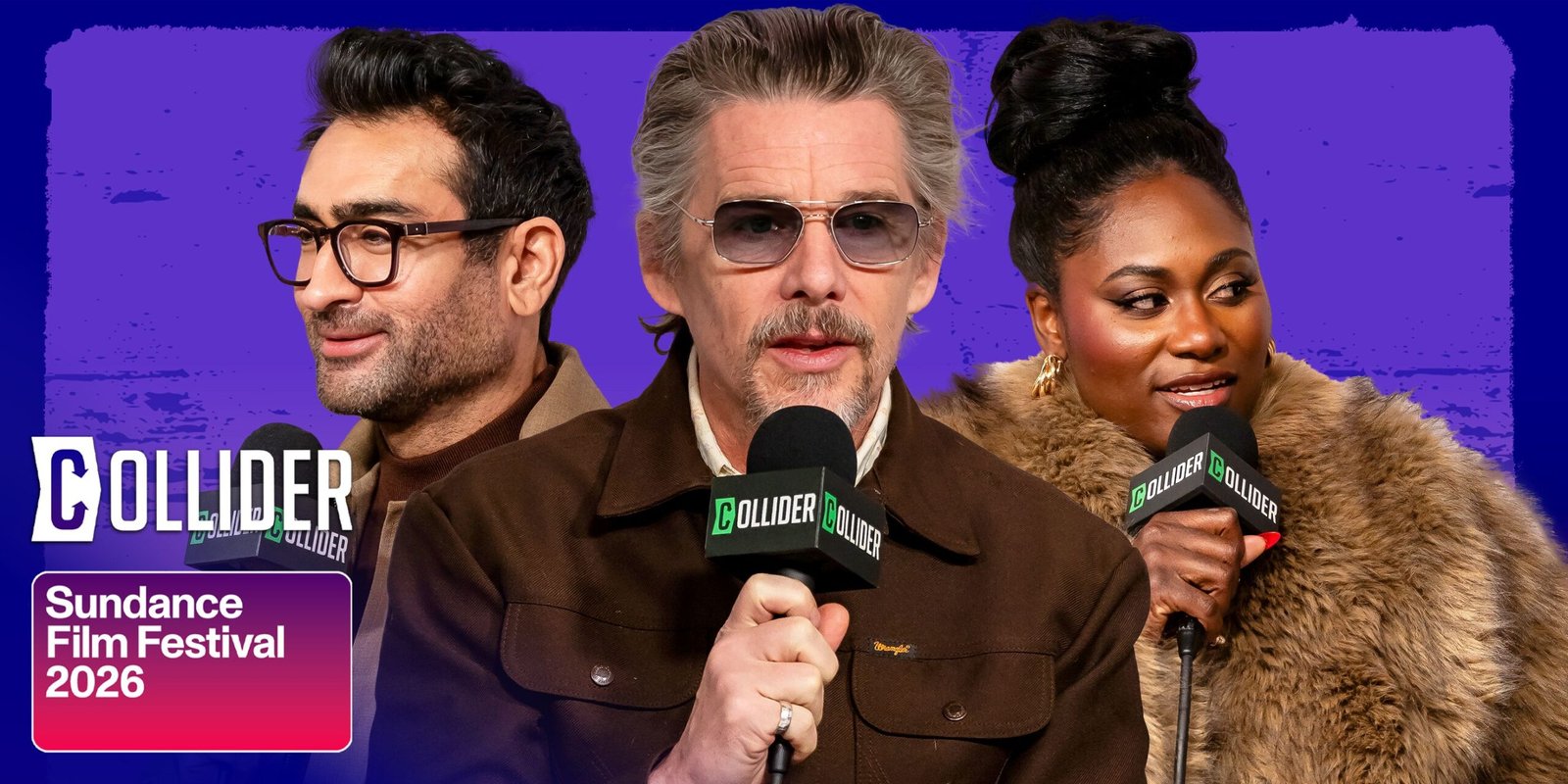
Sundance Film Festival 2026 carried a unique mix of celebration and reflection. Marking the first festival held after the passing of founder Robert Redford and reportedly the final edition in Park City, Utah, this year’s slate felt both like a tribute to independent cinema’s past and a preview of its future. Collider returned to the Arby’s Cinema Center to sit down with filmmakers and actors behind many of the buzziest premieres and emerging indies, capturing candid conversations about process, risk-taking, and why these stories matter now.
Our interviews — hosted by Steve Weintraub and Perri Nemiroff — focused on films and series that pushed formal boundaries, explored personal and cultural trauma, or rediscovered the intimate potential of low-budget filmmaking. Below are the highlights from seven standout interviews, concise film summaries, key revelations from each conversation, and timecodes so you can jump straight to the moments that matter.
The Disciple — Joanna Natasegara on obsession, archives, and the “Mona Lisa” of albums
Synopsis
- Joanna Natasegara’s documentary follows Tarik Azzougarh (Cilvaringz), a superfan whose deep involvement with the Wu‑Tang Clan culminated in the creation of Once Upon a Time in Shaolin — an album released in a single copy and sold in highly publicized transactions.
What we learned
- Natasegara described how she first encountered Azzougarh’s story in Marrakesh and built trust over time to access decades of personal footage.
- The film traces the album’s controversial journey — including its purchase history — and examines the band’s reaction and the album’s cultural value. Natasegara and producer Abigail Anketell‑Jones liken the album to a musical “Mona Lisa” because of its uniqueness and the way it reframes ideas about art and ownership.
- The filmmakers discuss attending a curated listening session of the physical album and how the edit shaped the film’s themes of spirituality, morality, and fandom.
Notable moments and timecodes
- 00:27 — What is The Disciple about?
- 01:04 — Backstory of Once Upon a Time in Shaolin
- 02:54 — How three decades of archive footage were recovered
- 05:56 — Why the film frames the album as the “Mona Lisa” of music
- 08:30 — Reactions after attending an exclusive listening session
- 11:34 — How the documentary portrays the Wu‑Tang Clan’s spirituality
- 12:47 — Plans for the film after Sundance
Frank & Louis — Petra Biondina Volpe and Rob Morgan on caregiving, incarceration, and moral complexity
Synopsis
- Frank & Louis dramatizes an unlikely caregiving relationship that forms inside a men’s prison. Kingsley Ben‑Adir plays Frank, a lifer seeking parole who becomes a caregiver for Louis, a convicted man suffering from early‑onset dementia, portrayed by Rob Morgan.
What we learned
- Director Petra Biondina Volpe developed the project over a decade after working in a California men’s prison and interviewing inmates who served as caregivers. She emphasizes the film’s insistence on presenting complicated human realities rather than tidy moral resolutions.
- Volpe spoke about financing the film internationally and casting a transatlantic ensemble to realize a story she felt was “very universal.”
- Rob Morgan discussed his character preparation, the film’s emotional stakes, and how independent financing allowed the filmmakers to avoid simplifying difficult questions about crime, punishment, and redemption.
Notable moments and timecodes
- 00:34 — Director explains Frank & Louis
- 01:02 — Why the story needed to be told
- 02:59 — Confronting society’s difficult questions about incarceration
- 04:03 — Morgan’s preparation for the role
- 06:26 — Kingsley Ben‑Adir’s transformation
- 12:48 — The Cast plays Collider’s Bracket Challenge
See You When I See You — Jay Duplass returns to features with a film about grief
Synopsis
- See You When I See You, written by Adam Cayton‑Holland from his memoir Tragedy Plus Time, centers on Aaron Whistler (Cooper Raiff), a comedy writer living with severe PTSD after his sister’s suicide. The film weaves comedy and grief, featuring Kaitlyn Dever, David Duchovny, and more.
What we learned
- This project marks Jay Duplass’s return to narrative filmmaking after a long focus on television and other projects. He says the script “scared the hell out of me” and compelled him to reengage with features.
- The filmmakers and cast discussed balancing tonal risks — treating loss with honesty and humor without trivializing trauma — and the personal impact of working on such an intimate story.
- Producers Emily V. Gordon and Kumail Nanjiani joined the conversation about shepherding the script from memoir to screen and supporting a sensitive, character‑driven production.
Notable moments and timecodes
- 01:35 — Cast discussion on addressing sensitive material
- 02:52 — Duplass on why he returned to directing
- 04:10 — How cast members joined the project
- 07:47 — The personal impact of making the film
- 15:27 — The team plays Collider’s Bracket Challenge
Run Amok — NB Mager’s risky tonal balancing act about youth and trauma
Synopsis
- Expanded from a short, Run Amok follows Meg (Alyssa Marvin) and a group of misfit students who stage a controversial school play confronting a past tragedy. The feature includes Patrick Wilson, Margaret Cho, Molly Ringwald, and Sophia Torres.
What we learned
- NB Mager explained that turning the short into a feature required proof that the tone could be managed across a longer runtime. The subject matter — teenage trauma and school violence — demanded careful handling.
- Patrick Wilson described why he trusted Mager’s voice and why it was important to present the story from young people’s perspectives rather than rehash adult assumptions.
- Cast members reflected on how the project challenged them and why they believe the film can empower younger viewers to find and use their voices.
Notable moments and timecodes
- 00:33 — How the film confronts controversial territory
- 02:00 — Cast stories about joining the project
- 03:49 — Patrick Wilson on trusting Mager’s vision
- 08:19 — Wilson and Margaret Cho on perspective and responsibility
- 11:43 — The Run Amok team plays Collider’s Bracket Challenge
Zi — Kogonada’s intentional reset and guerrilla filmmaking in Hong Kong
Synopsis
- Zi finds Kogonada stepping away from industry expectations to shoot a compact, experimental piece in Hong Kong. The film stars Jin Ha, Michelle Mao, and Haley Lu Richardson and explores identity, future visions, and intimate encounters with strangers.
What we learned
- Kogonada described Zi as a deliberate “reset” — a way to reconnect with cinema that inspired him before the pressures of larger projects. He and cinematographer Benjamin Loeb shot the film with a small crew over roughly three weeks.
- The director discussed favoring an “art of not knowing” approach, keeping performances and interactions fresh by allowing actors to discover dynamics organically on set.
- Jin Ha and Kogonada spoke about the practicalities and liberations of low‑scale, international production, and how the project helped him reclaim his creative compass.
Notable moments and timecodes
- 00:27 — Kogonada on how Zi captures the Sundance spirit
- 01:51 — The filmmaker explains why he pursued creative freedom
- 05:53 — Zi’s experiments with improvisation and discovery
- 08:36 — Calling the film a “reset” on his career
- 12:55 — Kogonada and Jin Ha play Collider’s Bracket Challenge
Burn — Makoto Nagahisa’s sensory portrait of Tokyo nights
Synopsis
- Burn follows Ju‑Ju (Nana Mori), a runaway who drifts into Kabukicho’s nightlife, finds a group that feels like family, and faces harsh consequences when betrayal fractures that belonging. The film aims to place the viewer directly into Tokyo’s bright, chaotic streets.
What we learned
- Makoto Nagahisa explained that, while the film looks guerrilla in style, most sequences were shot with permits and planned visuals. He emphasized meticulous preparation in sound and storyboarding, while also remaining open to spontaneous moments on set that become cinematic “miracles.”
- Nagahisa discussed an obsessive attention to sound mixing and small postproduction adjustments that shape mood and rhythm.
- Nana Mori talked about what drew her to the role and the aspects of the shoot that made her most nervous.
Notable moments and timecodes
- 00:32 — Director explains Burn’s story
- 01:33 — Nana Mori on why she joined the film
- 04:12 — How the filmmakers balanced legal location shoots with an immersive style
- 05:58 — Nagahisa on sound, visuals, and postproduction precision
- 08:04 — The pair’s favorite Studio Ghibli films and creative influences
Levitating — Wregas Bhanuteja channels Indonesian trance rituals into a hallucinatory spectacle
Synopsis
- Levitating reimagines traditional trance practices into a dazzling cinematic ritual. Angga Yunanda stars as Bayu, a young man training to become a spirit channeler who uses flute music to guide dancers into trance states, with Maudy Ayunda and Anggun rounding out the cast.
What we learned
- Director Wregas Bhanuteja described how trance parties function in the film as communal, non‑substance‑based gatherings where chanting and mantras induce shared hallucinations — a “pleasure realm” of color, music, and ritual.
- The film uses trance as a lens to explore the pressures of capitalism and threats to Indigenous cultural practices, transforming traditional forms into a vivid, genre‑blending experience (romance, action, horror).
- Cast members discussed how they learned “spirit animal” movements and tackled some of the film’s most intense sequences.
Notable moments and timecodes
- 00:55 — Explaining the trance‑party concept
- 02:49 — Anggun on the cross‑cultural resonance of trance rituals
- 07:06 — Discussion of the most intimidating scenes to film
- 09:42 — Maudy Ayunda on learning spirit animal choreography
- 10:23 — Bhanuteja on building a meditative, hallucinatory world on screen
Sponsors, studio notes, and where to watch more
Collider’s Arby’s Cinema Center studio was presented with support from Arby’s (who provided onsite hospitality), Hendrick’s Gin, Sommsation — The Wine Company, Peroni USA, neau water, Bernier, and partner agency Twenty35. For the full conversations, extended clips, and complete time-indexed interviews from Sundance Film Festival 2026, visit Collider’s Sundance coverage and the Arby’s Cinema Center interview pages.