A lean, mean return to features
Adam Davidson—whose TV credits include Community, Six Feet Under and Parenthood—has returned to cinema with One Mile: Chapter One, a stripped-down action thriller that leans hard on tension, practical stunts and a small but committed cast. Davidson and star-producer Ryan Phillippe shot not only this film but its sequel back-to-back on Vancouver Island, embracing a “guerrilla-style” production ethos to stretch limited resources into big-screen moments.
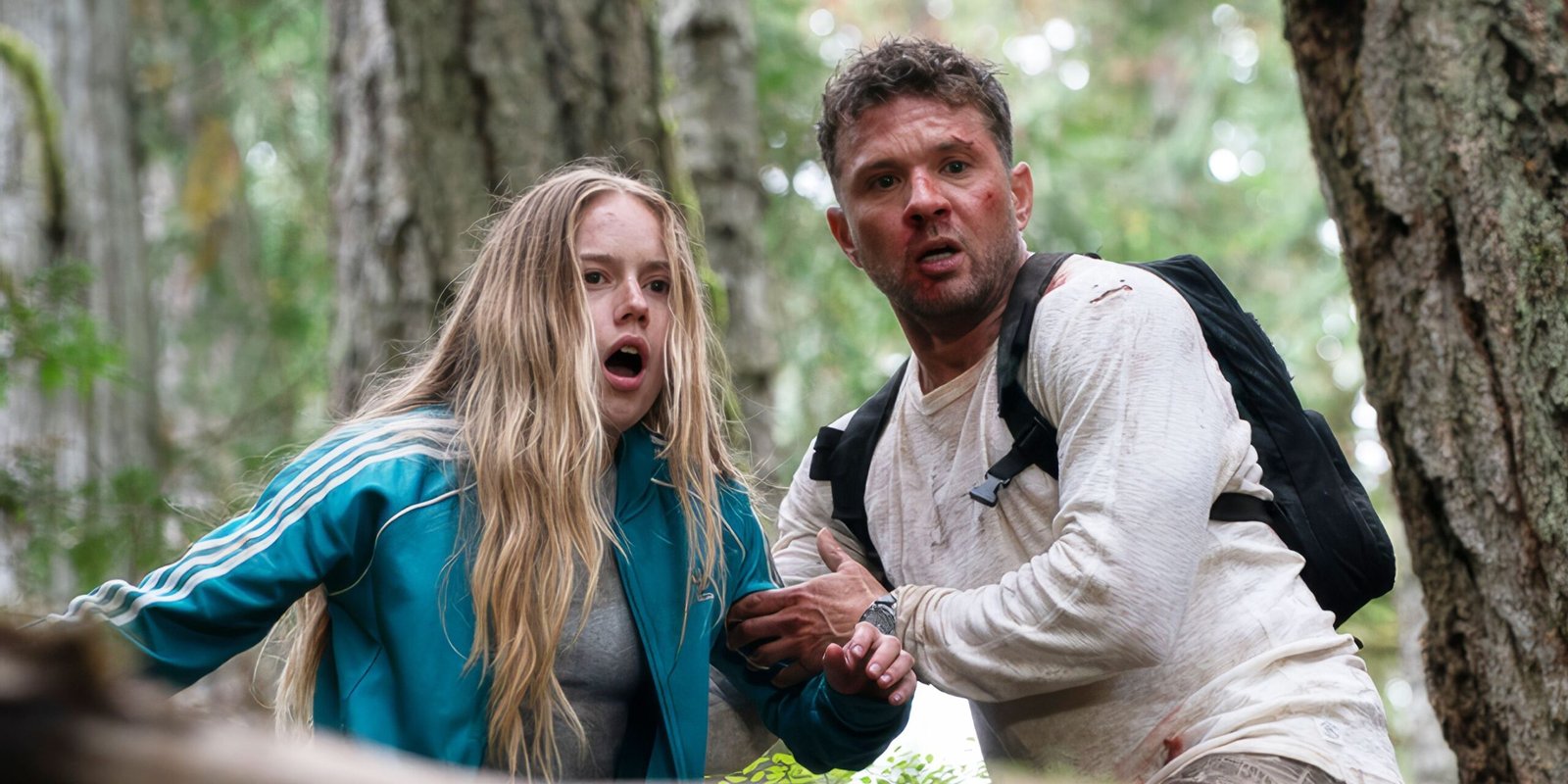
At an advanced screening moderated by Collider’s Perri Nemiroff, Davidson joined Phillippe and co-star C. Thomas Howell to discuss how they pulled off the unusual logistics of making two films simultaneously, casting a breakout young lead, and grounding the action in a believable emotional core: a father trying to reconnect with his daughter.
Shooting two films at once—why and how
The team didn’t stumble into the double-feature by accident. Davidson and Phillippe developed the project together from the ground up, shaping scripts and production plans so both installments could be produced in tandem. Phillippe called the decision “wild,” noting the practical challenge of jumping between scenes from different movies on the same day, and how that non-sequential shooting schedule made continuity and performance arcs more demanding.
Davidson described the process as boots-on-the-ground filmmaking, drawing on his decades in television to adapt quickly. The production leaned on location-driven choices—finding natural features such as a mill, cliffs and waterfalls on Vancouver Island and folding them into the script rather than building expensive sets. That flexibility, Davidson explained, allowed the filmmakers to turn last-minute discoveries into memorable sequences, like an unscripted cliff jump that became a signature moment.
Guerrilla filmmaking: weather, locations and quick thinking
Cold, rain and mud were the production’s constant companions. Phillippe recalled near-daily rain delays, a soggy base camp and planks to keep the crew from sinking into the muck. Those conditions forced the team to be nimble: days were reconfigured around changing weather, staging and camera coverage; action choreography sometimes came together just hours before rolling.
The result is a very physical film that, despite limited special-effects budgets, feels immediate and tactile. Davidson credited the crew’s willingness to adapt and the producers’ resourcefulness—names like Aaron and Jaiden Kaplan and Michael Lohmann—to finding practical locations and making them cinematic.
Casting Alex: how Amélie Hoeferle emerged as the emotional center
Finding the right actor to play Alex—Danny’s teenage daughter—was crucial. Davidson and Phillippe auditioned extensively before discovering Amélie Hoeferle, who joined production from Germany after a last-minute Zoom chemistry read. Davidson called her presence “real” and said she immediately clicked with the team.
Hoeferle’s performance balances vulnerability and agency. Phillippe emphasized that Alex is not a “damsel in distress”—she’s an angsty, budding artist with her own strength and resourcefulness, traits that deepen across both films. A revealing casting detail: some of the artwork shown as Alex’s pieces in the film are actually Hoeferle’s own work, lending authenticity to the character.
Phillippe’s physical commitment and military detailing
As Danny, an ex–special forces operative protecting his daughter, Phillippe carried the action heft of the films. He served as a producer and collaborator on the script, helping shape the character’s tactical credibility. Phillippe—who described a deep personal connection to military themes through family history—said he’d trained with SEALs, Marines and Army personnel and has a lifelong background in martial arts.
That preparation informed the physicality onscreen. Phillippe performed many of his own stunts and embraced the wear-and-tear of action production: repeated takes, bruises, cold-water jumps and genuine physical discomfort. He and Davidson both praised the stunt team for devising choreography that could be executed reliably in remote, unforgiving locations and often with minimal rehearsal.
Crafting a believable antagonist: Howell’s layered approach
C. Thomas Howell, who plays Stanley, the leader of an off-grid community, avoided playing a cartoon villain. Inspired by an early career exchange with Rutger Hauer—“I don’t play bad guys,” Howell quoted—he aimed to portray Stanley as complicated: capable of harm but motivated by survival and loyalty to his community.
Howell emphasized the role of production design in shaping his performance. The film’s mill-turned-village, community gardens and shared eating spaces helped him imagine what’s at stake for Stanley and why he would defend that way of life. In the second film, Davidson teased, the village becomes more of a character, and viewers will see deeper layers of what Stanley hopes to protect.
Finding production gifts in constraints
Several production choices grew out of necessity and turned into narrative strengths. A waterfall and cliff found on location became a practical alternative to building a stunt set—providing striking visuals and authentic peril. Cinematographer Alwyn Kumst, praised by Howell, had to operate with limited gear while hiking into remote shooting spots; Davidson credited the camera team for making those limitations disappear onscreen.
Costume designer Carol Case faced the challenge of distinguishing the off-grid community visually without resorting to theatrical “costuming.” Her work—along with the careful selection of props, art and set dressing—helped ground the villagers as real people, not caricatures.
Phillippe singled out the stunt team as an unsung hero; Howell highlighted the cinematography and the local crew heads—names like Chad Oakes—who brought seasoned talent and cohesion to a production that, for weeks at a time, lived and worked as a tight-knit family on the island.
What the cast and director want viewers to take away
At its heart, One Mile: Chapter One is an action thriller with an emotional pulley: a father-daughter relationship tested by brutal circumstances. Davidson said the material resonated for him personally—he’s a father of three daughters—and that emotional investment helped guide choices across casting, performance and staging. Phillippe echoed that point, noting this is as much a story about reconnection and protection as it is about fights and chases.
Howell emphasized nuance: villains who feel human create more compelling tension than one-note antagonists. Hoeferle’s Alex offers a modern, resilient teen perspective rather than passive victimhood, which both Davidson and Phillippe insisted was important for the film and its young audience.
Where to watch and film specifics
One Mile: Chapter One (runtime 86 minutes) was released February 20, 2026. Both One Mile and its Chapter Two were made available to rent or own on digital platforms upon release. Viewers drawn to grounded, location-driven action and strong central performances should find the film’s blend of practical stunts, emotional stakes and guerrilla-style filmmaking worthwhile.
Credits and closing
Directed by Adam Davidson; written by John Hlavin; produced by Aaron Kaplan, Adam Davidson, Brian Morewitz, Chad Oakes, Jaiden Kaplan, Michael Frislev and Michael Lohmann. The principal cast includes Ryan Phillippe (Danny), Amélie Hoeferle (Alex), C. Thomas Howell (Stanley Dixon) and Sara Canning (Janine).