A Brief, Unexpected Moment That Stands Out
Freaky Tales, the anthology film directed by Anna Boden and Ryan Fleck, unfolds over a single, strange night in 1987 Oakland. Amid its intersecting stories—crime, music, and survival—one brief, surprise appearance by Tom Hanks has emerged as a memorable highlight. In a role that lasts only a few minutes, Hanks steps into a video store and delivers a quietly electrifying monologue that reframes the film’s central theme: why we root for underdogs.
The Scene: A Video Store, a Basketball Game and Five Underdog Movies
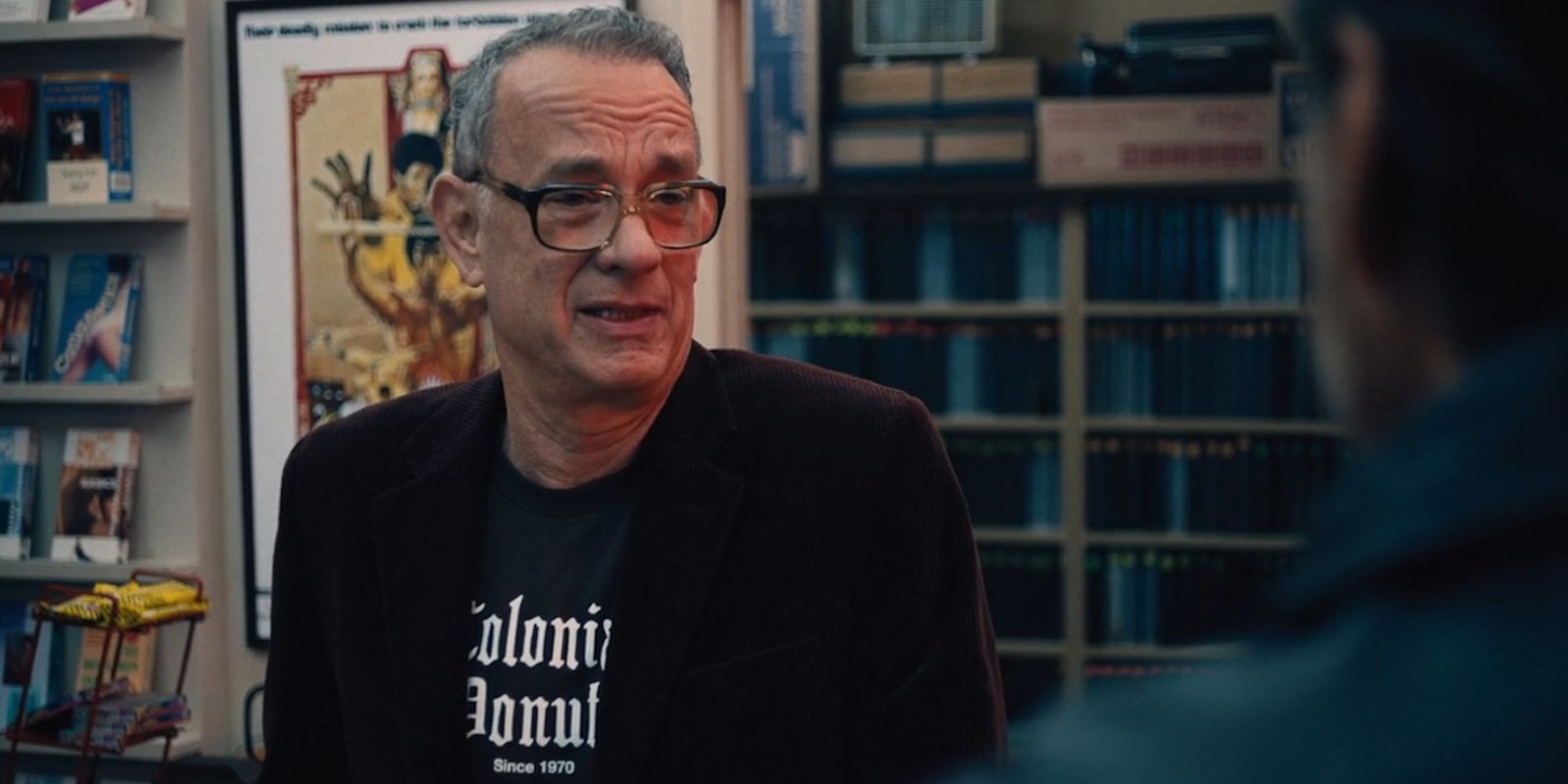
Hanks appears roughly halfway through the feature during the segment titled Born to Mack. Pedro Pascal’s character, Clint, enters a cramped video shop where the clerk—played by Hanks—is watching a basketball game that threads into the movie’s climax. What begins as a casual exchange about the score turns into an impromptu list of Hanks’ “top five” underdog films.
With the shop bathed in neon and Hanks outfitted in thick-rimmed glasses and a local donut-shop T‑shirt, the list he calls out includes Rocky, Hoosiers, The Dirty Dozen and The Verdict. He coyly withholds his number-one pick, teasing a 1979 title Roger Ebert once praised as “a cinematic miracle”—a clear nod to Breaking Away—before realizing Clint’s real objective is to gain access to a private poker game in the back. Clint’s indifference to the cinematic canon and Hanks’ gentle exasperation create a tonal pause that’s both funny and revealing.
Why the Cameo Matters: Context, Character and Theme
The cameo functions on several levels. On the surface it’s an amusing, nostalgia-soaked exchange that anchors the film in 1980s movie culture. But it also crystallizes Freaky Tales’ emotional logic: each of the anthology’s protagonists is, in one way or another, an underdog.
- Clint is attempting to escape organized crime.
- Dominique Thorne’s Barbie and Normani’s Entice are chasing a breakthrough as rappers.
- Characters like Tina (Ji-young Yoo) and Lucid (Jack Champion) are fighting for survival against violent threats.
Hanks’ monologue—especially the line “That’s why we love the underdogs, it’s a projection of ourselves. We’re all just a bunch of losers. We cannot kill Darth Vader, we cannot win a rumble against The Soc’s, and we definitely cannot beat L.A. And yet, the underdog believes they can achieve the impossible.”—acts as a rallying cry. It reframes the characters’ struggles as something viewers instinctively root for: the small-person dream of accomplishing the improbable.
Why Hanks? A Local Connection and a Creative Favor
It may seem surprising to find a multi‑Oscar winner in a scrappy, independent anthology, but the cameo grew organically out of existing relationships and local ties. Boden and Fleck previously worked with Hanks on the Apple TV+ series Masters of the Air and wrote the part with him in mind. They also leaned into Hanks’ real‑world connection to Oakland: he has publicly professed an affection for the city and its baseball team, and he’s celebrated in local art alongside figures like Too $hort, who also appears in and executive produces the film.
Hanks’ presence carries additional resonance because of the kind of screen persona he embodies—someone audiences associate with steady, comforting authority. That history makes him an effective source of reassurance in a scene that elevates the film’s thematic stakes.
Tone, Nostalgia and the 1980s Influence
Freaky Tales revels in 1980s texture—music, fashion, video stores and street basketball—and Hanks’ cameo fits that mood naturally. Though his later career is filled with prestige dramas, the 1980s were formative years for him as a star of offbeat comedies and crowd-pleasing films. His brief turn in this film feels like a wink to that era, a tiny bridge between the audience’s nostalgia and the characters’ present tensions.
Impact on the Film and Reception
Critics and audiences have singled out the video-store sequence as one of Freaky Tales’ most memorable moments. The surprise of seeing Hanks in such an unassuming role—delivering an assured, slightly acid monologue—creates a standout beat within the anthology’s mosaic. It doesn’t upstage the rest of the ensemble; instead, it amplifies the film’s central idea and spurs forward the emotional arcs of several storylines.
By the movie’s end, many of the film’s underdogs have faced their trials with renewed resolve, partly energized by the spirit of Hanks’ speech. The cameo’s blend of humor, tenderness and film geekery helps tie together Freaky Tales’ disparate threads.
Credits and Where to Watch
- Title: Freaky Tales
- Directors/Writers: Anna Boden and Ryan Fleck
- Notable Cast: Pedro Pascal, Ben Mendelsohn, Dominique Thorne, Normani, Ji-young Yoo, Jack Champion (among others)
- Producer: Poppy Hanks
- Runtime: 107 minutes
- Release Date: April 4, 2025
- Streaming: Available on HBO Max in the U.S.
Tom Hanks’ three-minute turn proves that a concise, well-placed cameo can do more than elicit a smile—it can underline a film’s emotional thesis and become one of its defining images. In Freaky Tales, that small burst of star power helps turn individual stories of struggle into a unified celebration of the underdog.