
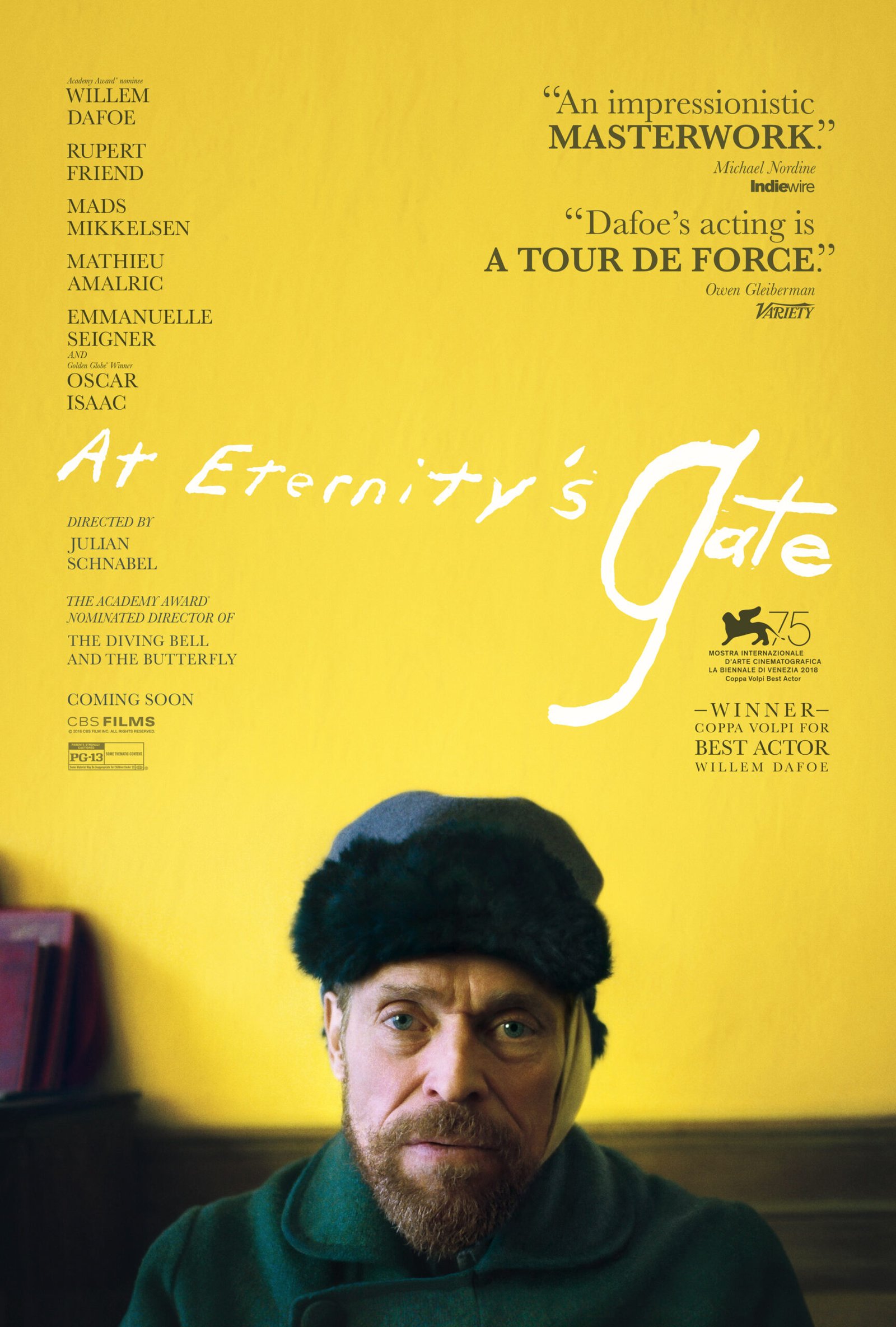
Information
tl;dr
Quick verdict in one sentence
“At Eternity’s Gate” offers a poignant meditation on Van Gogh’s tumultuous life, balancing beauty and despair, making it a visually arresting but emotionally uneven experience.
Who will most likely enjoy it
Art enthusiasts and those fascinated by the tortured artist trope will resonate most with this film. However, viewers looking for a conventional narrative with clear resolutions might find it frustratingly abstract.
What kind of film is At Eternity’s Gate?
Tone, mood, and overall approach
The film embraces an impressionistic approach that aligns with Van Gogh’s own artistic ethos, employing a tone that oscillates between poignant introspection and disorienting chaos. The cinematography, with its vivid colors and textured visuals, mirrors Van Gogh’s paintings, prioritizing emotional resonance over linear storytelling. There’s an atmospheric quality that cultivates a sense of unease, effectively echoing the artist’s mental struggles. Yet, this loose approach can feel disjointed, leaving viewers to sift through moments of brilliance tempered by stretches of ambiguity.
Runtime and pacing expectations
Clocking in at a brisk 100 minutes, the pacing frequently diverges from the traditional arc, opting for an episodic structure that can feel erratic. While some sequences flow with an ethereal grace, others grind to a halt, laboring over contemplative moments that may test the patience of the audience. The film’s runoff of emotional beats is often compelling, though it occasionally stumbles into languor, asking viewers to engage with the art of stillness amid a life defined by turmoil.
Does the story and pacing work?
How the narrative is structured and what it focuses on
The narrative is less a linear biography and more a series of vignettes, each illuminating facets of Van Gogh’s existential struggle against despair and the search for artistic validation. By eschewing traditional plot mechanics, the film homes in on thematic inquiries about creativity and madness, underscoring the connection between artistic genius and personal strife. However, this narrative choice diverts attention from character development, leading to a portrayal that, while rich in atmosphere, can feel emotionally opaque.
Where the film slows down or feels compelling
The film shines when it lingers on Van Gogh’s relationships with his contemporaries, particularly his connection with Gauguin, presenting moments filled with a palpable tension that reflect artistic rivalry and camaraderie. In these exchanges, the pacing feels intentional, allowing the dialogue and dynamic to drive the emotional stakes. Conversely, scenes that delve introspectively into Van Gogh’s psyche can drag, risking disengagement as the film embraces its more abstract tendencies. Overall, “At Eternity’s Gate” works best when it strikes a balance between life and art, but it falters when it overindulges in introspection.
Are the performances convincing?
Willem Dafoe’s take on Vincent van Gogh
Willem Dafoe’s performance as Vincent van Gogh is a masterclass in embodying a character steeped in turmoil and genius. He captures the eccentricities of Van Gogh with an intensity that feels both raw and refined. Dafoe inhabits the physicality of the artist, from the wild gestures to the haunting gaze, allowing us to witness the inner conflict—a man torn between passion and despair. It’s a portrayal that doesn’t shy away from the fragility of Van Gogh’s mental state; every crease in Dafoe’s brow and tremor in his voice communicates layers of pain and longing. The emotional peaks, such as moments of fiery creativity or bleak desperation, land with a potent authenticity, creating an experience that feels achingly real. Yet, it’s worth noting that Dafoe’s commitment to the character sometimes skirts dangerously close to caricature, and a more nuanced interpretation might have further illuminated Van Gogh’s complexities without sliding into melodrama.
Supporting cast and character chemistry
While Dafoe undeniably anchors the film, the supporting cast plays crucial roles in fleshing out Van Gogh’s world. Oscar Isaac’s portrayal of Paul Gauguin, for example, presents a dynamic interplay of friendship and rivalry that drives much of the emotional tension. Their chemistry crackles with an urgency that reflects both artistic camaraderie and philosophical clash. Yet, not every supporting character feels as robustly drawn. Some, like the villagers or family members, tend to exist more as narrative devices rather than fully realized individuals, leaving moments that hinge on these interactions feeling somewhat flat. This unevenness can dilute the film’s emotional core, leaning heavily on Dafoe’s performance to anchor scenes that might otherwise feel underdeveloped. Overall, the chemistry among the leads is compelling, but the film’s emotional impact could have benefited from deeper engagement with the broader cast.
How does the direction and visual style hold up?
Visuals, cinematography, and production design
Julian Schnabel’s direction is as much a character in “At Eternity’s Gate” as its actors. The film’s visual style mirrors Van Gogh’s impressionistic palette, with vibrant colors splashing across the screen in a way that evokes the artist’s paintings. The cinematography, led by Benoît Delhomme, operates through a keen lens that immerses viewers in Van Gogh’s world, capturing not only the beauty of landscapes but also the fraying edges of his mind. Every frame seems intentional, vibrating with energy—yet this commitment to visual storytelling can lead to a disorienting experience. At times, extreme close-ups and erratic camera movements detract from the narrative flow, creating a feeling of chaos that underscores Van Gogh’s turmoil but may alienate audiences seeking a coherent visual structure. Production design effectively folds into this vision, creating settings that feel both authentic to the late 19th century and imbued with an emotional resonance that mirrors Van Gogh’s artistic journey.
Editing, music, and how they shape the experience
Editing plays a pivotal role in shaping the film’s rhythm and pacing, often oscillating between smoothly flowing sequences and jarring cuts that reflect Van Gogh’s fragmented mental state. While this approach enhances the thematic exploration of instability, it can also render some narrative threads disjointed. However, the score, composed by Tatiana Lisnic, beautifully complements the film’s emotional landscape, weaving through scenes with a haunting, lyrical quality. The music acts as an aural bridge, knitting together disparate moments while elevating the emotional stakes. It’s in the interplay between sound and visuals that the film finds its most compelling fabric; yet, the editing choices sometimes undercut this synergy, leading to moments where the overall impact feels less than cohesive. Even so, the intentionality behind these directorial choices is commendable, producing a work that stays true to the chaotic brilliance of Van Gogh.
How true is it to Vincent van Gogh’s life?
Historical accuracy versus artistic choices
The film’s approach to Van Gogh’s life raises questions about the balance between fidelity and artistic interpretation. While it offers glimpses of significant events—his relationships, struggles with mental health, and artistic battles—it rarely anchors itself firmly in historical accuracy. Rather than create a straightforward biopic, “At Eternity’s Gate” opts for a poetic representation, enhancing emotional truths at the expense of factual detail. This artistic license can be both liberating and limiting; while it allows the film to capture the essence of Van Gogh’s turmoil and genius, it risks oversimplifying his complex legacy. Each scene is infused with a subjective perspective, prompting viewers to consider not just what Van Gogh did, but how he felt, though this can leave historical purists yearning for more depth in the factual narrative.
What the film chooses to emphasize or leave out
The choices in what to emphasize reflect a clear intent to highlight Van Gogh’s internal struggles over external events. Moments of violent passion, artistic brilliance, and emotional despair are foregrounded, creating a portrait that feels intimate and compelling. However, the film’s focus on his mental health overshadows crucial aspects of his artistry and the relationships that shaped his work, such as the influence of his brother, Theo. By omitting broader context—like his formative years in the Netherlands or the impact of the art world at large—the film creates an impression of isolation that, while true to his experience, might mislead viewers about the collaborative nature of art. This selective portrayal underscores how the film views Van Gogh not just as a painter, but as a symbol of the tortured artist, a lens that sacrifices nuanced historical context for emotional impact. In this light, the film resonates with themes of alienation and genius, even if it leaves important facets of Van Gogh’s life unexplored.
What are the main strengths and weaknesses?
Biggest strengths that make it worth seeing
One of the film’s most striking strengths lies in its profound exploration of the inner world of Vincent van Gogh, a journey that lures viewers into the depths of creative despair and fleeting moments of brilliance. Through Julian Schnabel’s direction, “At Eternity’s Gate” crafts an immersive portrayal that feels simultaneously intimate and broad, echoing Van Gogh’s signature brushstrokes in each frame. The cinematography stands out as a powerful storytelling tool, effectively capturing the vibrancy and turbulence of both Van Gogh’s art and psyche. Each scene bursts with color and emotion, beckoning viewers to not only witness but feel the weight of the artist’s struggles.
Willem Dafoe’s committed performance serves as the film’s anchor, imbuing Van Gogh with a raw vulnerability that resonates long after the credits roll. His ability to oscillate between moments of manic creativity and profound sorrow gives a palpable depth to Van Gogh’s character, inviting empathy rather than mere pity. The supporting cast, including Isaac’s engaging portrayal of Gauguin, also enhances the film’s exploration of artistic rivalry and companionship, creating layers of tension that enrich the viewing experience.
Key flaws that might frustrate some viewers
However, the film’s abstract narrative structure can prove disorienting, making it a tough sell for audiences craving coherent storytelling. The episodic nature often leaves characters feeling underdeveloped, particularly in interactions with those beyond Van Gogh’s closest circle, which can dilute the emotional stakes. Moments that dive deep into introspection, while otherwise thematically rich, occasionally meander into dullness, risking disengagement from viewers who prefer a more linear narrative arc.
Additionally, Schnabel’s stylistic choices, such as erratic camera movements and extreme close-ups, may veer into chaos, detracting from rather than enhancing the emotional depth. This experimental flair, while certainly bold, might alienate viewers who seek a grounded cinematic experience. In this respect, the film’s ambition to evoke the tumult of Van Gogh’s mind also creates a barrier that could frustrate those not willing to meet its demands for patience and introspection.
Who is this film really for?
Viewers who should watch it
Art lovers and those intrigued by the complexities of creative genius will find much to engage with in “At Eternity’s Gate.” The film speaks to anyone who appreciates visual storytelling as a means of diving into emotional landscapes rather than adhering to conventional narratives. The exploration of Van Gogh’s mind—his struggles, inspirations, and relationships—will resonate deeply with those who understand the tragic beauty often inherent in the lives of great artists. Fans of Dafoe’s craft, too, will appreciate the fearless commitment he brings to a role that demands an intricate balance between despair and ecstasy.
Viewers who might want to skip it
Conversely, those seeking a traditional biopic filled with a clear beginning, middle, and end may want to steer clear. The film’s approach can be frustratingly abstract, lacking in the emotional clarity some viewers desire. Those who enjoy plot-driven narratives or straightforward character arcs may find themselves adrift amid the film’s episodic structure and deliberate pace. Additionally, viewers uncomfortable with experimental filmmaking techniques, such as shaky cam or extreme close-ups, might not find the viewing experience as rewarding. If a viewer’s taste leans towards conventional storytelling, “At Eternity’s Gate” could feel more like a chore than an artistic exploration.
Is At Eternity’s Gate worth watching or rewatching?
Value on a first viewing
On a first viewing, “At Eternity’s Gate” offers a visually arresting experience that is difficult to categorize. It’s a film that demands full attention, inviting you to lose yourself in Van Gogh’s emotional and sensory landscape. The strength of Dafoe’s performance combined with the evocative visuals provides a rich tapestry of emotional experiences, even if it occasionally strays into obscurity. Viewers willing to engage with its artistic intentions will surely appreciate its aesthetic beauty, even if they emerge feeling somewhat unsettled or unsure about the film’s narrative coherence.
Rewatch potential and lasting impressions
As for rewatch potential, its somewhat fragmented storytelling may deter some from revisiting the film, though there’s a certain allure in experiencing its ambiance again. A second viewing might reveal deeper layers and nuances in Dafoe’s portrayal and the film’s thematic explorations, particularly around the nature of genius and madness. The emotional impressions left behind, fueled by the vivid cinematography and haunting score, linger, suggesting that the film could work as a contemplative piece to revisit for viewers looking for new insights. Nevertheless, whether this exploration can transform into a fulfilling repeat viewing experience depends primarily on one’s appreciation for cinema that prioritizes emotion and style over narrative clarity.
Practical details to know before watching
Release year, runtime, and rating
Released in 2018, “At Eternity’s Gate” runs for a concise 100 minutes, navigating through Vincent van Gogh’s tumultuous life with an impressionistic lens. The film has received a rating of PG-13, suggesting it is suitable for a teen audience but may address complex themes of mental health and artistic struggle that might resonate more profoundly with adult viewers. This runtime is strategic; it allows for an intimate exploration of Van Gogh’s psyche before the emotional weight risks overwhelming the audience.
Where you can find it (theaters, streaming, or rental)
Currently, “At Eternity’s Gate” is available for rental on several platforms, including Amazon Prime Video, Google Play, and YouTube. Potential viewers can also find it on select streaming services, making it accessible for those eager to delve into the heart of Van Gogh’s art and struggles. Its availability in home-viewing formats allows for a more contemplative viewing experience—ideal for a film that merits reflection and perhaps multiple viewings.
FAQs
Is At Eternity’s Gate based on a true story?
Yes, “At Eternity’s Gate” is rooted in the real-life experiences of Vincent van Gogh, focusing on his latter years as he battled mental illness while striving for artistic recognition. However, the film leans heavily into a poetic interpretation of his life rather than a precise biographical account. This creative liberty aims to evoke the emotional essence of Van Gogh’s turmoil rather than simply retelling historical facts, illuminating the artist’s inner world in a way that invites viewers to engage with the underlying themes of isolation and genius.
Does Willem Dafoe really play Vincent van Gogh?
Indeed, Willem Dafoe portrays Vincent van Gogh in a performance that oscillates between visceral authenticity and artistic interpretation. His embodiment of Van Gogh is marked by an intense physicality and emotional depth that resonates throughout the film. Dafoe’s commitment to the role captures the dualities of Van Gogh’s character—his vibrant creativity juxtaposed with his deep despair—rendering a portrayal that feels both heartbreaking and profound. It’s a performance that transcends mere imitation, channeling the complexities of an artist caught in the throes of both madness and brilliance.
Did the film win any notable awards?
While “At Eternity’s Gate” didn’t sweep the major awards circuits, it garnered critical acclaim that translated into nominations, most notably for Dafoe at the Academy Awards, where he earned a nomination for Best Actor. This recognition reflects the film’s impact in showcasing a nuanced portrait of one of art history’s most enigmatic figures. Despite missing out on broader accolades, the film’s artistic merits—for its unique visual storytelling and Dafoe’s performance—have secured it a place in discussions around biographical cinema, situating it within a specific niche that appreciates narrative risks and experimental approaches in film.