
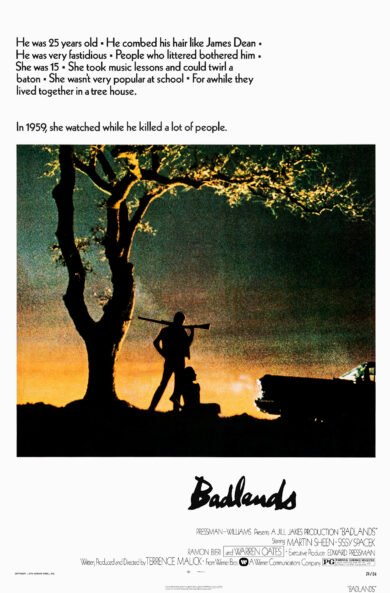
Information
tl;dr
Quick verdict in one sentence
“Badlands” is a haunting yet beautifully crafted exploration of youthful rebellion and moral ambiguity, skillfully blending cinematic aesthetics with complex themes.
Who will like this film and who should skip it
Film lovers drawn to character-driven narratives rich in visual storytelling will find “Badlands” captivating. Conversely, those seeking conventional plot-driven thrillers or clear-cut moral resolutions may find it frustratingly ambiguous.
Does the story and pacing hold up?
What the film focuses on without spoiling the ending
At its core, “Badlands” delves into the psychological landscape of its young protagonists, exploring themes of love, disenchantment, and the consequences of violence. The film artfully juxtaposes the idyllic American Midwest with the chaos of a crime spree, using the vastness of the landscape to mirror the internal turmoil faced by its characters. This focus on the characters’ motivations and emotional states elevates the narrative beyond mere action; it’s a study of misguided youth desperate for meaning.
Does it move slow or fast and where it drags
Pacing in “Badlands” is deliberate, a choice that mirrors the characters’ introspection and aimlessness. While certain sequences meander, echoing the vast emptiness of the landscape, these moments can sometimes feel indulgent. Nevertheless, the film maintains a tautness thanks to its striking visuals and atmospheric score. There are lulls that may test viewers’ patience, particularly as the focus shifts to themes of existentialism rather than driving plot, but the richness of its examination often compensates for these slower beats.
Are the performances convincing?
How the leads carry the film
The performances by the leads are mesmerizing, channeling youthful rebellion and existential uncertainty with remarkable nuance. Martin Sheen’s portrayal of Kit is both charming and chilling, encapsulating the duality of a romantic anti-hero caught in the throes of violent impulse. Sissy Spacek balances innocence with an unsettling detachment as Holly, embodying a blend of naiveté and complicity that makes her character’s journey palpable. Their chemistry is electric and serves to heighten the emotional stakes, drawing viewers deeper into their moral conflicts.
Supporting roles and the chemistry that matters
While the focus remains on Sheen and Spacek, the supporting cast enhances the film’s thematic gravity. The figures that populate their world—parents, law enforcement, and bystanders—add layers to the narrative, representing societal norms and the consequences of the protagonists’ actions. Their interactions with Kit and Holly serve as a haunting commentary on the disconnection between youthful aspirations and adult realities. The ensemble’s performances are subtle yet impactful, creating a tapestry of responses that amplify the leads’ portrayal of love in a turbulent context.
How does the direction and visual style affect the film?
The director’s choices that shape the mood
Terrence Malick’s directorial approach weaves poetry into the fabric of “Badlands,” establishing a mood that oscillates between serene beauty and stark violence. His penchant for long takes, coupled with a preference for natural light, captivates viewers and immerses them in the world of Kit and Holly. This stylistic choice doesn’t merely serve aesthetics; it transforms the environment into a character itself, amplifying the emotional stakes. Each frame feels meticulously constructed, echoing a sense of longing and disillusionment that underpins the narrative. Malick’s deliberate pacing allows moments of contemplative silence to resonate, encouraging viewers to reflect on the fragility of innocence amid chaos. The film’s tone—a blend of dreamlike serenity punctuated by sudden violence—emanates from Malick’s ability to capture both the beauty and brutality of human experience.
Cinematography, music, and editing — do they help or distract
The cinematography by Néstor Almendros is essential in shaping “Badlands.” Each shot is a meticulously crafted tableau, showcasing the rugged landscapes of the American Midwest in sumptuous detail. This visual richness enhances the film’s themes of isolation and desperation. The sweeping shots contrast starkly with the intimate, close-up moments between Kit and Holly, illustrating their disconnect from the world around them. Alongside this, the haunting score—including pieces by composer George Tipton—infuses the film with an ethereal quality that lingers long after the credits roll. The music often feels like a character, guiding viewers through the emotional landscape and providing a haunting counterpoint to the narrative. Editing is judicious, maintaining a rhythm that balances scenes of lush beauty with moments of stark violence that punctuate the dreamlike quality. Overall, these elements coalesce to elevate the film, offering a seamless narrative experience that neither distracts nor detracts, but enriches the thematic resonance.
What are Badlands’ strongest and weakest elements?
The film’s main strengths that make it worth seeing
One of “Badlands'” most significant strengths lies in the complexity of its characters. Malick does not present Kit and Holly as mere archetypes but instead crafts them as intricate individuals wrestling with their impulses and desires. Martin Sheen and Sissy Spacek’s performances breathe life into these young people, allowing viewers to empathize with their reckless search for meaning, even as their actions spiral into violence. The film’s visual storytelling complements this character depth, with the stunning cinematography illuminating their emotional states. Additionally, the exploration of themes like disillusionment and youthful rebellion remains profoundly relevant, resonating with the generational angst that continues to echo in contemporary society. The juxtaposition of lush visuals with bleak moral outcomes leaves a lasting impression, offering a rich terrain for analysis.
The weaknesses that may bother some viewers
Despite its many strengths, “Badlands” may not resonate with every viewer. The deliberate pacing, while intentional, can feel drawn out, especially for those expecting a more conventional narrative arc. Certain sequences linger to the point of tedium, potentially alienating audiences who prefer a tighter focus on action or plot progression. The lack of clear moral resolution can also frustrate viewers accustomed to definitive conclusions in their cinematic experiences. Characters occasionally elude straightforward understanding; their motivations remain elusive, which might disengage those seeking clarity over ambiguity. This interplay of beauty and discomfort, though intentional, risks misalignment with viewers’ expectations, rendering some moments challenging rather than illuminating.
Is Badlands worth watching or rewatching?
Why it still matters years after release
“Badlands” remains a cornerstone of American cinema due to its masterful blend of aesthetic beauty and incisive commentary on youth and rebellion. The film captures a sense of timelessness, reflecting the perennial struggle for identity and meaning against society’s constraints. With its rich visual language and profound thematic depth, it invites viewers to grapple with questions of morality, disillusionment, and love that remain pertinent today. Students of cinema will find it essential viewing for its innovative style and artistic influence, as Malick’s work paved the way for filmmakers interested in blending philosophical inquiry with visual storytelling. Its relevance continues to spark discussions around the nature of violence and the consequences of disconnection, making it a vital piece for both academic study and personal reflection.
How it holds up on repeat viewings
On repeat viewings, “Badlands” unveils deeper layers of meaning, rewarding audiences willing to engage with its reflective pacing and subtle nuances. Each viewing reveals new details in the cinematography, offering fresh perspectives on how landscape and character intertwine. The rich textures of the score resonate with different emotional chords upon revisiting, enhancing moments that may have seemed fleeting during an initial watch. As viewers become more attuned to Malick’s thematic preoccupations, the film’s existential contemplations deepen in resonance, elevating its rewatch value. Though it may challenge initial expectations with its ambiguity, this very quality invites ongoing interpretation, allowing “Badlands” to grow more impactful with each viewing.
Who is this film really for?
Types of viewers who will get the most out of it
“Badlands” speaks to viewers who appreciate artful cinema that prioritizes character exploration over traditional narrative structures. Fans of films that subvert genre expectations will find much to admire; its blend of haunting visuals and philosophical depth distinguishes it from straightforward crime dramas. Additionally, those interested in the exploration of youth and rebellion, particularly through a historical lens, will resonate with the film’s emotional weight. Scholars of cinema and history may be captivated by its socio-political undercurrents, such as the critique of American idealism woven into its narrative fabric. This film invites soliloquies of reflection rather than mere consumption, rewarding audiences willing to immerse themselves in its lyrical yet unsettling tale.
Viewers who might want to skip or temper expectations
Conversely, those who prefer fast-paced action or clear moral delineation may find “Badlands” frustrating. The film’s deliberate pacing and existential ambiguities can dissuade viewers who thrive on immediate gratification or facile resolutions. If you favor conventional thrillers where heroism and villainy are easily discernible, the moral complexity and the often dispassionate portrayal of violence might prove off-putting. Additionally, viewers looking for robust character growth may struggle, as the protagonists’ motivations remain elusive. Such audiences might benefit from tempering expectations, appreciating “Badlands” more as a meditation on youth and despair rather than a plot-driven adventure.
Is Badlands based on real events and how realistic is it?
The connection to true events and what was changed
“Badlands” is inspired by the real-life crime spree of Charles Starkweather and Caril Ann Fugate in the late 1950s, but it transfigures these events into a mythic exploration of life’s darker impulses rather than a factual retelling. While Malick draws from actual events to ground the narrative, he reinterprets characters and motivations to serve a more profound thematic inquiry. This departure from strict realism enhances the film’s meditative quality, allowing for an examination of the American youth as tragically romantic figures—flawed yet compelling. It’s a careful balancing act; while rooted in reality, the stylization prompts viewers to question the essence of the characters’ actions beyond the mere facts of their crimes.
The film’s tone — stylized or realistic representation
The tone of “Badlands” leans heavily into stylization, with Malick elevating the narrative to a realm that feels both dreamlike and haunting. Cinematic choices allow audiences to sift through layers of beauty and horror, painting a world where the lush landscapes serve as a backdrop for existential dread. The juxtaposition of serene natural beauty with sudden outbursts of violence suggests a philosophical commentary on the allure and dangers of romanticized notions of rebellion. This surreal approach permits a critique of the American Dream itself—portraying not just the allure of youth but also the intrinsic moral vacuity that can accompany misguided passion. Rather than presenting an unfiltered slice of life, Malick crafts a fable that asks viewers to confront the unsettling complexity of human desires.
FAQs
Is Badlands based on a true story?
Yes, “Badlands” loosely draws inspiration from the real-life crimes of Charles Starkweather and Caril Ann Fugate. However, it takes significant artistic liberties, transforming these events into a narrative that explores deeper themes of love, rebellion, and moral ambiguity rather than sticking strictly to the facts.
Where can I stream or buy Badlands?
“Badlands” is available for streaming on various platforms, including popular services such as Amazon Prime Video and Apple TV. For those interested in a physical copy, it can be purchased through major retailers, both online and in-store.
How long is the movie and what is the rating?
The film runs for approximately 94 minutes and is rated PG for its thematic elements and brief moments of violence. This rating underscores the film’s focus on psychological rather than overtly graphic content, inviting a wider audience to engage with its complexities.
Are there any content warnings (violence, language, disturbing scenes)?
Yes, “Badlands” contains instances of violence, including depictions of murder and gunfire, which are presented with a dispassionate aesthetic that may be unsettling for some viewers. The film also features adult themes and language that reflect the characters’ turbulent emotional states, warranting caution for sensitive audiences. While the violence is not gratuitous, it is impactful enough to merit consideration for those who might be disturbed by such content.