
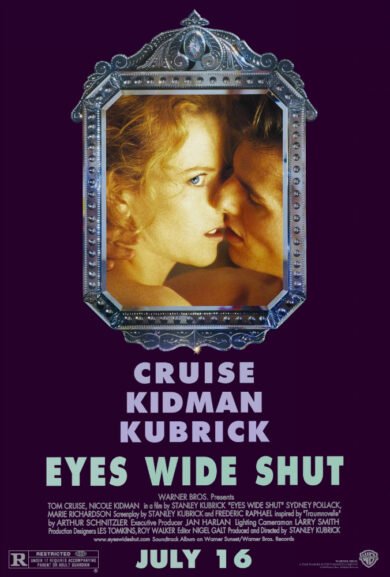
Information
tl;dr
Quick verdict in one line
Stanley Kubrick’s “Eyes Wide Shut” is a provocative exploration of desire and secrecy that challenges viewers’ perceptions but may frustrate those seeking straightforward storytelling.
Who will enjoy it and who should skip
Fans of psychological dramas and surreal cinema, especially those who appreciate slow-burn narratives that evoke deep themes, will find much to engage with. However, viewers looking for a conventional plot or clear resolutions might want to steer clear, as the film often revels in ambiguity.
Runtime and content warning
Clocking in at nearly two and a half hours, the film carries mature themes that include sexuality, infidelity, and psychological tension, making it unsuitable for younger audiences or those sensitive to explicit content and complex psychological narratives.
What is the basic idea behind Eyes Wide Shut?
The central situation without major spoilers
At its core, “Eyes Wide Shut” follows Dr. Bill Harford, as he embarks on a nighttime odyssey through New York City’s hidden sexual underbelly after his wife reveals a fantasy about infidelity. This journey exposes him to a world rife with secrets and moral ambiguity, forcing him to confront not just the reality of desire but the implications of his own marriage.
Main themes the film explores
Kubrick delves into jealousy, desire, and secrecy, crafting a narrative that dissects the fragility of relationships. Jealousy is palpably felt as Bill grapples with the idea of infidelity, reflecting a broader commentary on the insecurities that often lurk beneath the surface of commitment. The interplay between desire and secrecy is woven throughout, challenging the audience to question the masks that individuals wear and the hidden lives they lead. Kubrick’s use of a dreamlike tone further amplifies these themes, evoking a persistent sense of unease about the true nature of human connections.
Does the story and pacing work?
How the narrative unfolds and where it gains momentum
The narrative operates like a tightly wound coil, slowly unfurling to reveal the tapestry of hidden lives and desires. The pacing begins subtly, allowing viewers to settle into the world Bill inhabits, and gradually accelerates as he encounters increasingly bizarre and unsettling experiences. This gradual build allows the film to explore each character’s psychological depth, yielding moments of genuine tension and intrigue. However, as it progresses towards its climax, the film’s dreamy quality and shifting realities create a powerful momentum that draws viewers deeper into its hypnotic narrative.
When the film feels slow and why that might matter to you
While the pacing builds atmosphere, it can also lead to prolonged stretches that feel stagnant. Some viewers may find these intervals frustrating, particularly when expectations lean toward conventional thrill or conflict. However, the languid pacing serves as a deliberate choice, mirroring Bill’s own hesitations and the psychological unravelling of his mind. Recognizing this will either deepen appreciation for Kubrick’s stylistic intentions or reinforce the notion that the film might be a test of endurance for some. The slow burn encapsulates the unsettling nature of the story itself; it is about the duality of life beneath the surface, rewarding those who are patient with a compelling psychological experience.
Are the performances convincing?
Tom Cruise — what he brings and limitations
Tom Cruise’s portrayal of Dr. Bill Harford is an intricate balance of charisma and vulnerability, embodying the character’s internal turmoil within the unsettling narrative tapestry. His performance captures the essence of a man caught in an existential crisis, skillfully navigating the shift from a confident doctor to a man adrift in doubt and desire. However, there are limitations; at times, Cruise’s star persona overshadows Bill’s more nuanced emotional struggles. While his physical presence commands attention, the veneer of celebrity can detract from the authenticity of the character’s intimate moments. Rather than fully disappearing into Bill’s psyche, there are instances where the audience is reminded they’re watching a Tom Cruise performance rather than an unfiltered exploration of marital distress. This creates a jarring dissonance that partially undermines the film’s psychological depth.
Nicole Kidman and the supporting cast — chemistry and memorable moments
Nicole Kidman offers a compelling counterpoint to Cruise’s Bill, imbuing Alice Harford with a striking blend of sensuality and complexity. Her monologue about fantasy reveals both vulnerability and a fierce introspection, elevating her character from mere catalyst to key player in the film’s exploration of desire. The chemistry between Kidman and Cruise fluctuates, reflecting the spectrum of intimacy in their marriage. In certain scenes, their interactions pulsate with tension and longing, capturing the fragile dynamics that underpin their relationship. The supporting cast, from Sydney Pollack as the enigmatic Ziegler to the haunting figures at the orgy, reinforces this sense of unease. Each character intersects with Bill in ways that amplify his inadequacies and desires, yet none truly resonate for longer than necessary, underlining the ephemeral nature of the connections forged within this shadowy world. While moments of brilliance emerge, the film doesn’t always capitalize on these interactions, hinting at richer explorations left untapped.
How does the direction and style affect the film?
Kubrick’s visual approach, camera work, and production design
Stanley Kubrick’s direction is immediately evident in the film’s meticulously crafted aesthetic. The visual language of “Eyes Wide Shut” employs symmetry and depth that frequently draws viewers into an intimate yet disconcerting space, thereby mirroring Bill’s descent into the surreal underbelly of sexuality. His use of color—primarily rich blues, warm reds, and soft golds—evokes a dreamlike quality, both enticing and unsettling. Kubrick’s camera work often lingers, locking viewers into mundane settings before revealing the bizarre layers hidden beneath. The production design complements this vision superbly, creating lavish interiors that speak to affluence while simultaneously hinting at underlying decay and desire. Such deliberate choices create a hall of mirrors, challenging viewers to question not just what they see, but the motivations behind the characters’ actions. This cinematic approach serves to enhance the film’s overall themes of duality and disillusionment, though it occasionally veers into ostentation, risking overshadowing the narrative’s subtleties.
Tone, music, and how the film creates unease
The tone of “Eyes Wide Shut” cultivates a lingering sense of disquiet, primarily through its sound design and score, which work in tandem to evoke a haunting atmosphere. Jocelyn Pook’s unsettling score echoes throughout the film, weaving elements of both operatic grandeur and eerie minimalism, thereby heightening emotional stakes and undermining moments of supposed calm. The use of music becomes a character in itself—luring the audience in while simultaneously serving as a harbinger of the unsettling themes to come. Kubrick’s pacing and tonal shifts resonate on a psychological level; there’s a continuous tension, a palpable anxiety that permeates even the most tranquil scenes. This unease derives not solely from explicit content but from the emotional complexity and moral ambiguity inherent in each interaction. While the film’s tone can feel oppressive, it succeeds in instilling a disorienting experience that asks viewers to grapple with their own fears and curiosities about desire and betrayal.
How explicit is it and does that matter?
Level of sexual content and nudity to expect
“Eyes Wide Shut” is unmistakably explicit in its depiction of sexual themes, presenting numerous scenes that feature nudity and suggestive scenarios. Yet, the film doesn’t skew toward gratuitousness; the depictions of sexuality serve a broader narrative purpose, often acting as a mirror to the characters’ internal conflicts and the fragility of their relationships. The orgy sequence, in particular, paints a visceral picture of the darker side of human desire, encapsulating both allure and repulsion. For some, the level of explicit content may alienate or distract rather than enlighten. However, within Kubrick’s framework, each moment feels intended to provoke introspection rather than mere titillation, pushing audiences to confront the complexities of intimacy in their own lives.
Why the explicitness is part of the story, not just shock value
The film’s explicitness is intricately tied to its exploration of desire, secrecy, and identity. Kubrick’s choice to include sexual content serves not just for shock value but as a profound commentary on the conflicts inherent in modern relationships. By laying bare the primal instincts that often lurk beneath the surface of social niceties, Kubrick invites viewers to reflect on their own fantasies, fears, and the masks they wear in their personal lives. The explicit scenes are laden with emotional weight—each act becomes a revelation of character, allowing audiences to traverse the thin line between the mundane and the taboo. In this way, the film’s explicitness can be regarded as a necessary component of its examination of contemporary relationships, urging viewers to engage with the discomfort and exhilaration that often accompanies the exploration of one’s hidden desires.
What are the biggest strengths and weaknesses?
Strengths: atmosphere, mood, performances, design
“Eyes Wide Shut” thrives on its meticulously crafted atmosphere, a hallmark of Kubrick’s artistry that envelops the viewer in a unique, dreamlike experience. The film’s mood oscillates between seductive and unsettling; it invites you into a world that feels familiar yet profoundly alien. The production design, from opulent apartments to the surreal world of the masked orgy, enhances the visual storytelling, underscoring themes of secrecy and desire with every meticulously arranged frame.
Tom Cruise’s performance as Bill Harford carries a duality that resonates well within this atmospheric framework. While at times his star power is a distracting undercurrent, moments of emotional honesty shine through, particularly in his exchanges with Nicole Kidman, who imbues Alice with a complex blend of vulnerability and assertiveness. Their chemistry captures the film’s exploration of marital dynamics, mingling longing and disconnection. The supporting performances further heighten the mysterious undertones, making interactions with strangers feel loaded with hidden implications. This careful orchestration between atmosphere and performance ultimately serves to deepen the film’s emotional impact.
Weaknesses: pacing, opacity, occasional awkward dialogue
However, “Eyes Wide Shut” is not without its drawbacks. The pacing, while intentionally slow to build tension, can be disorienting, particularly for viewers unaccustomed to Kubrick’s deliberate rhythm. The film often lingers on moments that feel drawn out, risking audience engagement as it ventures into prolonged sequences that contribute to, yet sometimes impede, narrative momentum.
The opacity of the storyline may also frustrate viewers seeking straightforward storytelling. Kubrick navigates ambiguity with a bold hand, but the complex layers of meaning can become muddled in the dialogue. At times, lines feel contrived or overly expository, undermining the authenticity of character interactions despite the strong performances. This combination of pacing and narrative opacity can create a sense of detachment, leaving viewers pondering over thematic threads rather than fully immersing in the story’s emotional core.
Who is Eyes Wide Shut really for?
Viewers likely to appreciate it (Kubrick fans, slow-burn dramas)
“Eyes Wide Shut” will undeniably resonate with fans of Stanley Kubrick and viewers attuned to slow-burn narratives that delve into psychological complexities. This film is a labyrinthine exploration of desire, fidelity, and the intricacies of marital dynamics, rewarding those who appreciate metaphoric storytelling. Kubrick’s signature style—intense focus on visual compositions and subtle character study—naturally draws in an audience that values intricate artistic vision over straightforward plots.
Viewers who enjoy unraveling layers of meaning through somber atmospheres and surreal storytelling will find “Eyes Wide Shut” challenging yet engaging. The film opens up a dialogue about human nature and interpersonal relationships, inviting interpretations that extend beyond the screen. Those able to engage with its thematic richness will uncover a multitude of insights, reinforcing the film’s place in the conversation about modern cinema.
Viewers who may want to skip it (those wanting a clear plot or light entertainment)
Conversely, those inclined toward clear narratives or light entertainment might find themselves disappointed with “Eyes Wide Shut.” The lack of a conventional plot progression, marked by dreamlike interruptions and cryptic encounters, may alienate viewers expecting resolution and clarity. The film’s complexity and psychological depth can feel indulgent rather than rewarding, especially for audiences who prefer straightforward arcs or easily digestible themes.
Casual viewers may also struggle with its prolonged pacing and occasionally opaque dialogue. For those who approach cinema primarily for escapism—seeking films that provide immediate emotional payoffs—Kubrick’s deliberate approach might lead to frustration. The ambiguity permeating the narrative can elicit confusion rather than contemplation, ultimately rendering “Eyes Wide Shut” a challenging experience for anyone not willing to engage deeply with its thematic undercurrents.
Is Eyes Wide Shut worth watching now and is it worth rewatching?
How it plays on a first viewing
On a first viewing, “Eyes Wide Shut” unfolds as an enigmatic journey through a surreal landscape of desire and secrecy. The initial experience is akin to stepping into a dream; the film lures you in with its hypnotic atmosphere and rich visuals, even as it demands your patience and engagement. The emotional depth present in the performances captivates, compelling viewers to grapple with the intricacies of Bill and Alice’s relationship. Many first-timers may find themselves questioning the film’s motives and underlying messages, which challenges the very premise of narrative understanding.
Yet, the ambiguity and slow pacing can leave some feeling unfulfilled, as if they’ve traversed a path without a clear destination. The balance of intrigue and disorientation forms a crucial part of the viewing experience, making “Eyes Wide Shut” an exercise in both engagement and endurance. For those willing to invest in this variation of cinematic exploration, the film offers tantalizing insights into human desire, yet the lack of concrete resolutions may leave them with lingering questions.
What makes it rewarding on repeat viewings
Rewatching “Eyes Wide Shut” reveals an intricate tapestry that rewards those willing to dig deeper into its psychological layers. Subsequent viewings encourage audiences to notice the meticulous details within Kubrick’s visual storytelling—the symbolism hidden in production design, the nuances in performances, and the layered meanings in dialogue that may have initially gone overlooked. Each frame acts as a piece of a much larger puzzle, inviting an analysis that transcends the surface narrative.
The film’s atmospheric qualities, previously steeped in mystery, become more pronounced upon revisiting. As themes of desire, fidelity, and identity emerge more clearly, it becomes possible to appreciate how individual moments contribute to the overarching commentary on human relationships. Critics and audiences alike find fresh interpretations and insights with each viewing, solidifying “Eyes Wide Shut” as a work that transcends its initial impression. This depth ensures that the film retains its cultural relevance and continues to engage viewers long after the credits roll, making it a compelling candidate for re-evaluation and discussion.
FAQs
Is the ending explained or left intentionally ambiguous?
The ending of “Eyes Wide Shut” is a masterclass in intentional ambiguity, embodying the film’s broader themes of desire, fidelity, and the often unfathomable intricacies of human relationships. The final sequence, where Bill and Alice share a moment of intimacy after a harrowing odyssey, offers no definitive resolution or clear answers. Instead, it opens up a space for reflection on the fragility of trust, the ramifications of hidden desires, and the very nature of reality versus fantasy.
This ambiguity invites viewers to grapple with their interpretations, ensuring discussions around the film remain alive long after the credits roll. Some may argue it resonates as a masterpiece of psychological cinema, showcasing how the unresolved questions reflect the complexities inherent in our own lives. Others might feel frustrated by the lack of closure, longing for a more conventional denouement. Such divisive responses underscore Kubrick’s intent, crafting an ending that not only mirrors the character’s internal conflicts but also invites audiences to confront their own notions of fidelity and desire.
Is Eyes Wide Shut based on a book or a true story?
“Eyes Wide Shut” is inspired by Arthur Schnitzler’s 1926 novella “Traumnovelle” (translated as “Dream Story”), which explores similar themes of sexuality, dreams, and the subconscious. While not a direct adaptation, Kubrick draws on Schnitzler’s exploration of the blurred lines between reality and fantasy, weaving his own cinematic vision around the bones of the original narrative. This foundation permits a deeper examination of the societal constructs surrounding desire and fidelity, echoing the transient nature of human connections.
Consequently, Kubrick’s film transcends its literary origins, transforming a tale of psychological exploration into a richly atmospheric experience that straddles the realm of dreams and harsh realities. While some thematic elements carry over from the novella—such as the fragility of relationships and the unsettling exploration of secret lives—the film’s unique lens on contemporary romance renders it distinct. Therefore, though based in literary tradition, “Eyes Wide Shut” finds its identity in Kubrick’s bold reinterpretation, reflecting not just the era of its source material but also the lingering complexities of love in the modern world.