If you’re serious about cinema, you’ve probably asked yourself whether watching a film in IMAX is really worth it. Short answer: yes, if the movie is actually shot or formatted for it. Long answer? Let’s break down exactly why IMAX has become the gold standard for blockbuster filmmaking and why “IMAX movie experience” is one of the most searched cinema-related keywords online.
What Is IMAX?
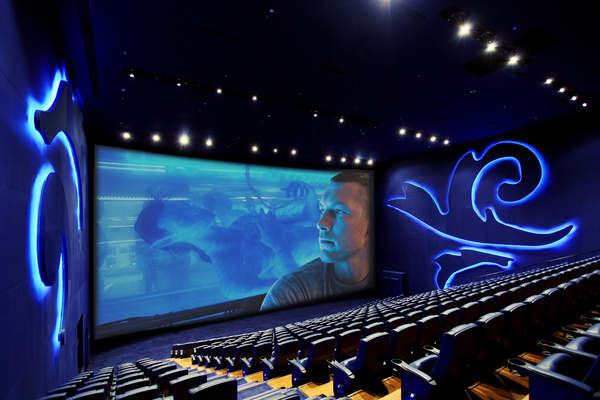
Unlike traditional cinema screens, an IMAX screen is:
- Significantly larger (often floor-to-ceiling and wall-to-wall)
- Slightly curved for immersive viewing
- Paired with dual 4K laser projection systems
- Equipped with a powerful 12-channel surround sound system
When people search for terms like “IMAX vs standard,” “IMAX screen size,” “IMAX format meaning,” or “Is IMAX worth it?” they’re really asking whether the difference is noticeable.
It is.
IMAX vs Standard Theater: What’s the Real Difference?
Here’s the blunt truth: not all IMAX experiences are equal. There’s real IMAX (70mm or IMAX Laser) and there’s “LieMAX” (retrofit digital screens that are only slightly bigger than standard).
The main differences:
- Screen Size
IMAX screens can be up to 75 feet tall. Standard screens? Much smaller and flat.
- Aspect Ratio
IMAX uses an expanded aspect ratio (1.43:1 or 1.90:1), meaning you literally see more image vertically. In some films, up to 26% more picture.
- Projection Quality
IMAX Laser projection provides higher brightness, better contrast, and deeper blacks.
- Sound System
IMAX sound is calibrated per theater. It’s louder, cleaner, and more spatially precise.
If you’re Googling “best way to watch blockbuster movies” — IMAX is usually the answer.
Directors Who Shoot for IMAX

Notable IMAX advocates include:
-
Christopher Nolan – Shot large portions of The Dark Knight, Interstellar, and Oppenheimer using IMAX 70mm cameras.
-
Denis Villeneuve – Designed Dune and Dune: Part Two for IMAX immersion.
-
James Cameron – Pushed IMAX 3D technology with Avatar.
When a movie is “Filmed for IMAX,” it means scenes were specifically composed to maximize the expanded aspect ratio and screen size.
If you’re searching for “best movies to watch in IMAX,” these directors dominate the list.
Is IMAX Worth It?
Let’s be rational.
If you’re watching:
-
A dialogue-heavy indie drama → Probably not necessary.
-
A CGI-heavy blockbuster → Absolutely.
-
A visually epic sci-fi or war film → IMAX is unmatched.
The IMAX ticket price is usually 20–40% higher than standard screenings. The real question isn’t price. It’s: Does the film benefit from scale?
For movies like:
-
[Oppenheimer]https://moviesfield.com/oppenheimer-returns-to-watchlists-as-nolans-oscar-winner-finds-new-life-on-vod-and-the-odyssey-looms/)
IMAX transforms the viewing experience.
For a rom-com? Save your money.
IMAX 70mm vs IMAX Digital
This is where film nerds get intense.
IMAX 70mm
-
Uses massive film reels
-
Highest resolution possible in cinema
-
Extremely rare (few theaters worldwide)
IMAX Digital / IMAX Laser
-
Dual 4K projection
-
Brighter and more consistent
-
More common globally
When audiences searched “IMAX 70mm near me” during the release of Oppenheimer, theaters sold out weeks in advance. That tells you everything.
Final Verdict: Should You Choose IMAX?
Here’s the no-BS conclusion:
IMAX is not marketing hype — when it’s done properly.
But you must check:
- Is it real IMAX or a smaller digital retrofit?
- Was the movie filmed for IMAX?
- Is it visually ambitious enough to justify it?
If your answer was yes, IMAX is the superior cinematic experience.
If not, then the standard or Dolby Cinema may be more cost-effective.
Cinema is about immersion. IMAX maximizes immersion.
And in a streaming-dominated era where people ask, “Why go to theaters anymore?” — IMAX is the strongest argument the big screen still has.