
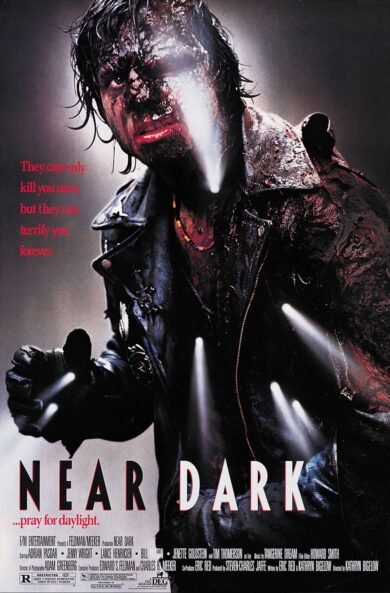
Information
tl;dr
Quick verdict in one line
“Near Dark” reinvents the vampire genre with a gritty, unexpected blend of horror and Western aesthetics, skillfully exploring themes of identity and choice.
Who will enjoy this movie most
Fans of unconventional vampire films will find much to appreciate in “Near Dark.” It’s for those who enjoy a mix of horror and authentic storytelling that subverts genre conventions, rather than adhering to them.
Does Near Dark’s story and pacing hold up?
What works in the plot
The narrative cleverly intertwines elements of classic Westerns and vampire lore, creating a sense of isolation and danger that permeates the film. The juxtaposition of the dusty, sun-scorched landscapes with the dark, claustrophobic interiors emphasizes the tension between the characters’ desires and their predatory instincts. The film navigates themes of humanity versus monstrosity, making the characters’ moral dilemmas palpable and resonant. As the vampires attempt to engage in some form of normalcy while being utterly outside societal norms, the film sharpens its commentary on what it means to be human in inhuman circumstances.
Where the pacing slows or speeds up
While the film keeps a brisk momentum, there are points where the pacing becomes uneven. The transition from seduction to violence can feel rushed, leaving some key character motivations unexplored. This lack of depth in those moments detracts from the emotional weight later in the story. Conversely, some quieter scenes linger perhaps longer than necessary, which could frustrate viewers anticipating a more consistent rhythm. Despite these fluctuations, the overall cadence reflects a tension that aligns well with its themes, alternating between frenetic action and introspective pauses.
Are the performances convincing?
Standout performances to watch for
Bill Paxton delivers a memorable performance as the anarchic vampire, Severen, embodying a sense of chaotic energy that perfectly contrasts with the film’s underlying tensions. His embodiment of the thrill and danger of vampirism immerses the audience in the seductive yet unsettling dynamics of his character. Lance Henriksen as the leader, Jesse, brings a weariness that suggests an ancient burden, imbuing the role with a tragic depth that resonates throughout the film. The chemistry among the cast ultimately enhances the unsettling nature of their interactions, threading complexity and nuance into their performances.
How believable the characters and relationships feel
The relationships amongst the characters feel raw and unfiltered, which adds to the film’s overall impact. The tension between love, betrayal, and survival amplifies the emotional stakes, making the viewer invested in their fates. The authenticity comes from the multifaceted portrayals; for instance, the evolving bond between Caleb and Mae is compelling, rooted in both attraction and fear. However, certain character dynamics could benefit from deeper exploration. While the film establishes likable, relatable characters, some interactions, particularly those pertaining to the group’s backstory, lack sufficient depth, pulling them back from fully realized, believable arcs. The complexity of their ties elevates the film, yet a richer examination could have made their struggles even more poignant.
How does the direction and tone affect the experience?
The film’s atmosphere and visual style
Kathryn Bigelow’s direction in “Near Dark” creates a palpable sense of place, immersing viewers in a world where shadows loom large and the sun feels both lifegiving and deadly. The cinematography is a deliberate dance between light and dark, with wide shots capturing the stark beauty of desolate landscapes reflecting themes of alienation. The use of night as a canvas for the action imbues each frame with an unsettling stillness, punctuated by visceral bursts of violence that feel both shocking and warranted. This careful balance cultivates an atmosphere rife with tension, where beauty and horror coexist. The muted, gritty color palette further enhances this mood, invoking a sense of nostalgia while grounding the film in a lived-in reality that contrasts sharply with its supernatural elements.
How the director balances horror, romance, and western elements
Bigelow juggles multiple genres with an innate understanding of their conventions while also challenging them. The film’s Western influences are unmistakable, with themes of loyalty, freedom, and survival echoing traditional Western motifs. Yet it’s the intertwining of horror and romance that makes “Near Dark” truly unique. The romance between Caleb and Mae is not just a backdrop but a crucial aspect that complicates the horror elements. Their relationship plays out against a tapestry of impending doom, creating a tension that is both romantic and threatening. Bigelow ensures that the horror does not overshadow the emotional stakes. The moments of intimacy are grounded, lending weight to the overall narrative. When the film shifts into terrifying territory, it does so with a sense of purpose, reminding viewers of the stakes that love entails in a world devoid of moral clarity.
Is it scary or more stylish thriller?
The type and level of horror or violence
“Near Dark” walks a fine line between horror and thriller, employing violence that is both stylized and impactful. The bloodshed isn’t gratuitous; instead, it serves a narrative purpose, highlighting the brutal reality of vampirism. The scares arise less from traditional jump scares and more from the foreboding atmosphere and the characters’ psychological unraveling. When violence erupts, it does so with an immediacy that shocks, grounding the viewer in the characters’ absolute peril. This method of storytelling elevates the film beyond mere horror, allowing it to explore the darker aspects of human nature while also providing a commentary on isolation and belonging.
Who might find it intense or off-putting
Given its blend of horror intertwined with emotional complexity, “Near Dark” may resonate more with viewers who appreciate character-driven narratives rather than those seeking traditional scares. While some might find the intensity of the violent scenes daunting, others will appreciate how these moments reflect the chaos of vampiric existence. The film’s exploration of darker themes can disturb, particularly for audiences averse to the moral ambiguity of its characters. Those expecting a straightforward horror experience might be taken aback by the film’s introspective pacing and emotional depth. However, for viewers open to exploring the subtleties of fear in a character-driven context, “Near Dark” provides a compelling journey through fear, love, and survival.
Is Near Dark dated or still fresh today?
Practical effects, production design, and 1980s feel
The practical effects in “Near Dark” hold up remarkably well, showcasing a commitment to craftsmanship that is often lost in today’s CGI-heavy landscape. The use of practical effects lends a visceral authenticity to the vampire transformations and violent encounters, grounding the film in a tangible reality. Its production design captures the raw grit of rural America in the 1980s, with settings that evoke a sense of forgotten history. The film’s aesthetic is unmistakably tied to its time, yet this only adds to its charm, fostering a nostalgic appreciation for a bygone era while maintaining a timeless quality in its themes and character dynamics.
Themes and moments that still land
“Near Dark” delves into timeless themes such as identity, belonging, and the struggle between personal desire and societal norms. These explorations resonate just as powerfully today as they did upon release. The internal conflict faced by Caleb, torn between his human instincts and the pull of his vampire nature, offers a poignant reflection on the struggle for self-acceptance. The moral ambiguities at play—the characters’ attempts to forge family bonds amidst their predatory existence—continue to echo in contemporary discourse on what it means to be human. Moments of connection and broken trust linger long after the credits roll, making “Near Dark” not just a cult classic, but a relevant dialogue on the nature of love and monstrosity that still captivates modern audiences.
Is Near Dark worth rewatching?
What rewards repeat viewings
Revisiting “Near Dark” unveils layers that may go unnoticed during an initial viewing. The intricate relationships between characters display a depth that becomes more apparent when you’re no longer distracted by the film’s rapid pacing and stylistic choices. Each subsequent watch allows the subtle nuances in dialogue and interaction to resonate with greater clarity. The moral complexities and the characters’ internal struggles with their vampiric identities emerge as a poignant commentary on existential dilemmas, revealing how richly crafted their arcs truly are. Additionally, Bigelow’s directorial touches, such as visual motifs and thematic callbacks, gain significance, enriching the experience and inviting analysis that deepens appreciation for the film’s artistry.
How many times viewers typically get something new
While the film’s immediate impact is striking, it’s not uncommon for viewers to find something new with each rewatch, typically yielding fresh insights after two or three viewings. The darkness of the film’s motifs can often obscure subtler gems. Themes of loyalty, fear, and love become increasingly complex, transforming the experience from a straightforward genre viewing into a multifaceted exploration of the human condition. It’s a film that rewards patience and consideration, making it suitable for viewers who appreciate dissecting character dynamics and thematic constructs over time.
What are the biggest strengths and weaknesses?
Key strengths that sell the movie
One of the standout strengths of “Near Dark” is its exceptional blend of genres that shifts away from familiar vampire tropes. Bigelow deftly employs the aesthetics of the Western to frame the story, enhancing the themes of isolation and lawlessness inherent to both genres. The visceral, raw performances bolster the material, allowing viewers to engage with the characters on a personal level. Furthermore, the film’s atmospheric cinematography creates a hauntingly beautiful contrast between the starkness of the landscape and the darkness of its characters’ struggles. This deliberate crafting evokes a genuine emotional response, capturing what it means to be trapped in a cycle of violence and longing. This ability to transcend mere genre classification speaks volumes of its enduring relevance and impact.
Main weaknesses to be aware of
Despite its merits, “Near Dark” is not without flaws. The film’s pacing can at times hinder its narrative flow, leading to moments where emotional beats feel rushed or inadequately developed. Several character arcs, particularly within the supporting cast, lack the depth necessary to elevate their motivations to the forefront, leaving audiences wanting more development to truly understand their actions. Additionally, the film’s tonal shifts between romance, horror, and Western elements may come off as jarring to some viewers, diluting its overall impact. While Bigelow’s ambition is commendable, it occasionally results in a film that feels uneven in its storytelling ambitions.
Who is this movie really for?
Fans and viewers most likely to enjoy it
“Near Dark” will resonate most with viewers who enjoy genre-defying films or those seeking a fresh take on vampire lore. Fans of horror that emphasizes emotional stakes over pure jump scares will appreciate the film’s intricate character studies and moral dilemmas. Those who admire Kathryn Bigelow’s previous work, infused with strong female characters and complex narratives, will find much to admire here. Additionally, cinephiles who appreciate the interplay of different genres and are open to films that demand reflection will derive deeper meaning from repeated viewings.
Who should probably skip it
Conversely, those looking for a straightforward horror flick might leave feeling dissatisfied. Viewers who prefer traditional vampire films laden with conventional scares could find “Near Dark” too slow, detached, or contemplative for their tastes. If one’s expectations center around an action-driven narrative rather than a subtle exploration of identity and morality, this film may feel at odds with their viewing preferences. Moreover, audiences averse to moral ambiguity or the darker themes of love intertwined with predation may not connect with the film’s core messages, ultimately rendering it less appealing for them.
Practical details: runtime, tone, and expectations
Runtime and how that affects pacing
“Near Dark” runs for a sleek 94 minutes, but its brevity might mislead viewers expecting a fast-paced spectacle. The runtime compacts its narrative into a form that demands intensity from both the characters and the audience. While this tight duration fosters moments of urgency, it also contributes to pacing challenges, especially in emotional scenes that could benefit from a longer exploration of character motivations. Consequently, some transitions feel abrupt, a potential drawback for those seeking a deeper connection with the characters’ struggles. The film’s momentum fluctuates, pulling viewers into exhilarating highs only to drop them into languid moments that can hinder immersion. The brisk runtime can serve as an asset in maintaining tension, yet it occasionally comes at the cost of fully capturing the weight of its emotional beats.
Mood, trigger notes, and what a first-time viewer should expect
Expect an atmosphere thick enough to cut with a knife, where the joy of discovery intertwines with a palpable sense of dread. The film’s mood shifts between seductive allure and brutal violence, each framing the vampire lore in a manner that feels both fresh and unsettling. First-time viewers should brace themselves for a rollercoaster of emotions—moments of tenderness exist alongside visceral horror that challenges the traditional boundaries of the genre. The gradual reveal of themes related to identity, love, and moral ambiguity invites contemplation long after the credits roll. However, it’s vital to acknowledge that this complex blend might be jarring for those unprepared for its intensity and darker undercurrents. “Near Dark” is less a conventional fright fest and more a nuanced exploration of what it means to give into one’s primal instincts. Hence, those looking for a standard vampire flick should recalibrate their expectations before diving into Bigelow’s haunting vision.
FAQs
Is Near Dark a vampire movie or something else?
“Near Dark” undeniably situates itself within the vampire genre, but to label it simply a vampire movie would be reductive. This film transcends traditional boundaries through its unique intermingling of Western motifs and horror elements. Instead of adhering to the usual tropes, it reimagines the mythos of vampirism, anchoring it in themes of desperation, survival, and the moral complexities of predation. The film subverts expectations by presenting vampirism not just as a supernatural affliction but as a metaphor for isolation and otherness. It’s a probing character study that enhances its chilling narrative rather than relying solely on genre conventions, thus inviting viewers to engage with deeper philosophical questions about humanity.
Where can I watch Near Dark right now?
Currently, “Near Dark” can be streamed on various platforms, including Hulu for those with subscriptions. Additionally, it’s often available for rent or purchase on digital storefronts like Amazon and Google Play, making it relatively accessible for viewers interested in experiencing this cult classic. For fans of physical media, Blu-ray and DVD options are readily available and can offer added features that enrich the viewing experience. It’s a film worth seeking out, as the visceral experience of its visual and auditory storytelling is best appreciated on a larger screen, enhancing Bigelow’s masterful direction.