
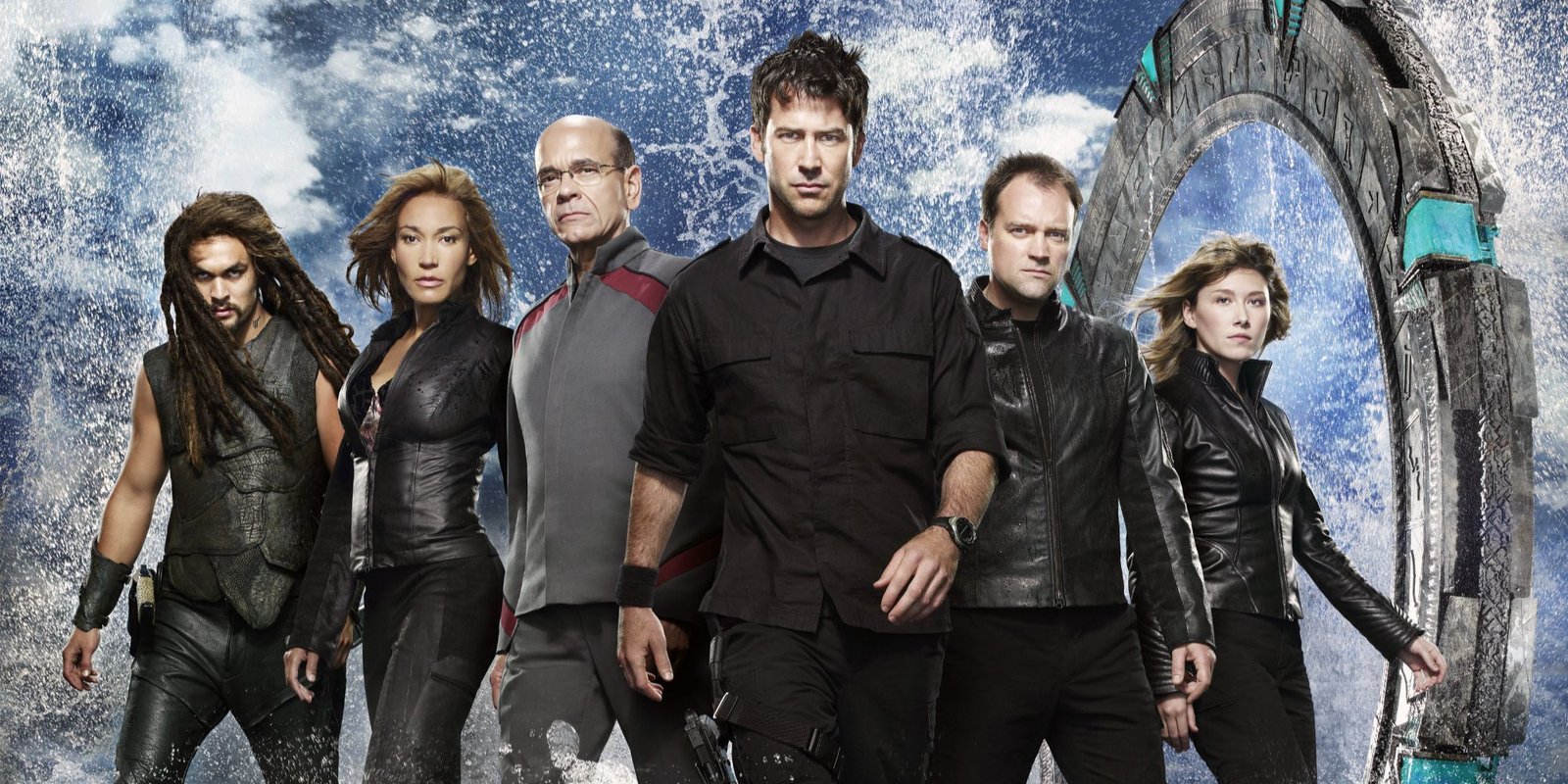
A franchise born in 1994 that kept expanding
Stargate began as a feature film in 1994 and quickly grew into one of sci‑fi television’s enduring universes. The small silver screen experiment evolved into Stargate SG‑1 in 1997, a series created by Brad Wright and Jonathan Glassner that ran for ten seasons and built a dedicated fanbase. From there the franchise branched outward into multiple spin‑offs and ancillary projects, creating a decades‑long continuity centered on the premise of wormhole portals between worlds.
Notable entries in the franchise include:
- Stargate SG‑1 (1997–2007) — the long‑running TV series that established much of the mythology.
- Stargate Atlantis — introducing a new team and setting, with Jason Momoa as Ronon Dex and Joe Flanigan as John Sheppard.
- Stargate Universe — a darker, serialized take that followed a ship stranded far from home.
- Stargate Origins — a web/streaming prequel exploring the early mythology.
- Stargate Infinity — an animated series aimed at younger viewers.
- Direct‑to‑video films Stargate: The Ark of Truth and Stargate: Continuum, which extended SG‑1’s storyline.
On the casting front, the TV adaptation of the franchise diverged from the original film: Kurt Russell’s film role of Col. Jack O’Neil was reimagined for television as Richard Dean Anderson’s Jack O’Neill, and James Spader’s film role of Dr. Daniel Jackson was filled by Michael Shanks for the series.
The Prime Video revival: an official reboot and new chapter
In November 2025, Amazon MGM Studios officially greenlit a new Stargate series for Prime Video, billed as “a new original series that begins a bold new chapter in the iconic science fiction franchise.” The project is intended as an exclusive streaming offering on Prime Video worldwide. Details about tone, cast, and plot have been deliberately scarce so far; the studio describes the effort as a fresh entry rather than a simple remake or continuation of a single series.
Martin Gero — who previously worked on Stargate Atlantis in a producing capacity — is the creator behind the new iteration. His involvement signals a connection to the franchise’s television DNA, even as the series aims to chart new territory.
Writers’ room activity and Joe Flanigan’s involvement
A key signal that development is moving ahead is confirmation that a writers’ room is active. Joe Flanigan, who played Major John Sheppard on Stargate Atlantis, revealed in a recent interview that series creator Martin Gero invited him to visit the writers’ room in Los Angeles. Flanigan said:
“Martin Gero called me and he said, ‘Why don’t you drop by the writers room here in LA?’ So I think I’m going to on Wednesday. But there’s a lot of NDAs involved in that. So don’t expect me to be able to give you any information.”
Flanigan’s participation—whether as a consultant, recurring cast member, or simply a fan stakeholder—underscores that the reboot’s creative team is engaging with legacy talent. At the same time, the presence of NDAs and tight secrecy around writers’ room discussions indicate the studio is protecting story details and creative direction during early development.
Why the writers’ room matters
A writers’ room is where a modern serialized series takes shape: arcs are plotted, character maps are drawn, and the balance between franchise legacy and new ideas is negotiated. For a property like Stargate, a thoughtful writers’ room is particularly important because:
- The franchise spans different tones and continuity threads (from episodic SG‑1 adventures to serialized Universe drama).
- Fan expectations run high for respect of established lore while also welcoming creative reinvention.
- Writing decisions will determine whether the series uses returning characters, introduces an entirely new cast, or blends both approaches.
The current activity suggests the reboot isn’t just a nostalgia play; it’s being developed with an eye toward long‑term storytelling.
What fans and newcomers can reasonably expect
While specifics remain undisclosed, a few logical expectations emerge from the announcements and the production context:
- A modernized aesthetic and production values matching current streaming sci‑fi.
- Potential inclusion of legacy elements—characters, concepts, or references—to honor the franchise’s history while enabling new viewers to jump in.
- A serialized narrative structure that can sustain multiple seasons, given the investment by Amazon MGM Studios.
- A creative approach that seeks to expand the Stargate mythos rather than retread old beats.
It’s worth noting that “new original series” suggests the project may not be a direct reboot of any single past show; it’s positioned as a fresh entry point that could build its own identity within the established universe.
Challenges and opportunities for the revival
Rebooting a long‑running franchise comes with both pitfalls and advantages:
- Challenges: balancing fan service with accessibility, integrating legacy continuity without requiring deep franchise knowledge, and ensuring the tone appeals to today’s viewers.
- Opportunities: reintroducing Stargate to a global streaming audience, leveraging modern VFX to realize big‑budget concepts, and exploring new thematic directions—political, scientific, and philosophical—relevant to contemporary viewers.
Having creators and producers with prior Stargate experience involved—while keeping room for new voices—can help the series thread that needle.
Where things stand now and what to watch for
- Development status: Writers’ room active; early stages of scripted development.
- Studio backing: Amazon MGM Studios greenlit the project in November 2025.
- Streaming: Will be exclusive to Prime Video worldwide.
- Talent involvement: Joe Flanigan has acknowledged engagement with the writers’ room; Martin Gero is leading the project.
At this stage there is no announced release date, confirmed main cast, or episode count. Fans should expect periodic updates as the writers’ room progresses, casting decisions are made, and the production moves from scripting into pre‑production and filming.
Why this matters to sci‑fi viewers
Stargate occupies a special place in genre television: it combined adventure, mythology, and procedural elements across multiple shows and formats. A successful reboot could reintroduce the franchise to a new generation while offering longtime viewers an evolution of the universe they know. The combination of legacy involvement, studio investment, and an active writers’ room makes this one of the more closely watched sci‑fi revivals in development today.
Stay tuned for official casting announcements, trailers, and production updates as Prime Video and the creative team reveal more.