
Quick take: a lean, twisty heist for the crypto age
Prime Video’s Steal is a compact, six-episode crime drama that modernizes the heist formula by replacing bank vaults with high-stakes cryptocurrency theft. Anchored by a committed lead turn from Sophie Turner, the series moves briskly, layers moral ambiguity onto its central crime, and has earned generally favorable reviews — currently holding an 80% critical rating on Rotten Tomatoes. While not every twist lands perfectly, the show’s momentum and thematic bite make it hard to stop watching.
Premise and opening setup
Steal opens on an ordinary morning at Lochmill Capital, a City investment firm where vast sums move through employee desktops rather than through physical safes. Zara (Sophie Turner) arrives for work hungover after a night out, only to witness the aftermath of a staggering cyber-raid: £4 billion has been siphoned away. What looks like a clean digital robbery quickly unravels into a tangled web of insider deals, personal desperation, and institutional secrecy.
On the investigative side, DCI Rhys Covac (Jacob Fortune-Lloyd) and investigator Darren Yoshida (Andrew Koji) are assigned to the case. Meanwhile Zara and her colleague and close friend Luke (Archie Madekwe) try to patch their lives back together — though their involvement in the heist proves deeper than it first appears.
Characters and performances
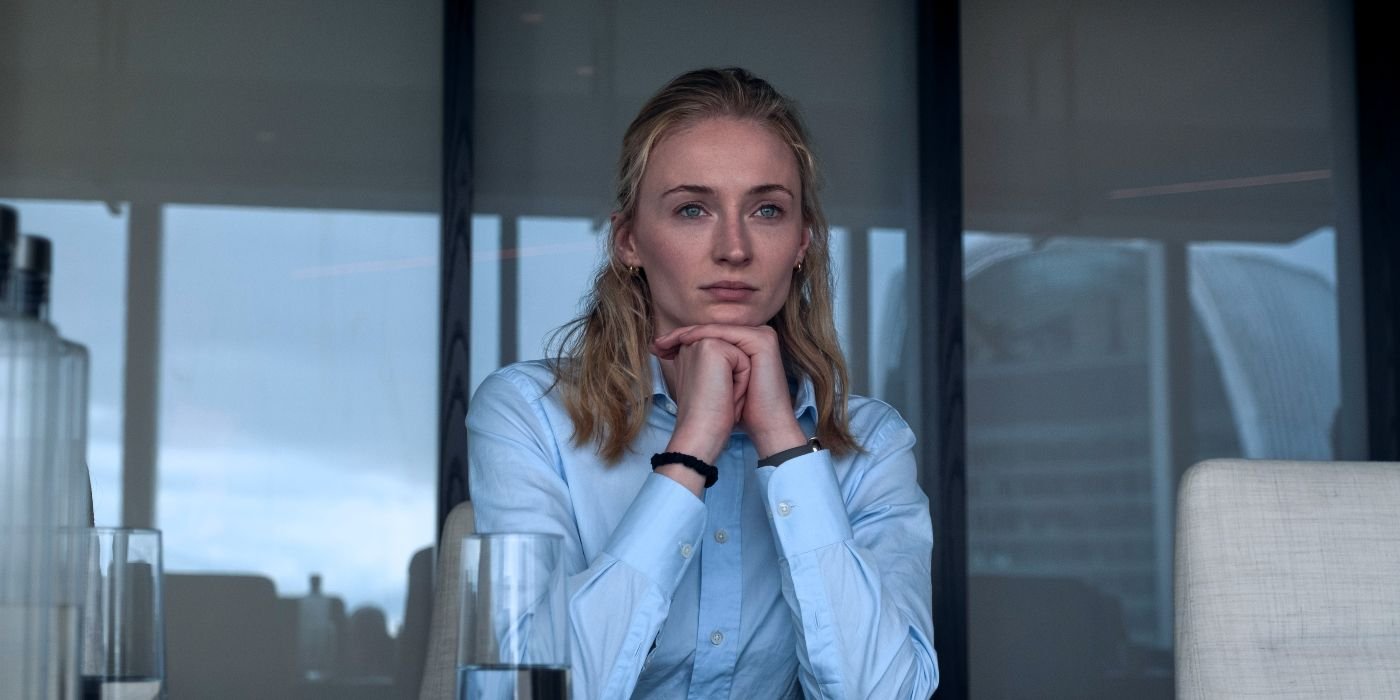
Sophie Turner carries the series as Zara, a character who’s both sympathetic and culpable. Turner’s performance balances wryness with vulnerability, making Zara’s choices feel driven by circumstance rather than caricatured greed. Archie Madekwe provides a convincing counterpoint as Luke, whose ambitions and frustrations help motivate the heist’s human element.
Jacob Fortune-Lloyd’s Rhys is written as a driven investigator with personal flaws — including gambling problems that complicate his judgment — while Andrew Koji’s Darren adds another procedural angle and steady presence. The ensemble is populated with characters who each harbor secrets, which keeps the narrative tension high across episodes.
Twists, pacing, and storytelling
Steal wastes little time in revealing that the robbery involves insiders; the first episode establishes Zara and Luke’s complicity early on. From there, the show piles on revelations: hidden motives, institutional cover-ups, and unexpected romantic entanglements — notably between Rhys and Zara, which complicates both the emotional stakes and the investigation.
The series thrives on momentum. Episodes are tightly plotted and designed to propel viewers forward, handing out information and misdirection in measured doses. Not every twist lands with equal impact, and a couple of late turns feel telegraphed, but the show’s consistent pacing and willingness to take risks keep it engaging.
Themes: greed, inequality, and the machinery of finance
Beyond its plot mechanics, Steal leans into topical themes. Creator Sotiris Nikias (credited as S.A. Nikias) draws on his own experience working in finance to imagine how modern trading floors — awash with pensions and routed funds — could be vulnerable to large-scale theft. The series asks who benefits and who loses when money is abstracted into code and accounts: the stolen sums aren’t anonymous cash but funds tied to ordinary people’s pensions and livelihoods.
That moral complexity is central to the show’s appeal. Characters aren’t painted as simple villains or saints; motivations range from personal desperation to ideological pushback against late-stage capitalism. These shades of gray give the heist more weight than a straight adrenaline vehicle would.
Production and creative team
Steal is directed across the series by Hettie Macdonald and Sam Miller, whose work helps maintain a sleek, contemporary visual tone. Nikias’s scripts emphasize character-driven revelations as much as procedural beats, and the production design underscores the cold, high-tech world where a few keystrokes can move billions.
The six-episode format proves advantageous: it’s long enough to develop relationships and subplots but short enough to avoid filler. That structural discipline keeps the show focused and binge-friendly.
Critical reception and what viewers are saying
Critics have generally responded positively, pointing to Turner’s central performance and the show’s propulsive plotting as highlights. Rotten Tomatoes currently lists Steal at around 80% among critics, reflecting strong if not unanimous enthusiasm. Common critiques center on the occasional overcomplication of the plot and a handful of twists that don’t fully satisfy. Still, many reviewers and viewers praise the series for refreshing the heist genre with timely stakes and moral nuance.
Where Steal fits in Sophie Turner’s trajectory
Steal marks another high-profile television role for Sophie Turner and continues her collaboration with Prime Video. Her portrayal of Zara underscores her range in anchored, adult drama — and fans will soon see her again on the streamer in the upcoming Tomb Raider series, where she is set to take on the role of Lara Croft alongside established genre names.
Final verdict
If you’re drawn to smart, fast-moving thrillers that interrogate contemporary finance as much as they deliver suspense, Steal is likely to satisfy. It’s not flawless, but its tight runtime, moral questions, and a strong lead performance make it one of Prime Video’s more compelling new offerings.