
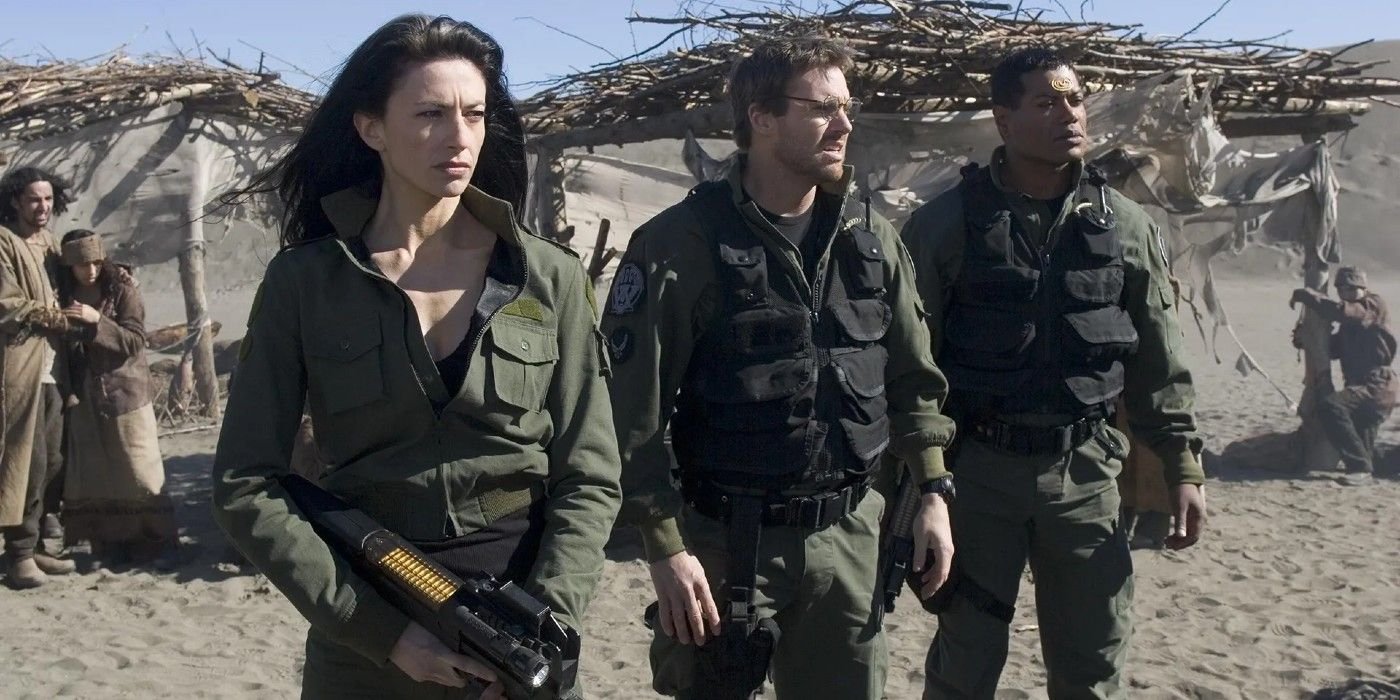
How a Costly Pilot Sparked Something Much Bigger
When Stargate SG-1 premiered, it carried an unusual burden: translate a feature-film mythos into a long-running television show and do so in a way that would appeal to viewers who’d never seen the movie. Studios noticed the potential. Showtime committed a two-season order and allocated a generous $6 million for the pilot, resources that allowed creators to expand the movie’s premise into a serialized format and cast new actors to inhabit familiar roles.
Recasting and Reframing: From Movie to Television Team
Adapting a theatrical property for TV required more than just replicating characters. The pilot needed to reintroduce the Stargate — an interstellar teleportation device — as the engine for episodic storytelling, and it had to establish a team dynamic audiences could follow week to week.
- The show recast the film’s central figures: Richard Dean Anderson stepped into the role of Jack O’Neill, and Michael Shanks took on Daniel Jackson. Their chemistry anchored the program.
- New regulars were introduced who became franchise mainstays: Amanda Tapping as Captain Samantha Carter and Christopher Judge as Teal’c, the latter a former servant of the parasitic Goa’uld. These additions widened the series’ tonal and thematic range, blending military procedure, scientific inquiry, and mythic conflict.
With a healthy pilot budget and a two-season runway, executive producers Brad Wright and Jonathan Glassner were able to develop a launch episode that both honored the source material and opened new narrative directions.
Building a Premise That Could Keep Going
The fundamental idea that made Stargate SG-1 television-friendly was simple: a network of gates provides instant access to other worlds. That premise turned the show into a platform for variety — different planets, different cultures, recurring antagonists — while also supporting longer arcs about alien politics, human origin stories, and the consequences of interstellar contact.
Wright and Glassner leaned into that flexibility. The gate’s existence created a believable reason for a small, NASA-like exploratory organization that sends teams to unknown worlds. Meanwhile, the conceit that the film’s Ra was not unique opened the door to an entire pantheon of alien antagonists modeled after human mythologies, giving the writers endless material to revisit and expand.
Growing Pains: Creative Changes and a Network Shift
SG-1’s production history was not without friction. Early creative choices and network expectations led to disputes over tone and content — notably Showtime’s requests for nudity that showrunners resisted and critics found unnecessary. By the third season, Jonathan Glassner stepped back from showrunning duties, shifting the creative leadership.
After five seasons on Showtime, the network declined to continue the series. Sci-Fi Channel (later rebranded as SyFy) acquired SG-1 and carried it through the remainder of its run. The show ultimately spanned ten seasons, concluding in 2005, and proved resilient across leadership changes and a network move.
From Long-Running Series to Full Franchise
The success of SG-1 did more than fill schedule slots; it spawned an entire franchise. Plans that began as a potential feature film evolved into new television spinoffs and expanded productions:
- Stargate Atlantis: Conceived when creators retooled earlier film plans into a new series.
- Stargate Universe: A later television entry with a distinct tone and cast.
- Stargate Infinity: An animated series aimed at younger viewers.
- Stargate Origins: A webseries exploring pre-series backstory.
- Two direct-to-home-media films created by the SG-1 team: Stargate: The Ark of Truth and Stargate: Continuum.
Not every franchise extension matched SG-1’s popularity or critical reception, but collectively they sustained Stargate as a recognizable science-fiction property for decades.
Legacy and the Path Forward
SG-1’s longevity rests on a few durable strengths: a flexible high-concept premise, a core ensemble that balanced humor and gravitas, and worldbuilding that allowed episodic adventures alongside serialized mythmaking. Those elements helped the franchise endure well beyond its original television lifespan.
The Stargate universe has continued to attract interest from modern platforms. A new television revival for Prime Video is in active development, with longtime franchise writer Martin Gero attached as showrunner and Brad Wright serving as a consulting producer. That combination of franchise veterans and fresh creative input suggests the reboot will draw on what made the original work — including the exploratory spirit first established in the pilot — while updating the franchise for contemporary audiences.
Why the Pilot Still Matters
“Children of the Gods,” the $6 million pilot that launched SG-1, did more than introduce a device and a cast. It set the parameters for a show that could explore new worlds, reimagine ancient myths as extraterrestrial encounters, and sustain a mix of standalone stories and long-form arcs. That structural clarity — the gate as a storytelling mechanism — is why a single pilot budgeted as a television launch helped seed a franchise that would persist for nearly 30 years.