
Information
tl;dr
Quick verdict in one sentence
Darren Aronofsky’s “The Fountain” is a visually stunning exploration of love and mortality that demands patience but ultimately rewards those willing to embrace its complexity.
Who will most likely enjoy this film
Fans of avant-garde cinema and meditative storytelling will find much to appreciate in its ambitious narrative structure and philosophical underpinnings. However, those seeking a linear plot and conventional character arcs may find themselves disengaged by its unconventional approach.
Does the story and pacing hold up?
How the film’s three timelines affect momentum
“The Fountain” intertwines three distinct timelines, each exploring themes of love, loss, and the quest for eternity. This non-linear narrative effectively echoes the cyclical nature of the film’s central themes, but it also poses challenges to pacing. While some viewers may feel invigorated as they piece together the connections, others might find the rhythm disjointed, with emotional crescendos sometimes feeling diluted as the film jumps between centuries. The moments set in the past, present, and a speculative future create a tapestry that suggests unity amidst chaos; this ambition, while intriguing, demands active engagement to fully appreciate its intricacies.
Will the structure feel confusing or rewarding for most viewers
For audiences accustomed to straightforward storytelling, “The Fountain” might come off as perplexing or even frustrating. The film challenges viewers to navigate its philosophical inquiries rather than simply enjoy a plot, making it a polarizing experience. However, those willing to delve deeper are likely to find a richly rewarding experience, unlocking layers of meaning in the connections between the characters and their struggles across time. Ultimately, the film’s structure fosters a profound sense of reflection, rewarding those who invest the mental energy needed to navigate its layered narratives.
Are the performances and characters convincing?
How the leads sell the emotional stakes
Hugh Jackman and Rachel Weisz deliver performances that anchor the film’s emotional gravity. Jackman navigates his multi-faceted roles with an intensity that makes his journey feel palpable, whether he’s a distressed husband or a tormented figure of cosmic ambition. Weisz complements his emotional arc beautifully, embodying both tenderness and strength across their shared scenes. Their chemistry resonates powerfully, making their love story feel both urgent and tragic. Despite the film’s abstract qualities, their performances ground its lofty themes, engendering genuine emotional investment.
Do supporting characters add depth or feel underused
While the leads shine, many supporting characters, like Ellen Burstyn’s role as the mother figure, often feel underdeveloped. Their contributions are significant but sometimes lack the nuance to leave a lasting impact, serving more as thematic vessels rather than fully fleshed-out individuals. This uneven character development can detract from the overall experience, as the strongest emotional beats often hinge on the interactions among the leads. The film occasionally overlooks opportunities to deepen the narrative through its secondary characters, leading to a sense that certain relationships—promising in premise—remain frustratingly superficial.
How does the direction and overall execution land?
What the director’s style brings to the material
Darren Aronofsky’s directorial approach is emblematic of his distinctive oeuvre: a harmonious blend of the visceral and the cerebral. In “The Fountain,” he invokes a dreamlike quality that mirrors the film’s exploration of love and mortality. Each scene is meticulously crafted, with a relentless focus on visual symbolism that amplifies the narrative’s weight. Aronofsky employs a rhythmic editing style and innovative transitions that evoke the cyclical nature of time—a central theme of the film. This insistence on visual storytelling rather than straightforward exposition invites viewers into a contemplative space, though it also risks alienating those not attuned to his meditative pacing.
Does the film feel deliberate or self-indulgent
While “The Fountain” is undoubtedly ambitious, its introspective nature occasionally flirts with self-indulgence. The slower, contemplative scenes, while elegant, may feel overly drawn out to viewers seeking a more traditional narrative engagement. Aronofsky’s tendency to favor grand ideas over linear storytelling creates a dichotomy; the film is both intellectually stimulating and emotionally distant at times. For those who appreciate cinema as a canvas for philosophical exploration, this deliberate pacing can feel intentional and rewarding. However, others may perceive it as an unnecessary indulgence, detracting from the emotional immediacy of the characters’ journeys. The line between thoughtful artistry and excessive abstraction is thin, and “The Fountain” bravely navigates it, albeit not without leaving some viewers disoriented.
Why do the visuals and sound matter here?
Cinematography, color palettes, and visual motifs
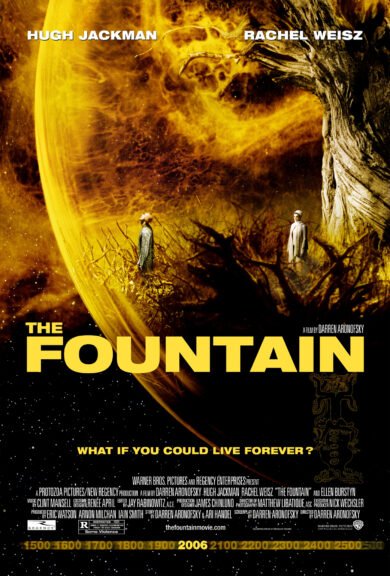
The visual landscape of “The Fountain,” crafted by cinematographer Matthew Libatique, stands as one of its most striking attributes. Libatique’s use of saturated colors and ethereal lighting creates a dreamlike aura that enhances the film’s themes. The interplay between warm and cold palettes serves to delineate the emotional landscape of each timeline, with earthy tones representing love and life, and cooler hues reflecting loss and despair. Visual motifs, such as the recurring imagery of trees and water, further symbolize growth, decay, and the nature of existence itself. Each frame is laden with meaning, and this rich visual storytelling transforms “The Fountain” into a visceral experience, inviting analysis of its deeper existential questions.
Music and sound design: atmosphere or distraction
Clint Mansell’s evocative score, complemented by the Kronos Quartet’s haunting contributions, plays a pivotal role in shaping the emotional atmosphere of the film. The music envelops the narrative, enhancing the poignancy of key moments while also heightening the sense of urgency and weight. It functions not merely as background but as an integral component of the storytelling, echoing the film’s themes of love and loss. However, there are instances where the score’s overwhelming presence threatens to overshadow the dialogues and subtle nuances of performances. This delicate balance between support and distraction can transform moments of contemplation into overwhelming emotional experiences, leaving viewers grappling with whether the intensity of the soundscape enhances or disrupts their engagement with the on-screen drama.
Does the emotional core and themes work?
Are the ideas about love, death, and obsession clear and moving
At its heart, “The Fountain” is an ambitious meditation on love, death, and the eternal quest for meaning in a transient world. The film deftly conveys the idea that love transcends time and death, embodied through Jackman’s characters, each navigating their struggles with mortality and the desire to save those they cherish. The emotional core resonates deeply, particularly in the moments where the characters confront their fears and desires. However, the film’s abstraction can make these moments feel distant or enigmatic, leading to a disconnect for some viewers. The clarity of its themes is often counterbalanced by complex visual metaphors, sometimes making it challenging to discern precisely what it’s trying to convey.
Does the film trade feeling for abstraction at any point
While “The Fountain” boldly engages with profound themes, it occasionally tiptoes into the territory of abstraction to the detriment of emotional connection. In diversifying its narrative structure, the film sometimes prioritizes lofty concepts over the raw immediacy of its characters’ experiences, which can leave emotional resonance feeling muted. Moments of intense sorrow and longing can be overshadowed by detours into philosophical musings that, while intellectually stimulating, detach viewers from the visceral stakes of the narrative. The film’s artistry is commendable, but it risks alienating those seeking a more grounded emotional experience. It’s a balancing act between art and accessibility, and at times, “The Fountain” leans too far into the former, missing opportunities to anchor its weighty themes in more accessible emotional truths.
What are the biggest strengths and weaknesses?
Key strengths that make it worth watching
One of the most compelling strengths of “The Fountain” is its ambition—both visually and thematically. Darren Aronofsky explores profound concepts of love, death, and the quest for immortality through an intricate narrative structure. The film elevates its narrative through stunning visuals and an evocative score, creating an immersive experience that complements its somber themes. Hugh Jackman and Rachel Weisz deliver deeply felt performances that anchor the film’s emotional stakes, allowing viewers to invest in their journey despite the film’s abstract tendencies. The multifaceted portrayal of love, especially in the face of mortality, resonates with audiences who engage with its philosophical undercurrents. The visual motifs, such as the interplay of life and decay, further enhance its storytelling, inviting contemplation long after the credits roll.
Main flaws that might turn viewers off
Despite its ambitious vision, “The Fountain” is not without significant drawbacks. Its non-linear narrative can come across as confusing, alienating viewers who expect a more traditional storyline. Some may find the pacing too languid, with moments of introspection feeling unnecessarily drawn out, detracting from the film’s emotional impact. The abstraction at play often creates a barrier to emotional connection, leaving audiences grappling with complex imagery instead of fully engaging with the characters’ struggles. Supporting roles occasionally feel underdeveloped, leading to missed opportunities for deeper emotional resonance. Ultimately, while some viewers might appreciate the film’s artistic bravado, others may find it frustratingly enigmatic or overly pretentious, potentially diminishing their overall experience.
Who is The Fountain really for?
Types of viewers who will connect with it
“The Fountain” will resonate strongly with those who appreciate avant-garde cinema and philosophical storytelling. Viewers who enjoy films that challenge conventional narratives—like those by Terrence Malick or Wong Kar-wai—will likely find meaning in its layered exploration of love and existence. Fans of visual storytelling, where imagery speaks as loudly as dialogue, will be drawn to the film’s rich cinematography and thematic motifs. People who are open to introspection and can embrace a slow-burn narrative will connect with its emotional core, especially those grappling with existential questions of mortality and the search for meaning in life.
Who should probably skip it
Conversely, those who prefer straightforward narratives with clear resolutions may struggle to find satisfaction in “The Fountain.” Viewers seeking action-packed sequences or conventional romantic arcs will likely find themselves disengaged by the film’s deliberate pacing and abstract storytelling. The lack of clear character development for many supporting roles may deter audiences who value well-rounded narratives. Additionally, if you favor films that focus on plot progression over thematic exploration, you might not resonate with the film’s immersive but contemplative nature. For these viewers, “The Fountain” could feel more like an intellectual exercise than an emotional journey, resulting in a frustrating viewing experience.
Is The Fountain worth rewatching?
What you’re likely to notice on a second viewing
Rewatching “The Fountain” often reveals layers of meaning that may have been overlooked during the initial viewing. The intricate connections between the three timelines become more apparent, and the symbolism woven throughout the narrative gains depth with familiarity. Subtle foreshadowing and visual motifs may reveal themselves more clearly, enriching the viewer’s understanding of the characters’ motivations and the overarching themes of love and rebirth. One might also appreciate the film’s detailed craftsmanship, from the nuanced performances to the meticulous design choices that elevate its themes. The emotional depth tends to resonate more profoundly upon reflection, as viewers can more readily explore their personal interpretations of the film’s core ideas.
Best mood or setting for a rewatch
For a successful rewatch of “The Fountain,” viewers should aim for an environment conducive to deep contemplation. A quiet, dimly lit room can help create an atmosphere that allows for immersion in the film’s artistry without distraction. If possible, watching it with an audience that appreciates thoughtful cinema can spark discussions that deepen understanding and appreciation. Engaging with the film in a meditative state—perhaps with a freshly brewed cup of tea—can enhance the experience, inviting a willingness to embrace its complexities and ambiguities. Such an approach makes way for a more reflective engagement, allowing viewers to explore its profound themes in a way that might not have been possible during the first viewing.
FAQs
Is the film hard to understand the first time?
Yes, “The Fountain” can be particularly challenging to grasp on a first viewing. Its intricate narrative weaves together three timelines—each with its own emotional and philosophical weight—while tackling abstract concepts of love and mortality. This ambitious structural choice often results in moments of confusion; viewers may find themselves grappling with the connections between timelines and characters rather than immersing fully in the emotional stakes. The film demands active participation and reflection, which may alienate those accustomed to more straightforward storytelling. Yet, it’s precisely this complexity that invites deeper analysis, rewarding viewers who are willing to explore its profound layers. The film’s ambiguity is both a barrier and an invitation, leaving many to wonder if they have truly decoded its messages or merely scratched the surface.
Does the ending make sense and does it matter?
The ending of “The Fountain” is a culmination of its themes, though its clarity is often debated. It offers a visually and emotionally rich resolution that emphasizes the cyclical nature of love and existence, suggesting that death is not an end but a transition. However, the abstract style may leave some viewers feeling disoriented, questioning whether they fully understand the symbolism at play. Even if the specifics of the narrative threads come together in a way that may seem elusive, the emotional resonance remains powerful. Ultimately, the ending matters because it encapsulates the heart of the film’s exploration; it challenges viewers to reflect on their own perceptions of life, love, and loss. Those who engage with the film’s depth will likely find that the conclusion enhances rather than diminishes the overall experience, serving as a poignant reminder of the enduring nature of love amidst the inevitabilities of life.