
Spoiler warning
This story discusses plot points through Season 2, Episode 6 of The Pitt.
A quieter Fourth of July shift — until it isn’t
Season 2 of HBO’s The Pitt picks up with the familiar chaos of Pittsburgh Trauma Medical Center, only this time the early hours of a holiday shift begin deceptively calm. By Episode 6, titled “12:00 P.M.,” the pressure ramps back up: other hospitals are diverting patients because of a mysterious “Code Black,” one of the ED’s frequent boarders, Louie (Ernest Harden Jr.), flatlines, and staff veterans must navigate fraught reunions and professional strain.
Collider spoke with executive producers R. Scott Gemmill and John Wells — along with members of the cast — about why the new season takes the shape it does, how the production handled sensitive material, and what viewers can expect from the back half of the season.
Why the show jumps 10 months — Langdon’s return and lingering tension
The creative decision to set Season 2 about ten months after Season 1 was rooted in character logistics, Gemmill explains. The time jump allows Langdon’s return from rehab to feel earned and plausible: showrunners wanted to depict a realistic rehabilitation period rather than rush his comeback. That timeframe also creates room to explore the emotional fallout of his absence.
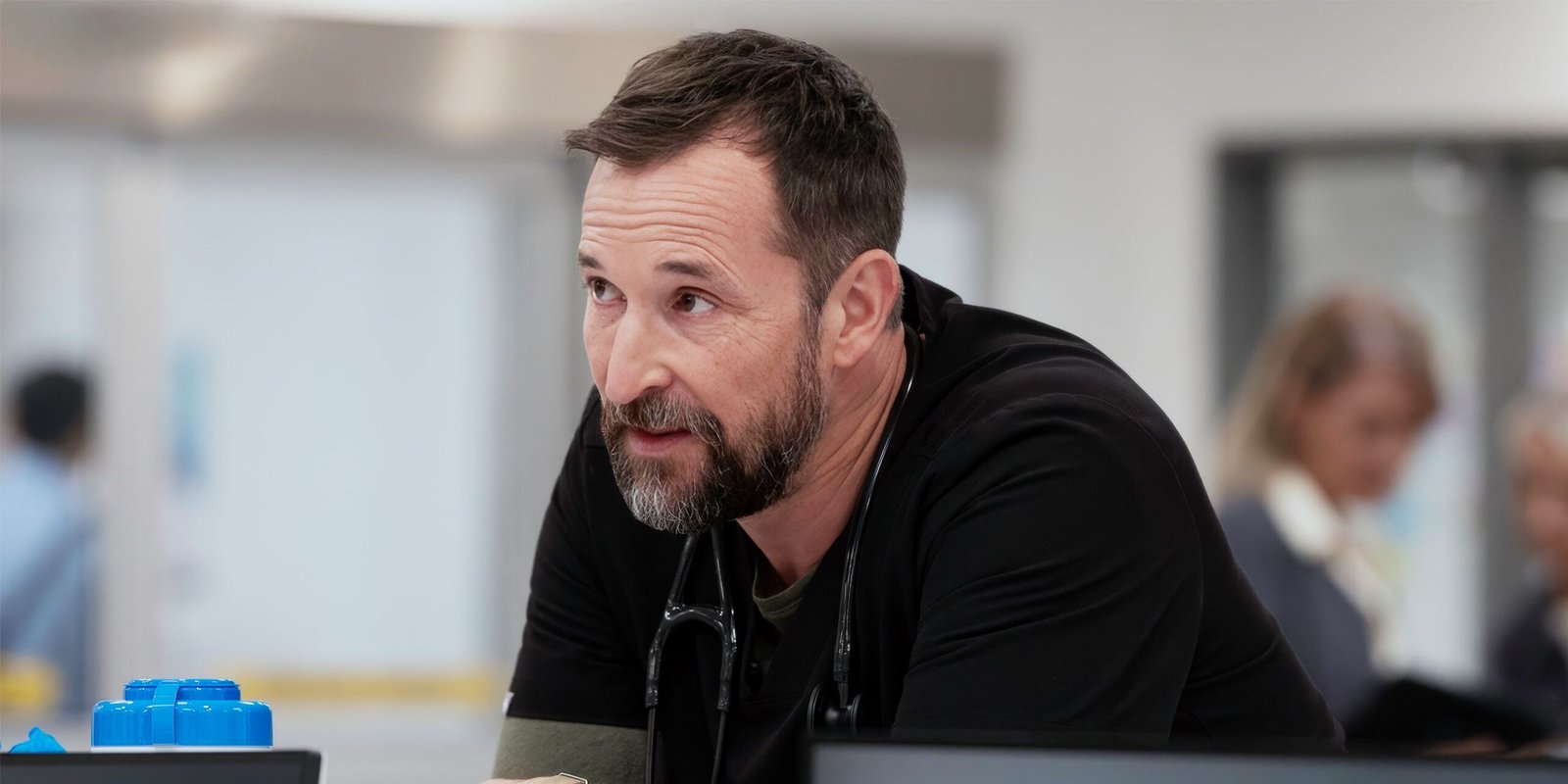
Wells notes that recovery doesn’t automatically grant a hero’s welcome. Characters who stayed behind — most notably Robby (Noah Wyle) — are angry and hurt. Robby feels betrayed by his former protégé, and that resentment simmers across early episodes, notably as they are forced to cooperate on a necrotizing fasciitis case. The gap in time raises another practical concern for Langdon: he’s left wondering whether prolonged absence has dulled hands-on clinical skills that don’t transfer easily outside the ER.
Working with an infant on set: a logistical puzzle
One of Season 2’s early storylines centers on an abandoned baby found in the ER bathroom. Filming infant scenes required careful planning and strict adherence to California law. Wells outlined the production realities: infants are heavily regulated and may only be on set for a limited window — roughly 20 minutes during the day — and permitted to work only during specific morning and afternoon blocks. To avoid wasted time, the crew rehearsed with a dummy baby, preblocked shots, and kept multiple infants available in case one would cry or sleep through required moments. On-set child welfare representatives time each session precisely; when the clock runs out, the infant must be removed immediately.
Those constraints shape how scenes are shot and how actors prepare: the infant-focused moments are compact, intensely rehearsed, and often filmed in a single, continuous pass.
Episode 6 shifts perspective to the nurses
Season 2 leans into the department’s often-underplayed backbone: the nursing staff and nurse practitioners. Gemmill stresses that nurses “run the ER” and are regularly underrepresented on medical shows, where doctors tend to receive the lion’s share of narrative focus. Episode 6 is told largely from the nurses’ point of view, deliberately highlighting their expertise, decision-making, and the emotional labor of emergency care. The choice reflects an effort to rebalance the storytelling and give long-working characters their due.
Gemmill also left the door open to future episodes that spotlight other supporting players, noting the writers will follow such detours when they arise organically from the core ensemble.
Nurse Dana returns — harder-edged after trauma
Katherine LaNasa’s Nurse Dana makes a welcome return this season, and viewers will notice a shift: her demeanor is sharper, more guarded. Wells confirmed this is intentional. After being the victim of an assault in Season 1, Dana’s wariness and readiness to defend herself inform her new posture at work. The show uses that arc to explore realistic consequences of trauma on front-line professionals without diminishing her competence.
Dr. Collins’ exit: teaching hospital realities and an open door
Tracy Ifeachor’s Dr. Collins is referenced early in the season as having taken a job in Portland and adopted a child. Gemmill framed that move as consistent with the series’ teaching-hospital environment: residents, med students, and even attending physicians will come and go as careers advance. While Collins’ departure provides emotional beats — Robby’s visible happiness that she’s getting what she wanted — the producers emphasize they keep options open. “Never say never,” Gemmill says about potential returns; turnover is simply part of the hospital ecosystem the writers are depicting.
No repeat of last season’s mass-casualty set piece — but expect complications
After Season 1’s large-scale mass-casualty storyline, fans wondered whether the show would revert to another singularly catastrophic event. Gemmill was explicit: the writers did not want to repeat that formula. Season 2 avoids another blockbuster disaster as its centerpiece. That said, both EPs warned the ER will still face moments that markedly increase stress and strain operations — “hiccups,” as Gemmill put it, that push the staff to their limits without resorting to contrived, once-a-season spectacle.
Wells — speaking with a touch of dark humor — rattled off hypothetical calamities (a building collapse, a plane crash, a sinkhole) before Gemmill reiterated their point: the season will feel intense, but in more grounded, less formulaic ways.
What this means for viewers
If the first six episodes are any indication, Season 2 of The Pitt deepens character arcs while broadening the show’s focus beyond headline-grabbing crises. Expect more attention on nursing staff and on how the hospital copes with everyday structural stresses, rather than staging another single dramatic catastrophe. At the same time, personal conflicts — especially the rift between Langdon and Robby — promise to keep the drama close to the core ensemble, even as new patients and medical mysteries arrive to test them.
For fans who worried the show might chase last season’s spectacle, the EPs’ message is clear: there will be friction and surprise, but the writers are steering away from repeating the same disaster-driven template.