
A careful musical reveal
After weeks of quiet, A Knight of the Seven Kingdoms finally lets Ramin Djawadi’s Game of Thrones theme land on its own terms — and the timing makes the moment resonate. Rather than lean on the franchise’s best-known musical cue from the start, the new HBO spinoff teases and defers it, reserving the familiar melody for a pivotal scene in Episode 4, “Seven.” That restraint transforms the cue from a nostalgic wink into an earned emotional beat.
Choosing when to call back the original score
HBO faced a choice with the franchise’s musical identity: reuse Djawadi’s instantly recognizable theme, which helped define Game of Thrones, or forge a wholly new sonic path. House of the Dragon opted to include the original score and an opening sequence closely modeled on the earlier series, a decision that created continuity but also invited direct comparisons. A Knight of the Seven Kingdoms has taken a different tack — largely relying on Dan Romer’s original score for the series’ smaller, more intimate scope — and only introduces Djawadi’s theme when it amplifies the story.
That restraint underscores a key distinction between the shows: unlike Game of Thrones and House of the Dragon, which sweep across many locations and dynasties, A Knight of the Seven Kingdoms is compact in both geography and cast. A thunderous franchise anthem felt less necessary for a series built around a single keep and a handful of characters. Using Djawadi’s theme sparingly lets it retain its weight and meaning.
The scene that earned the theme
Episode 4 raises the stakes for Dunk (Peter Claffey). After an altercation with Prince Aerion Targaryen (Finn Bennett), Dunk seeks a trial by combat. Aerion, however, insists on a “trial by seven” — a judgment in which each defendant must produce allies to stand with them — which forces Dunk to recruit six other combatants. He secures the allegiance of Ser Lyonel Baratheon (Daniel Ings) and several men of the realm, but as the trial approaches, the absence of a seventh supporter threatens to nullify his chance to defend himself.
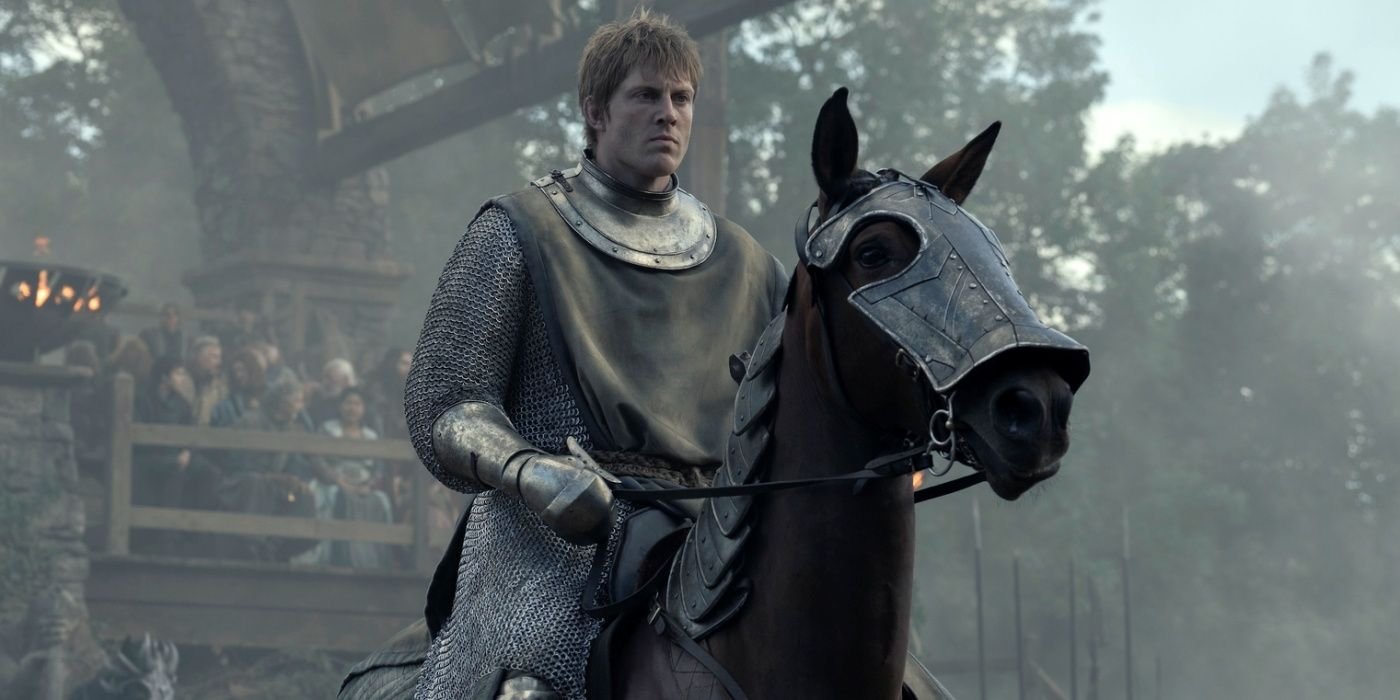
At the episode’s climactic moment, Baelor Targaryen (Bertie Carvel) rides onto the field to join Dunk. It is at this surge of hope that Djawadi’s theme arrives, not to merely hype an upcoming action sequence but to mark a narrative turning point: an outsider asserting his honor against entrenched authority, bolstered by an unexpected show of solidarity.
Why the callback works here
The Game of Thrones theme has become shorthand for epic struggle — the orchestral swell that announces high stakes and the clash of powerful forces. In A Knight of the Seven Kingdoms, the tune is used differently: as recognition rather than proclamation. It validates Dunk’s moment of courage and signals that the franchise’s core themes — honor, defiance, unexpected heroism — still apply even in a quieter, smaller-scale story.
Because the spin-off centers on characters who are not elite nobles by birth, the music reframes heroism as something available to outsiders. Historically, Djawadi’s score has accompanied major turning points across different houses and storylines; here, it underscores the idea that standing up for one’s beliefs can confer the gravitas traditionally reserved for highborn protagonists.
The show’s own musical identity: Dan Romer’s contribution
A Knight of the Seven Kingdoms has its own sonic signature, courtesy of composer Dan Romer, whose previous work includes Love Life and Atypical. Romer’s score supports the series’ tonal balance — a mix of earnestness, humor, and tension — and the show has used that music to define its world. In an early, telling beat, the series even toys with expectations around Djawadi’s melody: built up as if to introduce the grand theme, the music is abruptly cut off for a comic moment when Dunk is distracted by a basic human necessity. That gag signals the series’ willingness to temper grandeur with humility.
By mostly sticking to Romer’s compositions and calling on Djawadi only when the story demands it, the series manages continuity with the larger franchise while preserving an original voice.
What the musical choice signals for the franchise
The way A Knight of the Seven Kingdoms handles the Game of Thrones theme is a useful lesson in adaptation: callbacks are most effective when they serve character and story, not nostalgia alone. Dropping Djawadi’s theme at Dunk’s moment of vindication connects the spinoff to the franchise’s emotional lineage without flattening the new show into an imitation.
This episode demonstrates that a smaller-scale series can still deliver emotional heft comparable to its larger predecessors, provided it uses the franchise’s iconic elements judiciously. By reserving the franchise anthem for a scene that celebrates courage, camaraderie, and unexpected honor, A Knight of the Seven Kingdoms converts a familiar melody into a meaningful storytelling instrument — one that honors the past while affirming the spin-off’s distinct identity.