
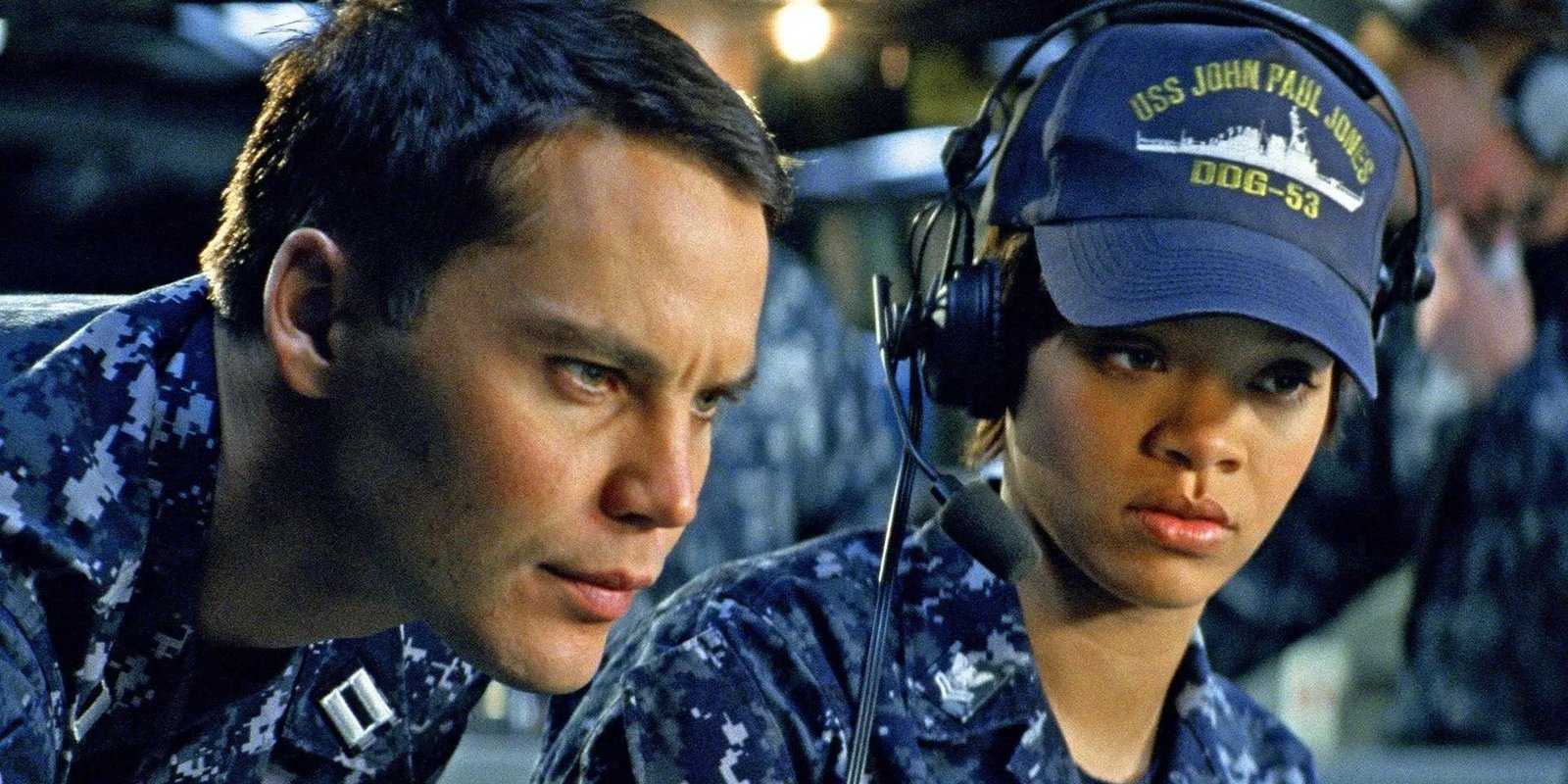
Netflix removal and viewing window
Netflix subscribers who’ve been meaning to revisit—or finally watch—Peter Berg’s 2012 sci-fi action movie Battleship have a short window: the film is scheduled to leave the platform on February 15. If you want to stream the movie before it departs, plan accordingly.
A studio gamble aiming for a franchise
Battleship was conceived as a big-budget, franchise-ready tentpole in the mold of Michael Bay’s Transformers series. Produced with major studio backing, the film carried a reported production budget of $220 million and enlisted a mix of established stars and rising actors to anchor a military-meets-aliens spectacle. Writers Erich and Jon Hoeber turned Hasbro’s classic board game into a large-scale action picture, with producers including Duncan Henderson, Scott Stuber, Bennett Schneir, and Brian Goldner backing the project.
The decision to build a movie around a toy-and-game brand was part of a broader trend that has only intensified: studios increasingly mine established properties and cultural products—video games, toys, snacks, and tech histories—to build recognizable, franchise-friendly films. Recent examples cited alongside Battleship’s concept include The Super Mario Bros. Movie, the Minecraft feature, and Barbie, while other IP-based projects like Monopoly and Matchbox have also been announced. Some of these succeed spectacularly at the box office; others falter.
Cast, creative team, and the film’s ambitions
Peter Berg directed Battleship, which was framed as a high-energy, effects-driven spectacle. The ensemble cast included:
- Taylor Kitsch as Lieutenant Alex Hopper
- Alexander Skarsgård as Commander Stone Hopper
- Liam Neeson
- Rihanna
- Brooklyn Decker
- Tadanobu Asano
With a runtime of 131 minutes and a PG-13 rating, the film blended naval warfare set pieces with alien-invasion action, aiming to translate the familiar board game into blockbuster cinema.
Box office, reviews, and critical reception
Battleship grossed approximately $303 million worldwide—enough to exceed its production budget in raw dollars but widely regarded as underwhelming given its scale and marketing. Critics were not kind: the movie holds a 34% score on Rotten Tomatoes, where the critics’ consensus reads, “It may offer energetic escapism for less demanding filmgoers, but Battleship is too loud, poorly written, and formulaic to justify its expense — and a lot less fun than its source material.”
When it opened, Battleship placed second at the global box office during its debut weekend, trailing a re-release of James Cameron’s Titanic—a curious counterpoint that underscored the film’s mixed fortunes.
Impact on careers and later developments
The film arrived in the same year as another high-profile disappointment for leading man Taylor Kitsch: John Carter. The back-to-back commercial failures hurt Kitsch’s momentum in Hollywood. In subsequent years he rebuilt his career, reuniting with Peter Berg for the Netflix Western series American Primeval and taking lead roles in projects such as Prime Video’s The Terminal List: Dark Wolf.
For director Berg and the rest of the creative team, Battleship didn’t launch an ongoing cinematic universe the way Transformers or other franchise properties did. Unlike some Hasbro-based franchises (G.I. Joe, Transformers), there has been little sustained effort to revive Battleship as a recurring film property.
Why Battleship still matters
Battleship matters as an early example of studios’ growing willingness to turn almost any recognizable brand into a big-screen franchise bid—from board games to snack brands and mobile phones. The movie’s mix of ambitious production values, a star-driven cast, and franchise intent makes it a useful case study in what can go wrong even when the financing and marketing are in place.
If you’re curious about the film’s visuals, spectacle, or simply want to re-evaluate it in the context of the current IP-driven marketplace, now is the time to watch before it leaves Netflix on February 15.
Quick facts
- Director: Peter Berg
- Writers: Erich Hoeber, Jon Hoeber
- Producers: Duncan Henderson, Scott Stuber, Bennett Schneir, Brian Goldner
- Release date: May 18, 2012
- Runtime: 131 minutes
- MPAA rating: PG-13
- Reported budget: $220 million
- Worldwide gross: ~$303 million
- Rotten Tomatoes critics score: 34%
Plan your viewing accordingly if you don’t want to miss this ambitious, flawed relic of early-2010s blockbuster filmmaking.