
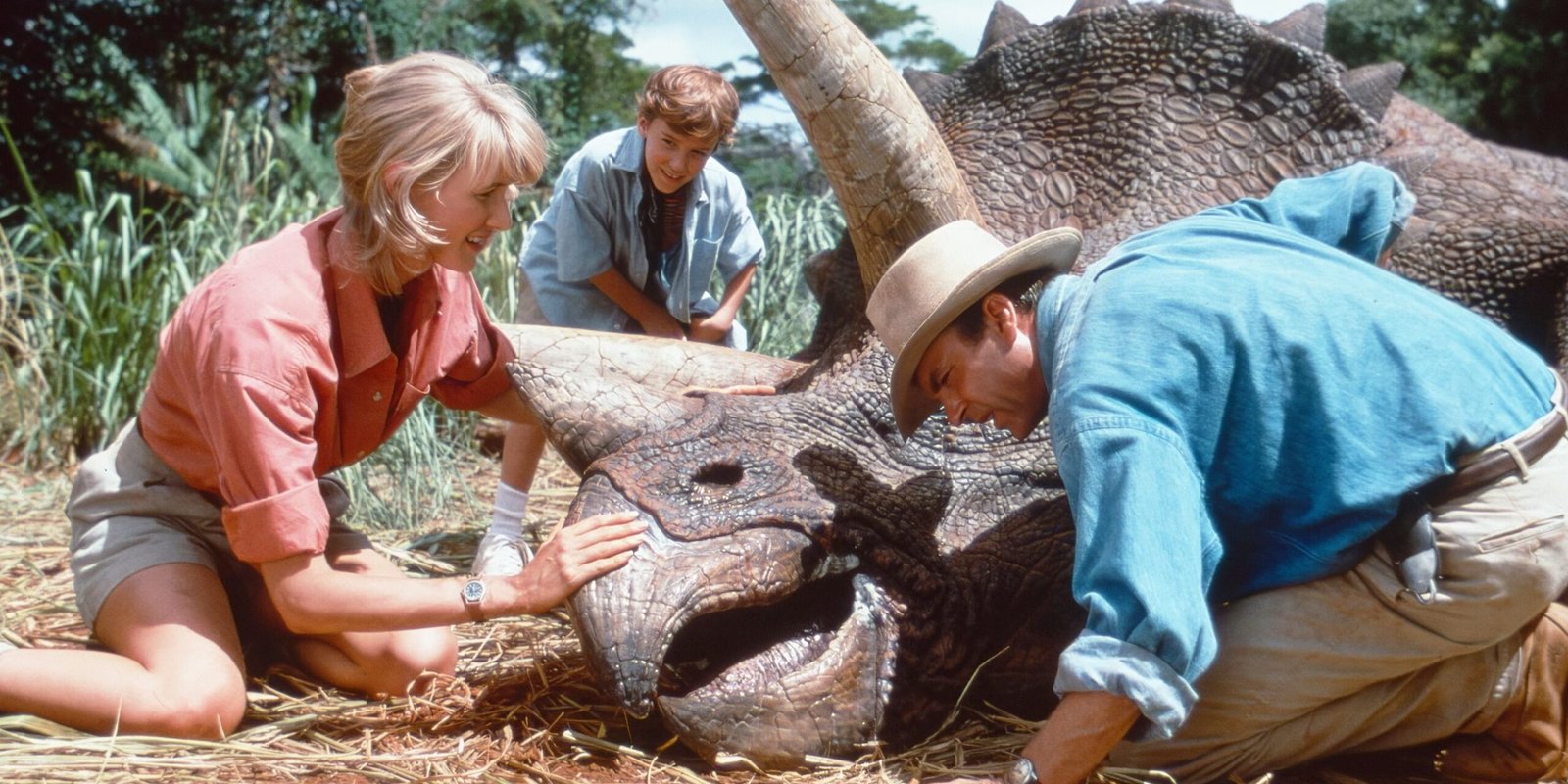
How Jurassic Park shaped dinosaur cinema — and expectations
Steven Spielberg’s Jurassic Park (1993) rewired Hollywood’s appetite for big-budget dinosaur spectacles and set a high bar for creature-driven science fiction. Its combination of cutting-edge effects, taut direction and blockbuster scope created a template many later films would echo, imitate or react against. That shadow has followed countless projects—some successful, some not—whenever dinosaurs, time rifts or “mad science” come into play.
One of the most maligned entries sometimes lumped into that lineage is the 2009 adventure-comedy Land of the Lost. Branded by critics and audiences as a misfire upon release, the film nevertheless shares a throughline with Jurassic Park: resurrected prehistoric beasts, a sense of wonder turned chaotic and the promise of spectacle. The difference was in tone and execution, and for many viewers that gap proved decisive.
What Land of the Lost is — premise and tone
Land of the Lost takes a comic, often absurdist approach to pulp sci-fi adventure rather than the tense, thriller-driven tone of Jurassic Park. The movie adapts the 1970s Sid and Marty Krofft television series of the same name (which ran on NBC from 1974–1976) into a broad, modern comedy.
Premise in brief:
- Will Ferrell stars as Dr. Rick Marshall, a scientist studying anomalies in space-time.
- Anna Friel plays Holly, Marshall’s assistant.
- Danny McBride portrays Will Stanton, a brash survivalist.
- Together they are swept through a space-time vortex into a strange world populated by dinosaurs and reptilian creatures called Sleestaks.
- Their only local ally is Chaka (played by Jorma Taccone), a primate-like inhabitant who helps them survive.
The film leans into slapstick, surreal visual gags and self-aware humor rather than suspenseful thrills, turning the source material’s campy charm up to eleven.
Who made it and when it premiered
- Director: Brad Silberling
- Writers: Chris Henchy and Dennis McNicholas
- Producers: Jimmy Miller, Marty Krofft, Sid Krofft
- Release date: June 5, 2009
- MPAA rating and runtime: PG-13, 102 minutes
- Genres: Adventure / Comedy / Sci‑Fi
The movie assembled a cast of comedic talents around Ferrell, positioning the film as a comedy-adventure rather than a straight science-fiction blockbuster.
Box office and critical response
Commercially, Land of the Lost failed to recoup its production budget, grossing approximately $69 million against an estimated $100 million budget. Critically it struggled as well: the film earned a low score on aggregate review sites, and its reception was reflected at the Golden Raspberry Awards, where it received seven nominations including Worst Picture. Land of the Lost won in the category Worst Prequel, Remake, Rip-off or Sequel.
Such a reception cemented its reputation as one of the more conspicuously unsuccessful dinosaur-themed films of the 2000s.
A curious streaming resurgence
Despite its rocky theatrical run and critical drubbing, Land of the Lost has recently reappeared in viewers’ watchlists. As of this writing, the film is trending on HBO Max, ranking as the third most-watched movie on the platform in several South American territories.
That surprising uptick places it alongside contemporary streaming hits; for example, at the top of the same charts sit titles like M3GAN 2.0 and Anna Kendrick’s Woman of the Hour, while other entries in the top five include Spider-Man: Homecoming and Sunshine.
Why audiences might be revisiting it now
Several nonexclusive factors can help explain Land of the Lost’s renewed attention:
- Nostalgia and curiosity: The Krofft TV series still holds nostalgic value for viewers who grew up with 1970s kids’ programming, and modern audiences sometimes stream older adaptations to compare them to contemporary sensibilities.
- Comedy reappraisal: Will Ferrell’s involvement makes the film a curiosity for fans of his work, and comedy films often find new life on streaming platforms where accidental discovery is common.
- Camp and cult appeal: Movies that were critical failures sometimes develop cult followings for their oddball choices, quotable lines or sheer audacity. Streaming provides a low-risk environment for viewers to sample cult curiosities.
- Curated visibility: Platform algorithms and regional cataloging can elevate older titles into trending slots; being prominently featured or algorithmically recommended can drive a sudden surge in views.
None of these reasons negate the film’s well-documented flaws, but they help account for how a once-discredited picture can return to public attention years later.
Is Land of the Lost worth your time?
That depends on what you’re looking for:
- If you want tense, effects-driven dinosaur thrills in the vein of Jurassic Park, this is not the film for you.
- If you enjoy broad comedy, absurdist moments and Will Ferrell’s brand of awkward leading-man humor, you may find it entertaining, even if uneven.
- If you’re watching out of curiosity—either for the original show’s fanship or to explore a widely panned film that’s become a streaming curiosity—that impulse is well-served by the low commitment of on-demand viewing.
Where to watch
Land of the Lost is currently streaming on HBO Max, where it has seen a recent spike in viewership in multiple South American markets. Availability can vary by region and over time, so check your local platform listings.
Final take
Land of the Lost arrived as a misjudged attempt to convert a nostalgic TV property into a modern slapstick sci-fi comedy, and it paid the price in box-office returns and critical scorn. Yet the film’s resurrection on streaming platforms demonstrates how distribution and audience habits can reshape the afterlife of a movie. Whether rediscovered for laughs, nostalgia or genuine reassessment, its sudden popularity is a reminder that no film’s cultural fate is ever entirely sealed.