
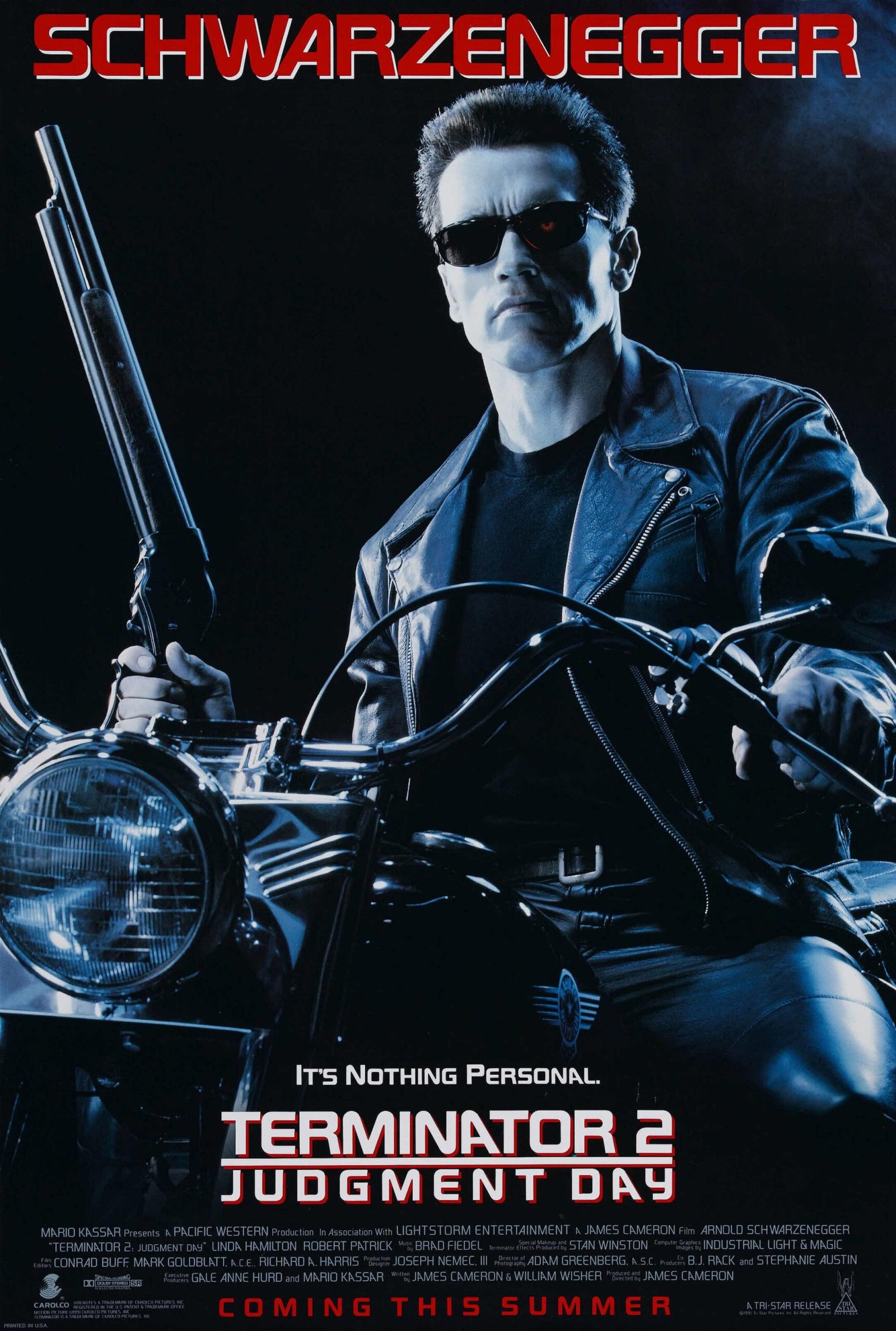

Information
Information
TL;DR
One-line verdict
“Terminator 2: Judgment Day” remains a timeless cinematic triumph that deftly balances breathtaking action with profound emotional depth.
Is it worth rewatching after 30+ years?
Absolutely. The film’s themes resonate just as powerfully today, and its groundbreaking visual effects combined with stellar performances invite viewers to experience it anew.
Big action, big heart — what’s the vibe here?
Tone: blockbuster thrills vs emotional core
“Terminator 2: Judgment Day” expertly straddles the line between being an adrenaline-pumping blockbuster and a poignant exploration of humanity. The relentless pursuit of the T-1000 creates palpable tension, yet the film’s emotional core—centered on the connection between young John Connor and the Terminator that’s evolved from antagonist to protector—offers moments of raw vulnerability that stay with viewers long after the credits roll. This duality isn’t merely a narrative gimmick; it’s integral to the film’s enduring allure, making audiences question the very essence of what it means to be human.
Is it more scary, sentimental, or fun?
While it boasts relentless action sequences that thrill, the film’s true magic lies in its ability to evoke genuine sentiment. The father-son dynamic forged between the mechanical guardian and human child is heartwarming, and scenes such as the Terminator’s simple explorations of empathy serve as both a springboard for humor and a sobering reflection on sacrifice. It’s a rich tapestry of emotion—impossible to box into just one category. Yes, it has its fair share of scares and laughs, but what truly sets “Terminator 2” apart is its capacity to make the audience reflect, even amidst explosive sequences.
What is Terminator 2: Judgment Day about (no spoilers)?
The basic setup in a sentence
In a future ruled by machines, a Terminator is sent back in time to protect John Connor while a more advanced killing machine hunts him down.
Where it fits in the Terminator timeline
“Terminator 2” serves as both a direct sequel and a deeper exploration of the narrative universe established by its predecessor. Following the events of the first film, we encounter a world teetering on the brink of apocalypse, with personal stakes more pronounced than before. With cybernetic threats looming larger, it carves out a definitive place in the franchise, blending plot continuity with character development in ways that enrich the overall lore.
As anticipation builds for the upcoming release of “Terminator 2: Judgment Day,” fans eagerly dissect the teaser trailer released by the studio earlier this month. The teaser has reinvigorated discussions about its iconic legacy while hinting at fresh twists and emotional stakes.
The cinematography, immediately striking and atmospheric, conjures a vision of a dystopian future bathed in shadows and desperation. It effectively captures the dissonance between the world’s bleak outlook and the flickers of hope symbolized by John and his mechanical guardian.
Character and/or antagonist analysis:
Returning characters like Sarah Connor and the formidable Arnold Schwarzenegger’s T-800 offer a sense of continuity and nostalgia, while the introduction of new characters is tantalizing. T-1000, the central antagonist with its chilling capabilities, serves as a brilliant foil, embodying the relentless evolution of technology. The juxtaposition of returning heroes with fresh threats deepens the conflicts presented in the trailer.
Conflicts hinted at in the trailer
The teaser hints at complex interpersonal conflicts and moral dilemmas. Sarah’s deep instinct to protect John contrasts sharply with the struggles of the T-800 as it seeks to understand its own identity. Meanwhile, the T-1000’s sinister abilities raise the stakes in ways that amplify the terror felt by the characters, hinting at both intense action and compelling heart.
Thematic deep dive:
The rich thematic exploration of “Terminator 2” surpasses its own predecessor, pushing boundaries on fate, choice, and digital consciousness. Its tone, while retaining the frenetic pace that fans expect, deepens its engagement with questions about humanity’s relationship with technology. Compared to other entries in the series or similar films, it breaks away from traditional action movie norms, demanding a reflection on what it means to care in a world increasingly dominated by machines.
Fan theories & speculation
Narrative twists
One popular theory posits that the T-1000 isn’t just a physical threat but also a digital puppet master, manipulating other characters to create chaos from within. This would not only heighten suspense but offer a commentary on surveillance and control.
Hidden villains or secret motivations
Others speculate that familiar characters may harbor hidden agendas, perhaps even seeking to subvert John’s future in ways that mirror the manipulative tactics seen in the first film. This revelation could upend viewers’ expectations, intensifying the emotional stakes.
Character betrayals or deaths
The fear of character betrayals looms large, particularly concerning Sarah Connor’s role as both protector and potential victim. Such developments could lend the film a further layer of unpredictability, making audiences rethink their investment in established character arcs.
Timeline or universe implications
Furthermore, fans are contemplating how this film may affect the existing timeline in the franchise. With time travel’s inherent paradoxes, the questions around continuity and alternate realities remain as tantalizing as ever. The teaser seems to hint at ramifications not only for the characters involved but for the very fabric of the series’ narrative universe.
Franchise / genre implications:
Release date & expectations:
Set to release later this quarter, “Terminator 2: Judgment Day” arrives with both anticipation and trepidation. As it dives back into a beloved but complex franchise, industry expectations are high. Fans hope for a return to form after past sequels struggled to capture the magic of the original entries.
Audience anticipation and industry context
In today’s cinematic climate dominated by nostalgia and remakes, this sequel’s success hinges on its ability to be both a tribute to its roots while boldly moving forward. The blend of thrilling action sequences and nuanced storytelling may just be the formula to draw in long-time fans while capturing new audiences.
Strong final verdict:
Why this film could succeed or fail ultimately lies in its willingness to engage with its legacy. If “Terminator 2: Judgment Day” can blend the nostalgia of the original while pushing the boundaries of its own story, it stands to reclaim its place as a trailblazer in the action genre.
In a world saturated with modern blockbusters, this sequel has the potential to remind us why we fell in love with cinema in the first place: the thrill of the story paired with the exploration of our deepest fears and hopes.
Don’t miss out; mark your calendars and prepare to delve into a tale that rekindles not just the fire and fury of action but the heart of what it means to fight for our future.
Why it still works: the good stuff
Arnold as the T-800: why the performance lands
Arnold Schwarzenegger’s performance as the T-800 in “Terminator 2: Judgment Day” remains iconic not just for his imposing physicality but for the depth he brought to a character that is, at its core, a machine grappling with human emotions. His stoic demeanor coupled with unexpected moments of warmth creates a compelling dichotomy, showcasing a journey from a relentless villain to a reluctant protector. Each line delivery punctuates the internal struggle of the T-800 as it evolves from a programmed assassin to a figure of hope and sacrifice. Schwarzenegger’s ability to convey both fear and affection through minimal dialogue is a masterclass in performance, drawing audiences into the emotional stakes of the narrative.
Linda Hamilton: the emotional and physical transformation
Linda Hamilton’s portrayal of Sarah Connor is another cornerstone of why the film thrives. She undergoes a profound transformation, evolving from a vulnerable waitress in the original film to a built, fierce warrior determined to protect her son and prevent the apocalypse. Hamilton embodies a raw, palpable ferocity that transcends the usual trope of a distressed damsel. Her physical transformation—muscles honed from rigorous training—mirrors her emotional journey, making her not just a mother figure but an unstoppable force. The sheer conviction in Hamilton’s performance elevates Sarah Connor to a symbol of resilience, delivering a feminist narrative that feels timeless.
Young John Connor: why the kid matters
Edward Furlong’s portrayal of young John Connor introduces a blend of innocence and rebellion that serves as a crucial element of the story. His character stands at the nexus of the future and the present, representing the pivotal hope for humanity’s survival against the machines. Furlong captures a child caught in extraordinary circumstances, grounding the sci-fi spectacle with genuine emotional stakes. Without his relatable struggles, mirroring the fears and uncertainties of adolescence, the film risks falling into a purely action-driven narrative. John’s bond with the T-800 adds layers to both characters, providing moments of humor and warmth that serve to amplify the stakes.
Pacing and story choices that keep it moving
“Terminator 2” flows seamlessly, thanks in large part to James Cameron’s adept direction and the carefully crafted screenplay. The film maintains a relentless pace while intertwining exposition with action, making it difficult for the audience to disengage. Each scene builds on the previous one, layering tension and conflict until the climax feels both earned and exhilarating. Story choices, such as the strategic revelations about Skynet and its intentions, keep the viewers invested in the unfolding drama. Cameron’s decision to weave character development into high-stakes set pieces prevents the film from becoming bogged down in exposition, balancing action with emotional depth.
Visuals and effects that were game changers
The technical mastery behind “Terminator 2” set new benchmarks for visual effects in cinema. The groundbreaking use of CGI introduced a wholly new realm of possibilities for filmmakers, especially with the T-1000—a character that could morph and shimmer, pushing the boundaries of what audiences believed possible. The practical effects blend seamlessly with digital tricks, creating a cinematic experience that feels both authentic and exhilarating. Iconic sequences, such as the motorcycle chase and the liquid metal transformations, are not mere spectacle but integral to the narrative’s core themes of survival and resilience against an overwhelming force.
The score and sound design: how they boost tension
The score, composed by Brad Fiedel, punctuates the emotional and dramatic beats of “Terminator 2.” The now-iconic theme resonates with themes of technology and humanity’s struggle against it, intertwining orchestral elements with synth-driven motifs that capture the film’s tone perfectly. Each musical motif enhances the viewer’s immersion, invigorating action scenes and amplifying quieter, reflective moments. The sound design complements this, with a cacophony of mechanical sounds against the backdrop of haunting silence, illustrating the clash between man and machine. The tension builds not just through visual spectacle but through an auditory journey that echoes long after the credits roll.
Any weak spots or things that show their age?
Which parts feel dated (CG, minor plot thinness)
While “Terminator 2: Judgment Day” is a cinematic landmark, certain elements do feel dated. Some CGI, particularly the T-1000’s transformations, although revolutionary at the time, can appear less convincing through the lens of modern technology. This might momentarily pull viewers out of the story, especially younger audiences accustomed to contemporary visual effects. The minor plot thinness regarding Skynet’s motivations and the reasoning behind certain actions could also leave viewers questioning specific elements without thorough exploration, signaling a plot device more suited to its era than to modern storytelling sensibilities.
Characters or subplots that don’t get enough time
Several characters and subplots, while intriguing, don’t receive adequate screen time to develop fully. Characters such as Miles Dyson bear significant narrative weight, yet his arc feels rushed, limiting the emotional impact of his character’s choices. Other secondary characters, including the T-1000’s human form, could have added more depth to the villain’s motivations. The film’s focus on primary protagonists overshadows potential richer storytelling avenues, leaving viewers craving more significance from these roles.
Where the film could have been tighter
At just over two and a half hours, “Terminator 2” is a relentless ride, yet sections of the narrative could have been more concise. Certain action sequences, while visually stunning, tend to stretch on, risking viewer fatigue. Tighter editing in these areas could sharpen focus on key narrative developments, ensuring that every moment feels essential to the story. A more streamlined narrative might improve pacing while maintaining emotional resonance, balancing spectacle with character-driven storytelling.
Are the performances convincing?
Arnold: iconism vs nuance
Schwarzenegger has transcended his action star status, often becoming the screen’s embodiment of the T-800. However, it’s not purely iconism; Arnold’s nuanced performance oscillates between indifference and an awakening sense of purpose. His ability to infuse a virtually emotionless character with moments of introspection qualifies his work as more than just a physical presence. In this sequel, we witness a softer side, where Arnold’s eyes convey the flickers of humanity ignited in a machine’s heart.
Hamilton and Furlong: chemistry and stakes
Hamilton and Furlong craft a believable mother-son relationship steeped in urgency and high stakes. Their chemistry is essential to the emotional gravity of the narrative. Hamilton’s fierce protectiveness juxtaposes with Furlong’s youthful vulnerability, painting a relatable portrait of familial love amidst chaos. The stakes feel genuine as they face seemingly insurmountable obstacles, anchoring the film’s bombastic action in a heartfelt human story.
Supporting cast: who stands out
In addition to the leading trio, several supporting performances deserve recognition. Robert Patrick’s portrayal of the T-1000 is hauntingly effective, blending menace with an eerie calmness that makes him an unforgettable antagonist. Joe Morton, as Miles Dyson, portrays a compelling blend of brilliance and tragic inevitability. These performances add layers and complexity to the narrative, showcasing the wide emotional spectrum that stretches across the film’s chaotic landscape.
“Terminator 2: Judgment Day” remains a pivotal entry in the action and sci-fi genres, expertly weaving emotion and spectacle. Its performances, pacing, and groundbreaking visuals create a timeless experience, solidifying its place as a cinematic triumph.
How do the action and effects hold up today?
When it comes to Terminator 2: Judgment Day, the action sequences and visual effects have become iconic touchstones in cinematic history. Released in 1991, the film pioneered techniques that continue to influence filmmakers and excite audiences. A deep dive into its action and effects reveals just how this masterpiece holds its ground in today’s ever-evolving landscape.
Practical stunts vs early CGI
The film’s commitment to practical effects offers a tactile authenticity that can be starkly contrasted with its early CGI. Director James Cameron accomplished remarkable stunts with real actors performing dangerous feats, a decision that imbues the action with a visceral quality. When the T-800 (Arnold Schwarzenegger) rides a motorcycle through Los Angeles, the danger feels palpable because it’s real.
However, the groundbreaking CGI used to render the T-1000 (Robert Patrick) was revolutionary for its time, creating a fluidity that real-life actors simply couldn’t match. The seamless combination of practical effects and CGI not only advanced the genre but also set a high bar for the visual effects industry. Audiences familiar with modern films will appreciate how these early techniques were woven together to provide an exhilarating experience.
The choreography and set pieces that still thrill
Choreography is another pillar where Terminator 2 excels. The film’s action scenes are meticulously crafted; they balance tension, timing, and spatial awareness. For example, the climactic showdown in a steel mill exemplifies this mastery, erasing the lines between combat choreography and realistic brawl. Each punch and gunshot feels earned, resonating emotionally as characters confront their fates.
Set pieces like the truck chase also showcase Cameron’s cinematic prowess. The fluid camera work, the chase’s ever-increasing intensity, and the sheer scale create a pulse-pounding spectacle, encapsulating the thrill of pursuit. Today’s audiences will find that these sequences remain pioneering, holding their own against even the most extravagant modern blockbusters.
Visuals that influenced later blockbusters
The impact of Terminator 2 on the visual language of action and sci-fi cannot be overstated. Its visual effects laid the groundwork for films such as The Matrix and Avatar, both of which utilize innovative technology to push the boundaries of storytelling. The T-1000’s morphing effects have been echoed in countless films and shows, often cited as a benchmark for CGI.
Cameron’s blend of practical effects and cutting-edge technology is mirrored in franchises that followed. Shots of molten metal and intricate mechanical designs inspired filmmakers to embrace creative storytelling through visuals. As audiences watch today, they’ll recognize that this film not only revolutionized its era but continues to cast a long shadow over cinematic techniques.
Standout moments that stick with you (no spoilers)
Terminator 2 has scenes that linger in the memory long after the credits roll; moments that transcend simple entertainment to provoke thought and emotion. These standout sequences reveal just why the film remains a high-water mark in cinema.
A chase you’ll remember
One of the most exhilarating parts of Terminator 2 is the chase scene featuring the T-800 and the T-1000. The relentless pursuit, vehicular mayhem, and breathtaking stunts all combine to create a sequence that keeps viewers on the edge of their seats. The stakes are palpable, and the choice of locations—ranging from public highways to ominous industrial landscapes—adds a layer of urgency and danger. This chase exemplifies the art of action filmmaking, ensuring that it remains unforgettable.
A quiet scene that unexpectedly hits hard
In contrast to the pulse-pounding action, there are quieter moments that resonate deeply. One such scene is the exchange between John Connor (Edward Furlong) and the T-800, as humanity shines through in their developing relationship. The heart-to-heart about choice and sacrifice reveals the emotional core of the film. It’s an intimate moment set against the chaos of the world that complements the grand stakes and adds depth to the narrative.
The final stretch: why it’s satisfying
As Terminator 2 approaches its climax, tension builds to an almost unbearable height. The resolution judiciously balances intense action with emotional payoffs that respect character arcs and thematic threads. Fans will feel a sense of closure mixed with excitement, leaving them satisfied yet contemplative. The film doesn’t just tie up plot points; it leaves lingering questions and reflections about fate and humanity, enriching the overall experience.
Who is this movie for?
Terminator 2: Judgment Day is a film that appeals to a diverse audience; it’s a cornerstone of action cinema and a cultural touchstone that continues to find relevance. Understanding who will appreciate this film helps gauge its enduring impact.
For first-timers: what to expect
Those stepping into the world of Terminator 2 for the first time can expect a rollercoaster of cutting-edge visuals, thrilling action, and unexpectedly tender moments. You’ll witness a narrative driven by complex characters caught in a central conflict: the battle between fate and free will. It’s a rollercoaster ride that defies the typical action genre tropes, offering depth and emotional stakes alongside adrenaline-fueled sequences.
For fans of the original and of action cinema
For those who loved the original The Terminator, the sequel ups the ante in every way. Characters evolve, and their struggles resonate even more profoundly. The blend of thrilling narrative with sharp dialogues serves as a testament to the extraordinary craftsmanship. Fans of action cinema will also appreciate the film’s ability to balance spectacle with substance, marking it as a benchmark in the genre.
For viewers who prefer modern effects — what to be ready for
While modern viewers may be used to high-octane CGI explosions, Terminator 2 will demand a brief adjustment period. Its effects, while groundbreaking for their time, may appear dated compared to today’s rapid technological advancements. However, there’s an essential charm in its practical stunts and pioneering CGI that adds layers to the viewing experience, allowing audiences to appreciate the artistry behind the scenes.
Scrolling through Terminator 2: Judgment Day, both newcomers and veterans can find a wealth of captivating moments and deep thematic explorations awaiting them. Embrace its blend of action and emotional resonance; it’s a journey worth taking.
Why Terminator 2: Judgment Day matters
“Terminator 2: Judgment Day” stands as a monumental pillar in the cinematic landscape, and its impact is still felt decades after its initial release. Directed by James Cameron and unleashing a wave of innovation in storytelling and visual effects, this film has shaped how action and science fiction are understood within the genre. More than just a sequel, it explored deeper themes and emotional narratives, making it essential viewing for any film enthusiast.
Its legacy in VFX and action filmmaking
The visual effects in “Terminator 2” were groundbreaking for their time. The film was one of the first to fully utilize CGI, particularly through the liquid metal T-1000 that Arnold Schwarzenegger’s T-800 had to face. This transformative use of technology allowed for expressions and actions previously unimaginable on screen. The fluidity of the T-1000’s character showcased not just innovation but also an artistry that pushed the boundaries of action filmmaking. Indeed, it paved the way for all subsequent blockbusters to incorporate special effects as a vital narrative device rather than just a spectacle.
Action sequences such as the chase through the Los Angeles River and the final confrontation at Cyberdyne Systems exemplify a kinetic storytelling style that melded heart-pounding excitement with emotional stakes. The film didn’t just dazzle the eyes; it engaged the heart, raising the bar for what action films could accomplish.
Awards and industry recognition
“Terminator 2: Judgment Day” racked up significant accolades upon its release, solidifying its place in Hollywood history. Winning four Academy Awards—Best Visual Effects, Best Sound, Best Sound Effects Editing, and Best Makeup—this film was celebrated for both its technical prowess and its storytelling. Roger Ebert, renowned film critic, praised the movie for balancing thrilling action with deeper existential questions regarding humanity and technology. Its box office success further emphasized its cultural significance, grossing over $500 million worldwide and making it one of the highest-grossing films of its time.
How it compares to later sequels like Terminator 3
When juxtaposed with later sequels like “Terminator 3: Rise of the Machines,” “Terminator 2” emerges as a high watermark for the franchise. While “Terminator 3” attempted to recapture the magic of its predecessor, it lacked the emotional depth and innovative storytelling that “T2” delivered. The sequel’s reliance on familiar tropes and formulaic action only highlighted how visionary Cameron’s sequel truly was. While “T3” offered some thrilling moments, it failed to resonate or innovate, leaving the legacy of “Terminator 2” undiluted in its triumph.
FAQs
What year was Terminator 2 released?
“Terminator 2: Judgment Day” was released on July 3, 1991. Its arrival was a pivotal moment in action cinema, redefining expectations for sequels in terms of scale, effects, and narrative coherence.
What is Terminator 2’s Rotten Tomatoes score?
As of now, “Terminator 2: Judgment Day” holds an impressive 94% rating on Rotten Tomatoes, demonstrating its critical acclaim and timeless quality. This score reflects both the visual splendor and the thematic depth that has attracted audiences for over three decades.
What did Roger Ebert think of Terminator 2?
Roger Ebert described “Terminator 2” as a remarkable film that not only excels in action but also thoughtfully explores themes of love, sacrifice, and the consequences of technological advancement. His review highlighted how the film goes beyond mere action sequences to delve into the emotional and philosophical underpinnings of its narrative.
Is Terminator 2 better than Terminator 3?
Most fans and critics widely consider “Terminator 2” superior to “Terminator 3.” The sequel’s innovative storytelling, emotional arcs, and groundbreaking VFX set a standard that “T3” struggled to match. While “T3” featured some engaging sequences, it didn’t capture the same level of complexity or cultural impact as its predecessor.
Did Terminator 2 win any major awards?
“Terminator 2: Judgment Day” won four Academy Awards, including Best Visual Effects. Its accolades were a testament to its technical achievements and storytelling prowess, establishing a benchmark for future action films.
Where can I watch or stream Terminator 2 today?
“Terminator 2: Judgment Day” can be streamed on several platforms, including Hulu and Amazon Prime Video. Check your local listings for rental options and availability across various streaming services to witness this iconic film.