Information
TL;DR: Quick verdict
One-line take
“Star Wars: Episode VI – Return of the Jedi” brilliantly balances spectacle and emotion, wrapping up the original trilogy with thrilling finality.
Should you rewatch it?
Absolutely. This film has layers that deepen with each viewing, making it a staple for any Star Wars enthusiast.
What’s the vibe here — fun, dark, or sentimental?
Mood and tone in a few words
“Return of the Jedi” captures a unique blend of sentimentality and exhilaration. It exudes a sense of closure while still delivering the exhilarating high-stakes drama that Star Wars fans crave.
Who this vibe will click with
Anyone who appreciates character-driven stories will find resonance here. Fans of narratives that marry lighthearted adventure with emotional payoff will particularly enjoy this film as it neatly ties the original saga together.
What is Return of the Jedi about (no spoilers)
The basic setup and stakes
In “Return of the Jedi,” the Rebel Alliance mounts a final offensive against the Galactic Empire, now fortified with a new Death Star. The stakes could not be higher as Luke Skywalker embarks on a quest to redeem his father, Darth Vader, while battling against overwhelming odds.
How it continues and closes the original trilogy
This film acts as a conclusion to the overarching saga of the Skywalker family. It synthesizes narrative threads from the previous two films, upping the emotional stakes and giving audiences a satisfying wrap-up to the trio’s journey, cementing legacy and redemption as central themes.
The “Star Wars: Episode VI – Return of the Jedi” teaser trailer made its debut online on April 2, 1983, sent shockwaves through the fandom and reignited excitement for the concluding chapter of the original trilogy. What stands out is how it encapsulates the essence of the saga: hope, redemption, and epic adventure. Watch the official trailer here.
Visually, the trailer immerses viewers in the galaxy far, far away, showcasing a vibrant spectrum that contrasts the dark undertones of the Empire with the hopeful hues of the Rebel Alliance. Cinematography captures both vast landscapes and intimate moments, hinting at the emotional depth we can expect. Symbolism permeates every frame, from the emergence of the Sith’s looming presence to the vibrant scenes of the Ewoks, cleverly suggesting themes of unity and the strength found in combining forces that are often perceived as small or insignificant.
Returning characters such as Luke Skywalker, Leia Organa, and Han Solo are astride the teaser, interspersed with striking glimpses of new faces, including the enigmatic Jabba the Hutt. The conflicts hinted at range from the personal struggles of our heroes to the larger battle against the Empire’s might, raising questions about loyalty and sacrifice. Each note in the music underscores the stakes, evoking nostalgia while grounding us in new terrain.
In terms of tone, the teaser reflects a distinct evolution from “Star Wars: Episode IV – A New Hope” and “Star Wars: Episode V – The Empire Strikes Back.” Where “A New Hope” is about beginnings and “Empire” explores the grim realities of war, “Return of the Jedi” promises a blend of hope and closure, inviting contemplation on the cycle of darkness and light that defines the saga.
Fan theories have been brewing since the teaser’s release. One speculation circulating is the potential for a character betrayal—after watching Luke’s inner turmoil, many wonder if someone close to him might turn against the Rebellion. Another tantalizing theory revolves around hidden motivations within Jabba the Hutt’s agenda. Could his plans extend beyond simple greed, intersecting with the larger Empire’s designs? Fans are piecing together possible narrative twists that could have implications for the mythology itself, sparking conversation about how this installment will resolve the conflicts laid out in previous entries.
The implications of “Return of the Jedi” extend beyond its narrative. As the finale of a beloved trilogy, it signifies a turning point in the franchise, steering it towards the next generation of stories yet to come.
When is the film hitting theaters? “Star Wars: Episode VI – Return of the Jedi” releases on May 25, 1983, and anticipation is at an all-time high. The film is set against the backdrop of a pop-culture landscape already enchanted by its predecessors, and industry insiders predict it’ll dominate the box office while enhancing its legendary status.
So, could this film succeed or fail? Given its rich legacy and the emotional weight it carries as an ending, it’s poised for triumph. Yet, it holds the delicate balance of meeting the expectations of a passionate fanbase that hasn’t just invested years but lifetimes into this galaxy.
In closing, as we approach this crucial chapter in the beloved saga, the “Star Wars: Episode VI – Return of the Jedi” teaser trailer reminds us that even in darkness, hope shines through. It’s this spirit that resonates with fans old and new, and we can only wait with bated breath for the next epic journey through the stars.
Any weak spots to know about?
Tonal shifts and divisive choices
“Return of the Jedi,” the third installment in the original Star Wars trilogy, invites a unique blend of tones that can feel uneven at times. While the film navigates the dark depths of the Emperor’s controls and the ultimate showdown between good and evil, it often shifts into moments that evoke fun and whimsy, particularly with the introduction of the Ewoks. These furry creatures can distract from the film’s otherwise epic stakes and have long sparked debates among fans about their role in the narrative. Some see them as an injection of light-heartedness, while others deem them a jarring contrast to the series’ more serious themes. The tonal juxtapositions may not resonate universally, leaving some viewers feeling as if the film struggles to balance light and dark elements cohesively.
What feels dated and what still surprises
Several technical elements in “Return of the Jedi” have aged, evoking nostalgia but also reminders of its era. The film’s special effects, while groundbreaking for the 1980s, can feel antiquated compared to modern standards. The use of practical effects remains charming but may not carry the same weight for contemporary audiences used to CGI. Yet, amid these dated moments, the film still surprises with its emotional weight and compelling character arcs. The climactic confrontation between Luke Skywalker and Darth Vader remains a riveting spectacle, delivering powerful emotional stakes that resonate regardless of visual style. The multifaceted portrayal of redemption and family bonds transcends age, inviting viewers to connect on a deeper level.
Standout moments
Sequences people still talk about
It’s impossible to discuss “Return of the Jedi” without acknowledging the sequences that have etched themselves into cinematic history. The skirmish on Jabba’s sail barge packs a punch, blending tight storytelling with ambitious action, while the fierce space battle over Endor remains a high point of excitement. Luke’s final confrontation with the Emperor and Vader is not merely an action spectacle; it’s a devastating emotional climax that asks audiences to ponder the nature of light versus dark. Light saber clashes and intricate choreography shape the memorable confrontations that continue to inspire and ignite conversations among fans, showcasing a magical quality even decades later.
Quiet beats that land emotionally
Nestled among the action set-pieces are quieter, more contemplative moments that ground the film. Luke’s farewell to his friends before confronting Vader solidifies the weight of his choices and the gravity of his mission. The scenes featuring the ghostly appearance of Obi-Wan Kenobi delve into themes of sacrifice and legacy, offering profound reflections on the past’s impact on the future. These emotional beats stand out just as vividly, enriching viewers’ understanding of the characters’ internal struggles. The sophisticated mixture of action and introspection captures the essence of what makes “Return of the Jedi” feel timeless, leaving an indelible mark on its audience.
Is Return of the Jedi worth rewatching and who is it for?
Fans, newcomers, and families — who benefits most
“Return of the Jedi” rightly holds a special place within the pantheon of sci-fi cinema. Longtime fans will revel in its nostalgia and the masterful culmination of the characters’ arcs they’ve followed through two previous films. Newcomers can appreciate its stand-alone storytelling; though it’s enriched by the first two installments, the film offers ample context to appreciate its themes of sacrifice, redemption, and the battle against tyranny. Families can find a compelling balance of adventure, humor, and poignant moments woven through the narrative, making it an engaging experience for young viewers as well.
Best setting and mood for a viewing
For the full “Return of the Jedi” experience, a setting that encourages companionship is ideal. Grab some popcorn and settle in with friends or family on a cozy couch where discussions can flow freely during and after the film. A darkened living room enhances the visuals, immersing viewers in every heroic moment and emotional beat. For a more nostalgic gathering, consider a retro movie night, complete with themed snacks. Inviting fellow fans to share their thoughts and cherished scenes can transform the viewing into a communal event that embodies the spirit of the original trilogy.
“Return of the Jedi” may face its share of critiques and evolving perceptions, but its legacy continues to soar, promising a rich cinematic experience worthy of re-exploration.
FAQs
Is Star Wars Episode 6 Return of the Jedi good on Rotten Tomatoes?
“Star Wars: Episode VI – Return of the Jedi” holds a respectable score on Rotten Tomatoes, with critics and audiences generally praising it as a fitting conclusion to the original trilogy. Currently, it boasts a favorable critiquing percentage in the mid-80s, showcasing a strong reception, particularly for its visual effects and compelling character arcs. Critics point to its balance of action and emotional depth as key reasons for its solid rating. However, it’s also worth noting that opinions vary; while many celebrate its achievements, some critique it for pacing or narrative choices that diverge from its predecessors.
What do people say about Return of the Jedi on Reddit?
Discussions on Reddit about “Return of the Jedi” are both passionate and nuanced. Many fans highlight the film’s emotional resonance, especially regarding character arcs like Luke Skywalker’s transformation into a Jedi. Others delve into the film’s iconic moments, such as the reveal of Darth Vader’s true nature and the thrilling Battle of Endor. Not all feedback is glowing; critiques often focus on the film’s pacing and the narrative decisions surrounding certain characters, particularly the Ewoks’ introduction. The film sparks a mix of nostalgic admiration and critical exploration of its legacy within the Star Wars canon.
Who is in the cast of Return of the Jedi?
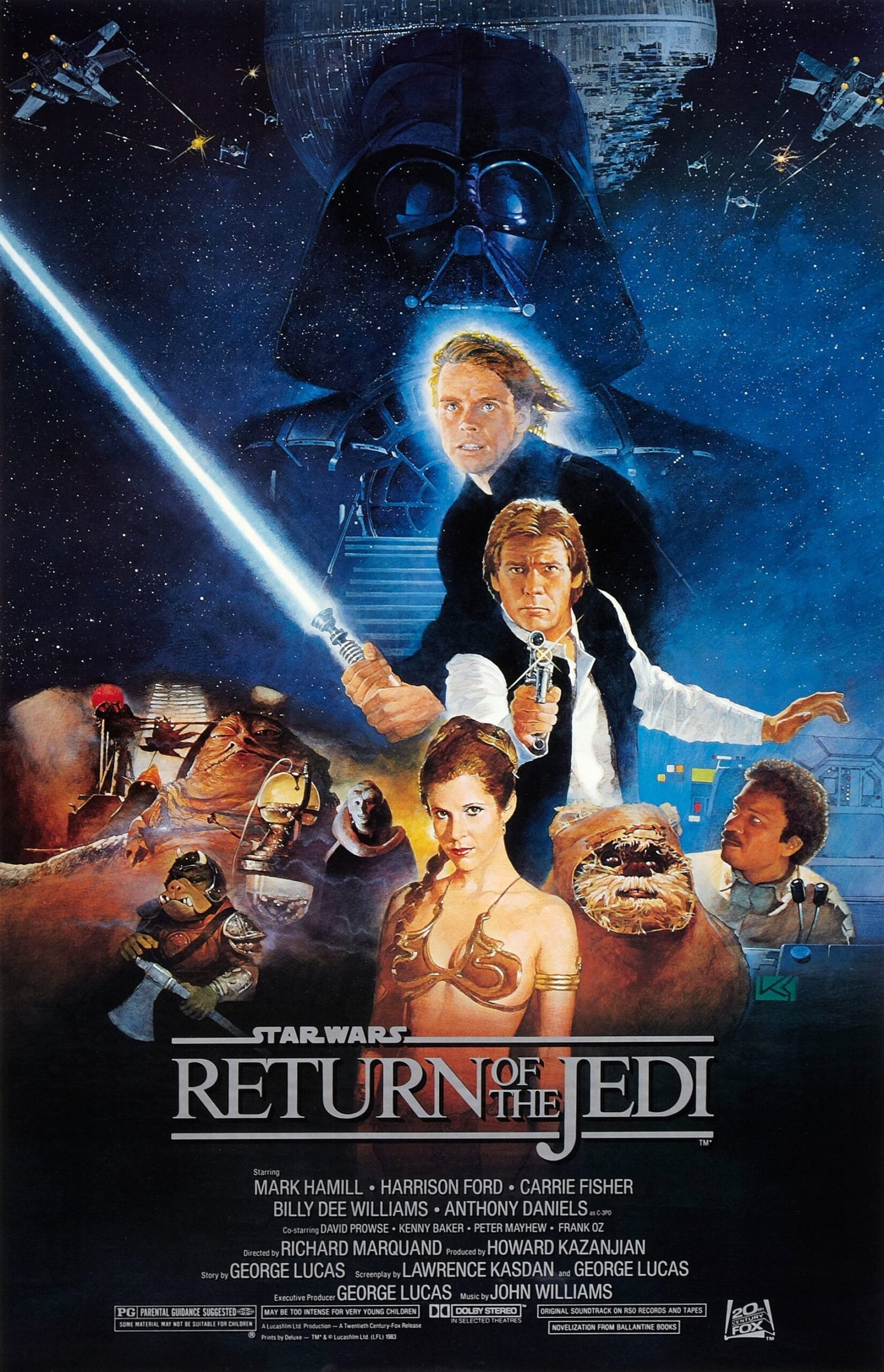
The ensemble cast of “Return of the Jedi” showcases a blend of returning legends and supporting characters that contribute to the film’s depth. Mark Hamill stars as Luke Skywalker, alongside Carrie Fisher as Princess Leia and Harrison Ford as Han Solo. Returning from previous entries, we see Anthony Daniels as C-3PO and Peter Mayhew as Chewbacca. Notably, the film also features the late David Prowse as Darth Vader and Ian McDiarmid, who brings the Emperor to life, adding a menacing layer to the story. The blend of strong performances across the board plays a vital role in matching the film’s emotional stakes.
What is the age rating for Return of the Jedi?
“Return of the Jedi” is rated PG in the United States. This rating reflects its suitability for most viewers, with parental guidance suggested due to some intense scenes and thematic elements. While some moments may be intense—such as battles and emotional conflicts—the film manages to balance its darker aspects with moments of humor and heroism. This combination allows it to appeal to a broad audience, including young fans experiencing the saga for the first time.
Where can I watch Return of the Jedi?
“Return of the Jedi” is widely accessible on various streaming platforms and digital rental services. Fans can find it on Disney+, which holds the streaming rights to the entire Star Wars saga. Additionally, the film is available for rent or purchase on platforms like Amazon Prime Video, Google Play, and iTunes. For those who prefer a physical format, DVDs and Blu-rays of the film are readily available in stores and online, featuring bonus content that adds to the viewing experience.
Does Return of the Jedi wrap up the original trilogy well?
The consensus among fans and critics is that “Return of the Jedi” does indeed wrap up the original trilogy effectively. It ties up key narrative threads, such as Luke’s journey to becoming a Jedi and the resolution of the conflict with the Emperor and Darth Vader. Critics appreciate how the film encapsulates the themes of redemption, hope, and sacrifice that are woven throughout the trilogy. However, some argue the film loses a bit of the narrative tension established in “The Empire Strikes Back,” with the resolution feeling somewhat rushed. Still, the emotional payoff and visual spectacle make it a satisfying closure to the saga for many.
Is Return of the Jedi the same as Return of the Sith?
No, “Return of the Jedi” and “Revenge of the Sith” are distinct films within the Star Wars franchise, each belonging to different trilogies. “Return of the Jedi” is the sixth episode of the original trilogy, focusing on the final battle against the Galactic Empire. In contrast, “Revenge of the Sith” is the third installment of the prequel trilogy, depicting Anakin Skywalker’s fall to the dark side. While both films share overarching themes of conflict, power, and redemption, their narratives and character focuses differ significantly.
Is Return of the Jedi also called Star Wars Episode VI?
Yes, “Return of the Jedi” is officially titled “Star Wars: Episode VI – Return of the Jedi.” It is the sixth film in the overarching Star Wars saga, positioned chronologically after “The Empire Strikes Back” and before the more recent sequel trilogy. The film’s title reflects its central theme: the redemption and ascension of Luke Skywalker, the last Jedi, as well as the ultimate battle between the forces of good and evil. This title structure is common within the franchise, as each episode is individually recognized for its unique contributions to the broader narrative.