
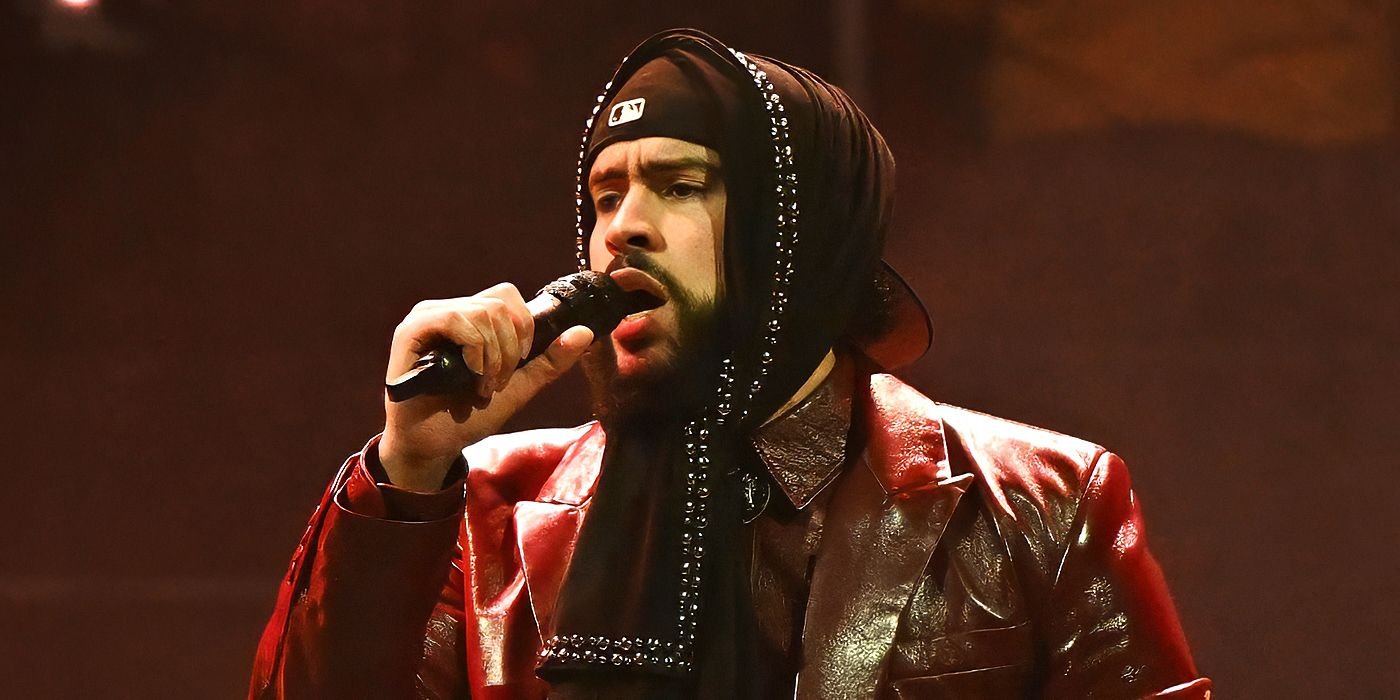
A halftime show that rewrote the script
Bad Bunny’s Super Bowl halftime set was one of the most talked-about cultural moments in recent memory. The Puerto Rican superstar—singer, rapper and producer—delivered a largely Spanish-language performance that leaned into joy, identity and unity. Coming on the heels of his historic Grammy win for Album of the Year, the show crystallized why he’s become a defining global artist of his generation.
From a guest spot to center stage
Bad Bunny wasn’t new to the Super Bowl stage: he first appeared during Shakira’s halftime show in 2020, contributing the verse from “I Like It.” This time, though, he was the headliner, presenting a full set that celebrated Latin music and culture. The performance marked a milestone in Super Bowl history—he was the first artist to present a largely Spanish-language halftime show in the event’s decades-long run.
His run-up to the big night included major career landmarks: he had been the most-streamed artist of 2025 and had just taken home Album of the Year at the Grammys, the first Spanish-language record to win that category. Those achievements set expectations high—and he met them with a show that emphasized both scale and intimacy.
The performance: guests, set moments, and surprises
Bad Bunny’s halftime was punctuated by high-profile appearances and carefully staged set pieces that amplified his central themes.
- Surprise and presence: Lady Gaga joined the set in a theatrical wedding scene that was one of the evening’s most memorable moments. Her appearance—introduced as part of a ceremonial sequence—underscored themes of unity and cross-cultural exchange.
- Familiar faces in the crowd: Cardi B appeared in a non-singing role and was visible among a roster of famous attendees, illustrating the event’s convergence of music, film and sports celebrities. Other notable names from the Latin and entertainment communities were also present, signaling broad support for the artist and the moment.
- Tributes and nods to Puerto Rico: The show wove in tributes to Bad Bunny’s homeland. Ricky Martin performed “Lo Que Le Pasó a Hawaii,” lending his voice to a theme of island pride and generational solidarity. Lines nodding to Daddy Yankee’s “Gasolina” echoed through the set as a musical salute, even if the reggaetón pioneer did not make a physical appearance.
Musically, Bad Bunny blended large, celebratory numbers with quieter, more acoustic moments—closing with the title track from his Grammy-winning album, which emphasized community and sing-along unity.
Politics, identity and the language of celebration
Beyond spectacle, the halftime show carried clear political and identity-driven signals. Bad Bunny has been vocal about social issues; in his Grammy speech he called for reform around immigration enforcement, and similar themes surfaced in his Super Bowl set.
- “Bailar sin miedo” (dance without fear) was a throughline—an invitation to celebrate openly and without the pressure of assimilation.
- In one song, Bad Bunny introduced himself by his birth name, Benito Antonio Martínez Ocasio, reframing the moment from persona to personhood and emphasizing authenticity.
- The wedding tableau functioned as a symbolic union: a staged celebration that honored Puerto Rican culture (including the Flor de Maga) while also positioning Latin identity within a broader American moment.
These choices turned the halftime into more than a concert; it became a visible, mainstream articulation of Latin American pride and belonging.
Reception and cultural impact
Reactions to the show were emphatic and varied. Many viewers praised the performance as a long-overdue acknowledgement of Latin music’s global influence and applauded the decision to present a predominantly Spanish-language set on such a massive platform. Others debated the inclusion of mainstream crossover figures and whether such choices softened or strengthened the show’s cultural message.
Whatever the response to individual elements, the broader consequence was clear: the halftime show expanded the Super Bowl’s cultural vocabulary and sparked conversations about representation on one of the world’s most-watched stages.
A unifying sign-off
Bad Bunny ended the night with a direct, inclusive gesture—holding up a football marked “Together We Are America” and offering a blessing that named countries across the Americas. The final sequence—an invitation to sing together, celebrate together, and be seen together—captured the performance’s dual ambition: to entertain and to assert a place in the national story.
In staging a halftime show that centered Spanish-language music, Puerto Rican identity and transnational solidarity, Bad Bunny delivered a performance that will be remembered for its artistry and its cultural resonance. It wasn’t just a set of songs; it was a statement about who gets to occupy big stages—and how joy, pride and authenticity can move millions all at once.